November 25, 2024
Owl in America is a series of letters tracing the actions of the current U.S. administration from the perspective of an environmental lawyer. These notes follow how, in a time of rapid political and ecological change, governmental decisions are felt in the living world.
Hi all~
There’s a trope in epic fantasy novels: lulled by the passage of time since the last Great War of good versus evil, human society gives in to the tempting distraction of interpersonal drama and power games and forgets the larger danger that lurks beyond their awareness. There’ll be a group of grizzled old veterans with long memories who see troubling signs that the dark power is rising again, but they’re ignored or accused of being paranoid old coots seeking renewed relevance. The world has moved on, but stubborn believers have stayed behind, in attenuated numbers and with little support from the larger society, guarding the wall or outpost beyond which lies a horror that no one else believes in.
By the time everyone realizes the oldsters were right all along, it’s far too late and white walkers are on the move, orcs have taken Osgiliath, and trollocs have overwhelmed the fortress of Fal Dara.[1]
It’s a trope because it rings true: we find this pattern over and over in human affairs. At the risk of giving the impression that I believe Russia can be fully equated with a fantasy dark lord (I don’t), we see in Putin’s invasion of Ukraine the initial push in a conflict that could spill into regional war. The world was warned when Russia, testing the waters, invaded in 2014, then warned again and again in the years to follow. In 2022, as predicted, the real offensive started.
Thanks to Ukraine’s defensive prowess, which has come at terrible cost to its people, and maybe thanks also to the aggressor striking before its military power was fully consolidated, the war has not spread to greater Europe. But as Timothy Snyder warned in his most recent piece, “A Third World War?”, Ukraine’s immense sacrifice—keeping the war contained to their own borders—has not only held back regional conflict but will also have deterred Chinese aggression against Taiwan. To Snyder’s mind, if Ukraine falls, Chinese leadership will perceive the United States as unwilling, or worse, unable to backstop Ukraine against Russia. China would therefore take its chances on conquering our Taiwanese allies under the assumption that American spinelessness would apply there as well.
Back in 2015, Tim Marshall’s book Prisoners of Geography described what he saw as an inevitability: Russia invading Ukraine again. In an oversimplified nutshell, Marshall’s argument is that Russia was never NOT going to invade Ukraine to gain control of the port of Crimea and eventually, much of the rest of the country. European powers have invaded Russia several times in the past 500 years; Russia will always perceive that as an ongoing threat, and it needs Crimea—the only true warm-water port it has consistent access to—in order to shore up what Marshall calls the Achilles heel of its global power, and thus deter Europe. There’s pride, too: no universe exists in which Putin would have allowed himself to be the Russian leader who “lost Crimea.”
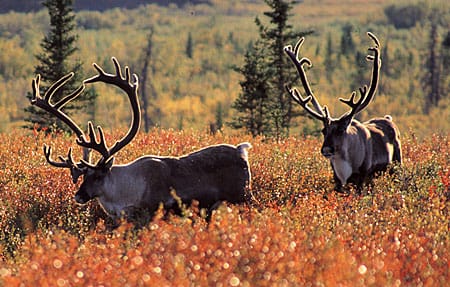
Something similar is at play with the Arctic National Wildlife Refuge (ANWR) in Alaska. This place is a big jewel in the wildlands conservation crown. Massive in scale, enormously valuable both as habitat and for the petroleum reserves that underlie it, it was probably doomed from the outset (during President Jimmy Carter’s term) to be a piece of land that, so long as the world is fueled by fossils, will be an unending target of attempts to revoke its legal protections. In other words, no universe exists in which a Trump administration was not going to encourage drilling there.
Trump has announced he intends to open the refuge back up for drilling, falsely claiming that it holds more oil than Saudi Arabia. In his first term, he signed the Tax Cut and Jobs Act of 2017, a law that requires two lease sales be held before the end of 2024 that offer up at least 400,000 acres.
The Biden administration has just endorsed a plan that would limit the acres offered for leasing to those that would have less impact on the region’s caribou (reindeer) herd. It also would prevent seismic exploration from occurring throughout the reserve, as Trump’s plan proposed, limiting it to just the acres that are leased. Seismic exploration involves using huge machinery to “thump” the earth and read the resulting seismograph for hints of oil deposits; it’s extremely disturbing for wildlife of all sorts.
According to Audubon magazine, quoting director Alaska Wilderness League, Kristen Miller:
“The 3-D technology is even more invasive because the trucks are bigger and they would have to move back and forth across the entire proposed wilderness area,” Miller says. “The wildlife refuge [is] home to a lot of species that are particularly sensitive to this type of activity.” This puts area wildlife, including birds like the Arctic Tern and the Northern Pintail and migratory animals that live on the 1.5-million-acre coastal plain, at risk. Birds from all 50 U.S. states raise young in northern Alaska’s coastal plain ecosystem alongside species from all over the globe.
Setting the tone for fantasy writers who followed in his footsteps, Tolkien frequently used environmental allegory in his Middle Earth tales: the fires of Isengard, where evil forces burned ancient forests to fuel the machinery of war, have many parallels in his time, and ours.
Despite the wisdom in his words, I used to feel like I should restrain my use of military metaphor for environmental harm, stop calling our work “forest defense,” give up on my idea that seasoned environmentalists—tree sitters, lawyers, letter-writers—are the rearguard protecting the remains of the wild world, routed and in full retreat from the fires and armies of capitalism. There was the thought that we needed to move past the language of conflict and speak to the innate love of nature within us all, move toward conciliation, and build a brighter future together.
Now, having been scarred by the first go-round with Trump, I’m over that.
It’s war, and the aggressors never stop coming, and we are still the grizzled old warriors at the gate, warning everyone of the dangers of believing capitalist lies, politically motivated and otherwise. We advance and retreat, fighting over the same patch of ground, year after year. But what else can we do?
David Brower, chief among “old school” environmentalists and founder of several American conservation groups, used to highlight what he called the asymmetric warfare between exploiters and preservationists. “They only have to win once,” he would say. “We have to win every time.”
Nowhere is this more poignantly illustrated, I think, than in the fight to save some of the last remaining ancient coast redwoods in the world. Logged by European despoilers down to 4% of their pre-colonial abundance, it’s hard to view any further fighting there as anything but a rearguard action. And every additional millennia-old tree that is lost now will not return in our lifetimes, or really, in the lifetime of this civilization. For all intents and purposes, it’s a permanent loss.
They only have to win once; we have to win every time.
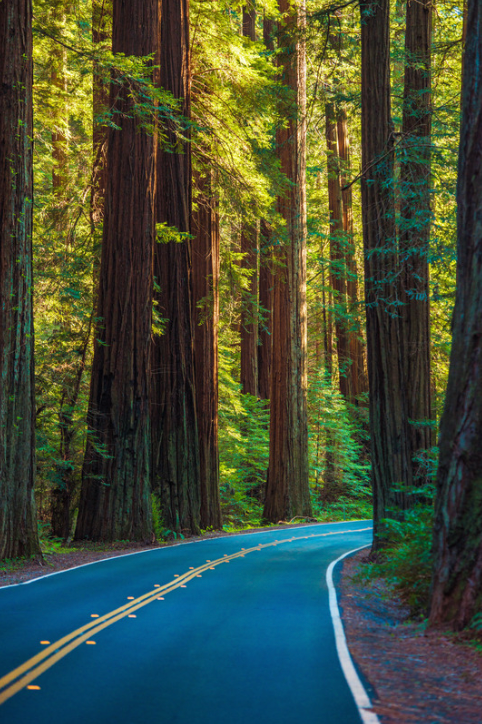
I just read the judge’s decision in a lawsuit regarding the most recent of four attempts by the California highway department, Caltrans, to rebuild and widen Highway 101 through an ancient redwood gateway called Richardson Grove. A few hours north of San Francisco, this is the first group of giants you encounter passing through the “redwood curtain” into that hidden corner of the north coast where it seems Tolkien’s tree guardian Ents might just walk among the forests. Its grandeur must be seen (and felt) to be believed.
Caltrans has been trying to widen and straighten the highway through this grove for almost two decades. In fact, one earlier iteration of this fight was before the federal judge I worked for during my last year of law school. The parties were arguing about whether Caltrans’ diagrams of the proposed construction accurately showed the locations of giant trees; my boss told them all to shut up (he was like that) and sent a magistrate up to the grove to see for himself.
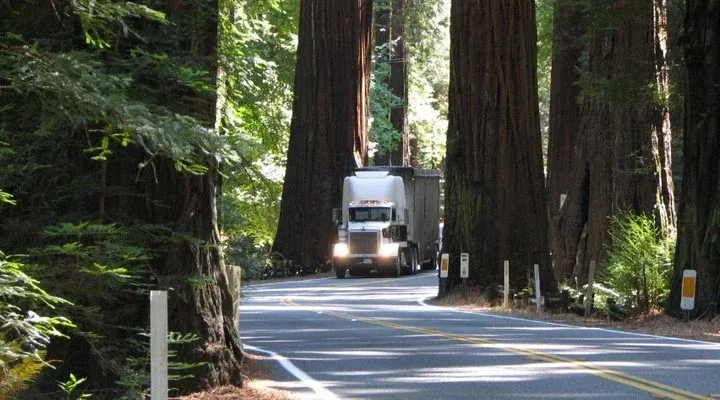
You, too, can see for yourself in the photos in this post. The pavement butts right up against the trees and it’s clear there’d be no way to build a wider highway through there without untold damage to the grove.
A few days after the field trip, the judge said that Caltrans had not accurately represented the scope of the damage their highway widening project would have on the grove, because they’d left out several trees, some over 20 feet in diameter (kind of hard to say you accidentally overlooked anything that big), and perhaps as old as 3,000 years. He vacated their planning approvals, and sent them back to the drawing board. But local enviros have had to bring Caltrans before the courts in at least two more cases since then, because the agency refuses to drop the project.
It’s nothing more than a 1.1-mile stretch of narrow, undulating highway that seems unworthy of so much effort and expense, until you understand that what are called “industry standard” semi trucks cannot navigate the curves. The only other highway into that part of the state passes through a tight, unstable river canyon and is incapable of being altered to accommodate large trucks. The highway department has been under pressure from corporate retailers with logistics centers near San Francisco to straighten the highway so they might find it economically feasible to operate stores in Humboldt County and gain easier access to points north.
Humboldt is one of those places that feels like it’s stuck in an earlier era, a time before big-box stores and the grand vision of semi trucks driving freely through every small town in America became real. Much of that was intentional: a prickly place where your quirkier types moved to grow weed and start cottage industries, it still has an active local currency called the Humboldt Exchange Community Currency (Humbucks). One town has an ordinance preventing any franchise restaurants from operating in city limits except the nine that existed there in 2002 when the rule went into effect.
Many locals don’t actually want new big-box stores. They know that would be the beginning of the end for their small businesses and networks where you can often pay with Humbucks, your labor, or trade the merchant for your own products. Yet major retailers see an untapped market, and all that’s stopping them is about a mile of curvy highway and a few trees.
Good thing, though: people up there really, really love their old-growth redwoods. You have a lot of these crusty types, some more paranoid than others, who’ve been fighting various iterations of “the man” for decades. They are not taking any of Caltrans’ crap, but as an outside observer, I admit I feel exhausted by it.
Because here we are again, with a poor decision issued by a Humboldt County judge last week, giving the agency the opportunity to move forward with the project. The same group that’s helmed the opposition since day one, the Environmental Protection Information Center (EPIC), says they’ve been here before, and won on appeal. They’re tenacious, they’re considering their options, and I wish them Godspeed.
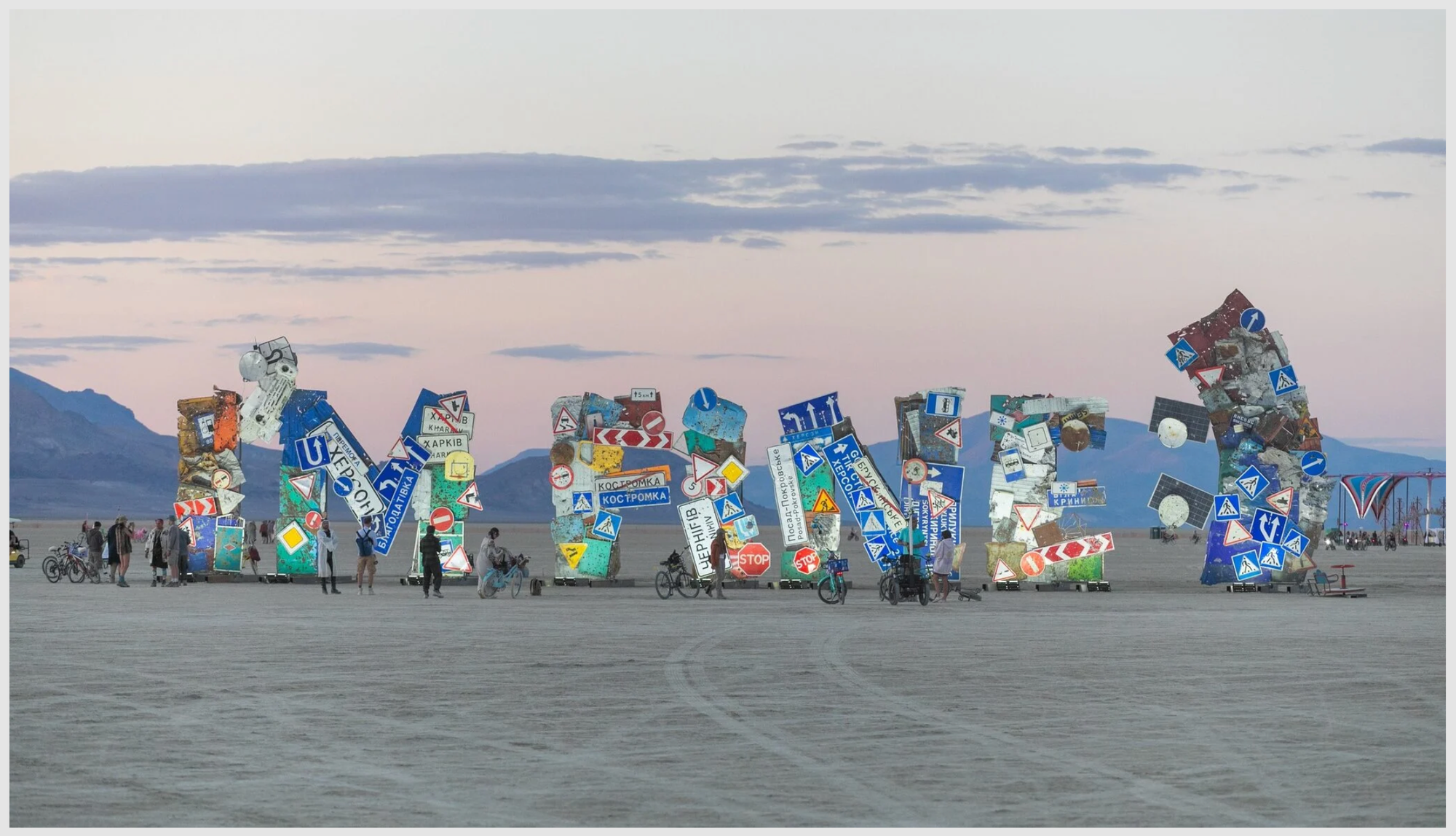
In the spirit of celebrating defenders holding back the forces of darkness, I want to share a beautiful performance at Burning Man this year by a member of the Ukrainian military who’s also a DJ. He set up on a table made of plastic bins in front of artist Oleksiy Sai’s sculpture “I’m Fine :)” to perform a sunrise set of music overlaid with testimony from his brothers and sisters in the Ukrainian army. It’s heartrending, especially when you consider that some of the young voices you hear in this music are unlikely to still be with us.
“I’m Fine :)” refers to the text messages Ukrainians send to let loved ones know they’re still alive. The artist built the sculpture from shot-up street signs gathered from the combat zone.
The Black Rock Desert, which you see in the video, is an immense and magnificent dry alkaline lake bed. It’s part of a federal national conservation area in northern Nevada. I mentioned in a previous note that the nonprofit partner who has been working for 25 years on behalf of this desert, Friends of Black Rock-High Rock, has recently laid off all its paid staff in the wake of public lands funding cuts from Washington.
I’ll return tomorrow with some interesting and maybe hopeful news about a raft of environmental actions the outgoing administration is pushing through.
Talk to you soon,
Owl
Sources:
https://snyder.substack.com/p/a-third-world-war
https://alaskapublic.org/2024/11/07/biden-administration-plans-new-limits-on-oil-leasing-in-alaskas-arctic-national-wildlife-refuge/
https://www.audubon.org/news/department-interior-seeks-conduct-seismic-study-arctic-refuge
https://www.northcoastjournal.com/news/tall-order-2133134
https://www.wildcalifornia.org/post/judge-sides-with-caltrans-in-latest-richardson-grove-court-development
https://lostcoastoutpost.com/2024/nov/16/judge-tosses/
https://artplugged.co.uk/oleksiy-sai-unveils-powerful-sculpture-im-fine-at-burning-man/#
*Inspired by historian Heather Cox Richardson’s Letters from an American.
[1] George R.R. Martin’s Song of Ice and Fire; J.R.R. Tolkien’s Lord of the Rings; Robert Jordan’s Wheel of Time, respectively.
Owl in America will remain free to all readers. You can subscribe directly below, choosing a free or paid subscription. Tips of any size can be left in the tip jar, and will be received with great thanks. 🦉

Member discussion