April 29, 2026
Owl in America is a series of letters tracing the actions of the current U.S. administration from the perspective of an environmental lawyer. These notes follow how, in a time of rapid political and ecological change, governmental decisions are felt in the living world.
Hello all~
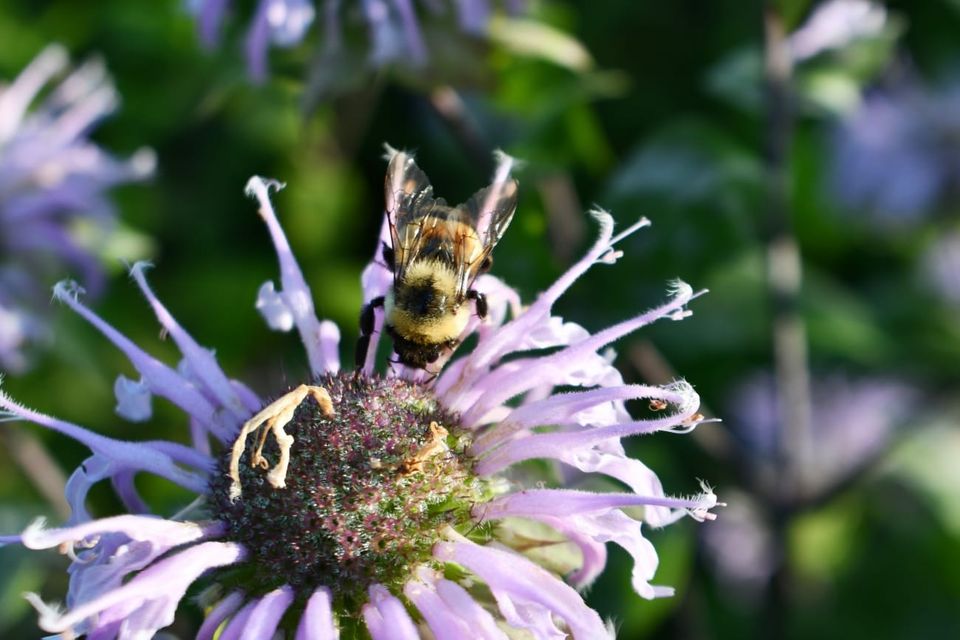
Bombus: one of the best words. In print, it's round and ponderous, a bit like the genus, bumble bees, that it describes. Spoken aloud, it conveys both their recognizable bumbling moves and their signature buzz-pollination service. I see those flying teddy bears and wonder, how can their tissue-thin, translucent wings keep them aloft? I suspect a sprinkling of star-stuff is responsible.
The United States boasts roughly 4,000 species of native bees (the common honeybee, wonderful though it may be, is not among them—it's a Eurasian transplant). Of those, bumble bees make up only about one percent, but their large size and yellow-striped appearance make them emblematic of bees in general. Once common, many species are now in decline, and two—the rusty patched and the Franklin bumble bees—are listed as endangered.
It's spring here in the U.S., and I want to hope that this will be a good year for bumble bees. I've seen quite a few of the fuzzballs already, bumping through blossoms of blue and purple, stuffing themselves into the upside-down cups of bleeding hearts and manzanita.
Given all that, the federal government’s latest moves on bumble bees are worth following. Here's an update on a story I shared a couple of years ago. In November 2024, just a couple of weeks after that fateful presidential election but while Biden was still in office, the U.S. Fish and Wildlife Service proposed to designate over 1.6 million acres across the Upper Midwest and the Virginias as critical habitat for the endangered rusty patched bumble bee (Bombus affinis).
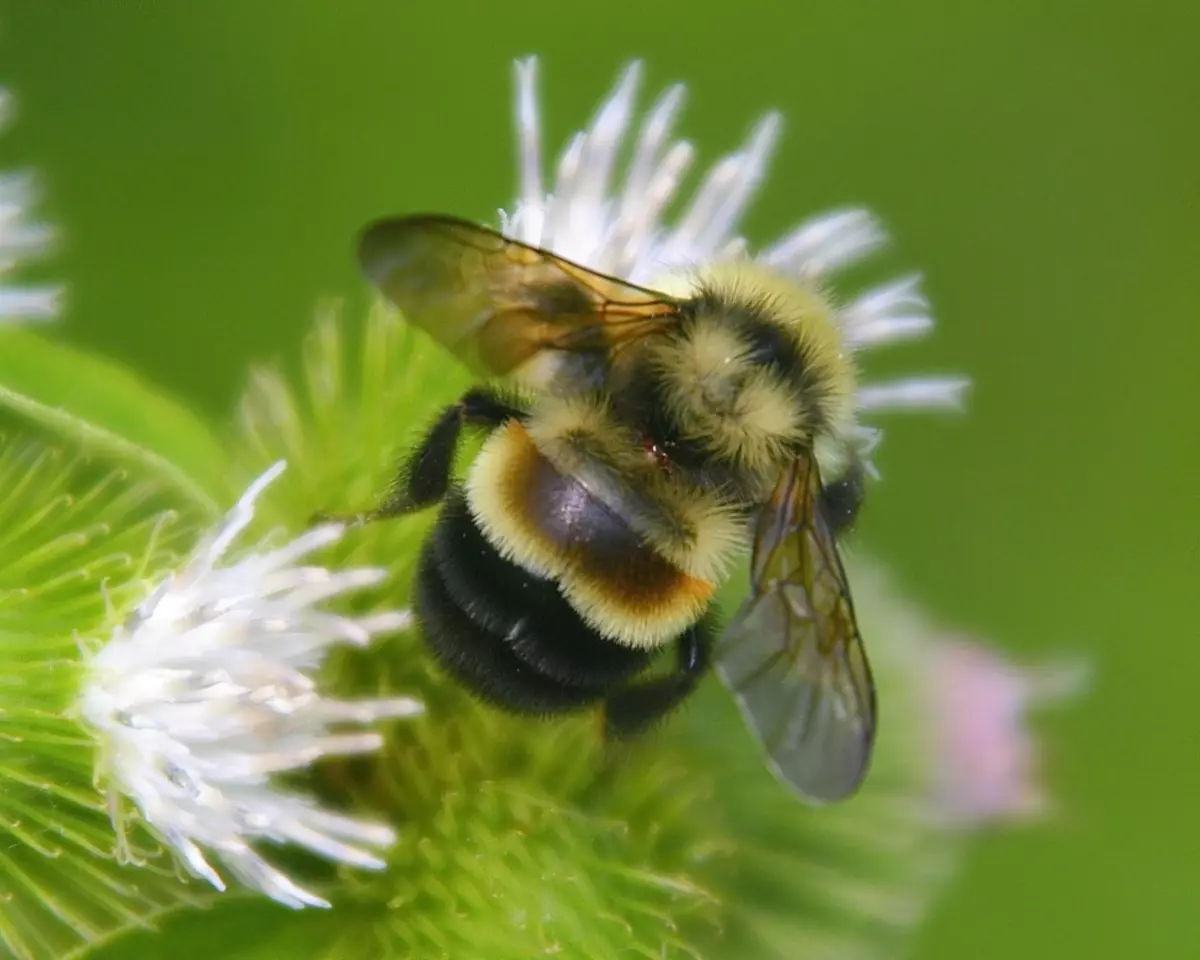
The species has disappeared from most of its historic range and was listed as endangered in 2017. It appears to be particularly affected by disease, including a parasitic infection spread by commercial bumble bee operations.
The parasite Nosema bombi is carried by captive bumble bees, shipped around the world to pollinate plants in greenhouses, like hothouse tomatoes. When they escape and share flowers with wild bees, they can spread the disease. Some bumble bee species seem relatively immune, but for the rusty patched, biologists believe Nosema is largely to blame for its steep population decline. Pesticides, habitat loss, and climate change are other factors.
The Endangered Species Act (ESA) requires the wildlife agency to designate critical habitat for each listed species, with some qualifications. In its simplest form, critical habitat is the specific set of places and conditions a species needs if it is going to recover.
Critical habitat can stretch across private and public land, and in the case of the former, does not place restrictions on the landowner unless federal approval or funding is required for an activity. Federal agencies, for their part, must ensure that actions they authorize, fund, or carry out are not likely to destroy or adversely modify designated critical habitat.
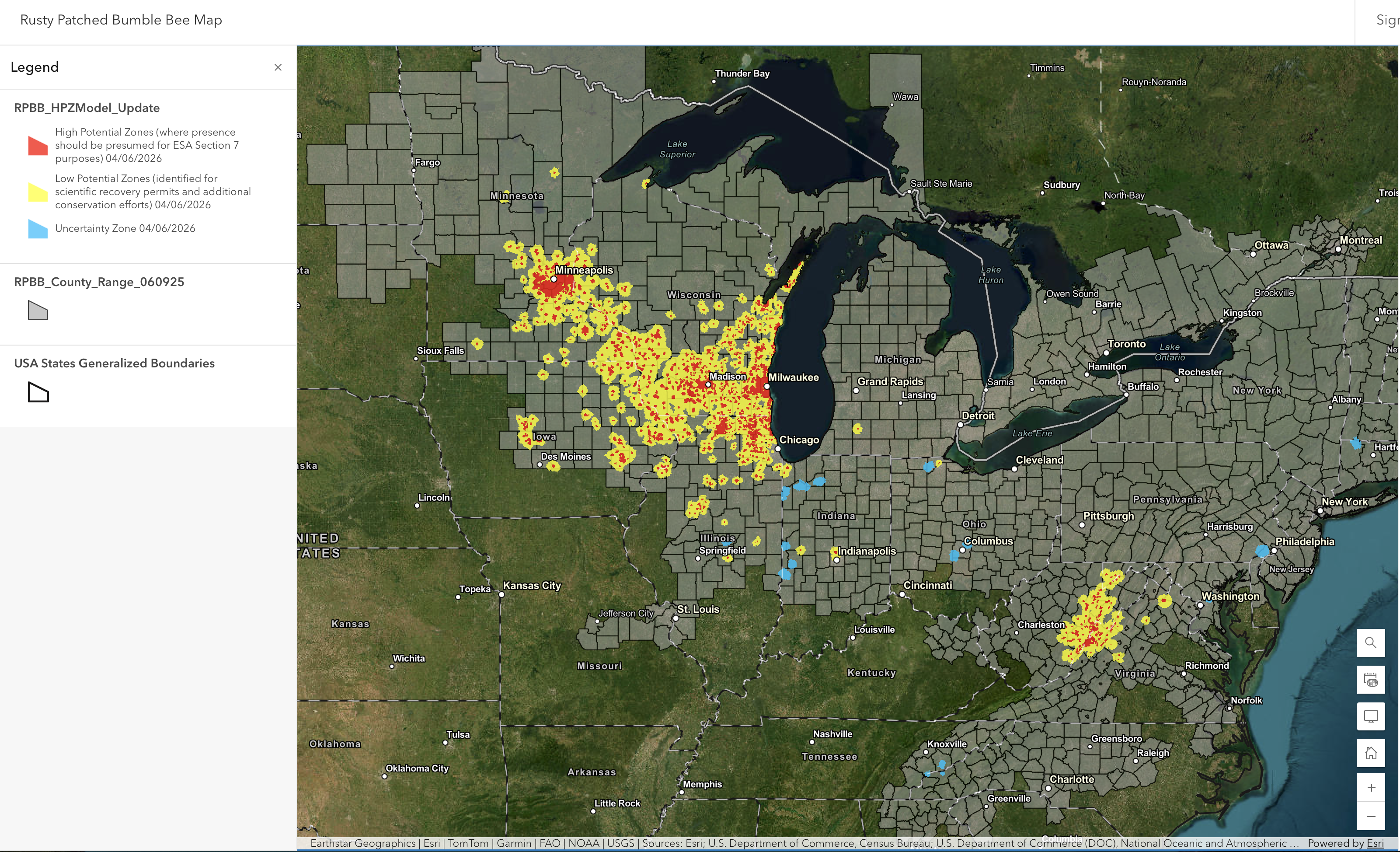
The Fish and Wildlife Service accepted public comments on the proposal through January 2025. So far as I can tell, no further action has occurred.
Now, the same agency is proposing a nationwide agreement that could give energy and transportation developers more regulatory certainty while threatening the bees’ recovery needs. It recently published the Proposed Nationwide Conservation Benefit Agreement for Bumble Bees, purporting to "directly address[] administration priorities to facilitate energy production and delivery while conserving listed and at-risk species."
Its stated intent is to provide a large-scale conservation framework for eleven bumble bee species, including the rusty patched, the also-endangered Franklin bumble bee, and nine other declining species. It presents as a conservation agreement. But it appears designed, in practice, to give energy and transportation developers certainty while asking fairly little of them in return.
The notice continues:
And there we see the magic words, beloved by industry: "improve permitting efficiency." Permitting fossil-fuel infrastructure, in particular, should not be efficient. It should be slow and frustrating, and the outcome should not be guaranteed. No streamlining is necessary. Instead, we need roadblocks, regulatory hurdles, and projects abandoned at the proposal stage. Protests, litigation, and administrative burdens—let's have them all.
For species already reduced to fragments of their former range, delay and difficulty are not bureaucratic failures but often function as necessary protective mechanisms. Unfortunate as that may seem, we want to use every tool available to help our little wild cousins.
The plan lays out a landscape-level approach to bumble bee conservation across millions of acres of energy development and transportation corridors. In exchange, participating companies and land managers would get some protection from future regulatory changes, even if some covered bumble bees are harmed in the process. That would include approved conservation activities, as well as routine operations, maintenance, and infrastructure upgrades.
The notice goes on to explain: "The agreement provides regulatory assurances to enrolled private and non-federal partners if any covered bumble bee species are listed under the Endangered Species Act in the future." In practice, that most likely means enrolled developers could continue their activities should future administrations decide to list other declining bumble bee species in their area.
The public comment period on this proposal has closed, but plenty of commenters weighed in. Several conservation groups pointed out its weaknesses. In particular, the Xerces Society for Invertebrate Conservation highlighted the plan's failure "to ensure that the biological needs of bumble bees are at the forefront of the agreement."
The group closed its letter with the observation that "in its current form, it may provide industry partners with regulatory certainty without providing needed biological certainty for the covered species." [1]
Even the U.S. Forest Service commented with what sounds to my ears, tuned to the nuances of bureaucratese, like a particularly plaintive plea: "The Federal Highway Administration was involved in the development of this document. Why were other federal agencies not involved?" (Translation: Hey, we're lifelong buddy agencies. We manage a lot of the land you're talking about here. Our biologists have been researching bumble bees together for decades. Why didn't you come to us with this?)
The Forest Service echoed the nonprofit: "Regarding [the provision] 'Although there are no assurances associated with Federal lands, enrollees have a high degree of certainty that no additional conservation measures, beyond those contained in this [plan], will be required on Federal lands for listed and any at-risk Covered Species that becomes listed under the ESA in the future.' Federal agencies need to be at the table for this to be valid." [2] (Translation: You left us out of this plan, and we don't agree to it.)
Things have truly gone sideways in the federal government when the Forest Service is dressing down the wildlife agency for being too lax with endangered species. In more normal times, it's usually the opposite.
The contrast from the last days of the Biden administration to the early months of this one is stark. I'll keep an eye on what happens with this plan, but in the meantime, smaller-scale Bombus conservation efforts carry on their good work.
Here's one: in northeast Illinois, a group of state, local, and federal agencies and members of the public worked together to restore almost 200 acres in the Greenbelt Forest Preserve to benefit the rusty patched bumble bee and other species. The group planted 9,000 individual plants including bee favorites, prairie blazing-star and wild bergamot (bee balm). A recent study documented rusty patched bumble bees in the preserve for the first time.
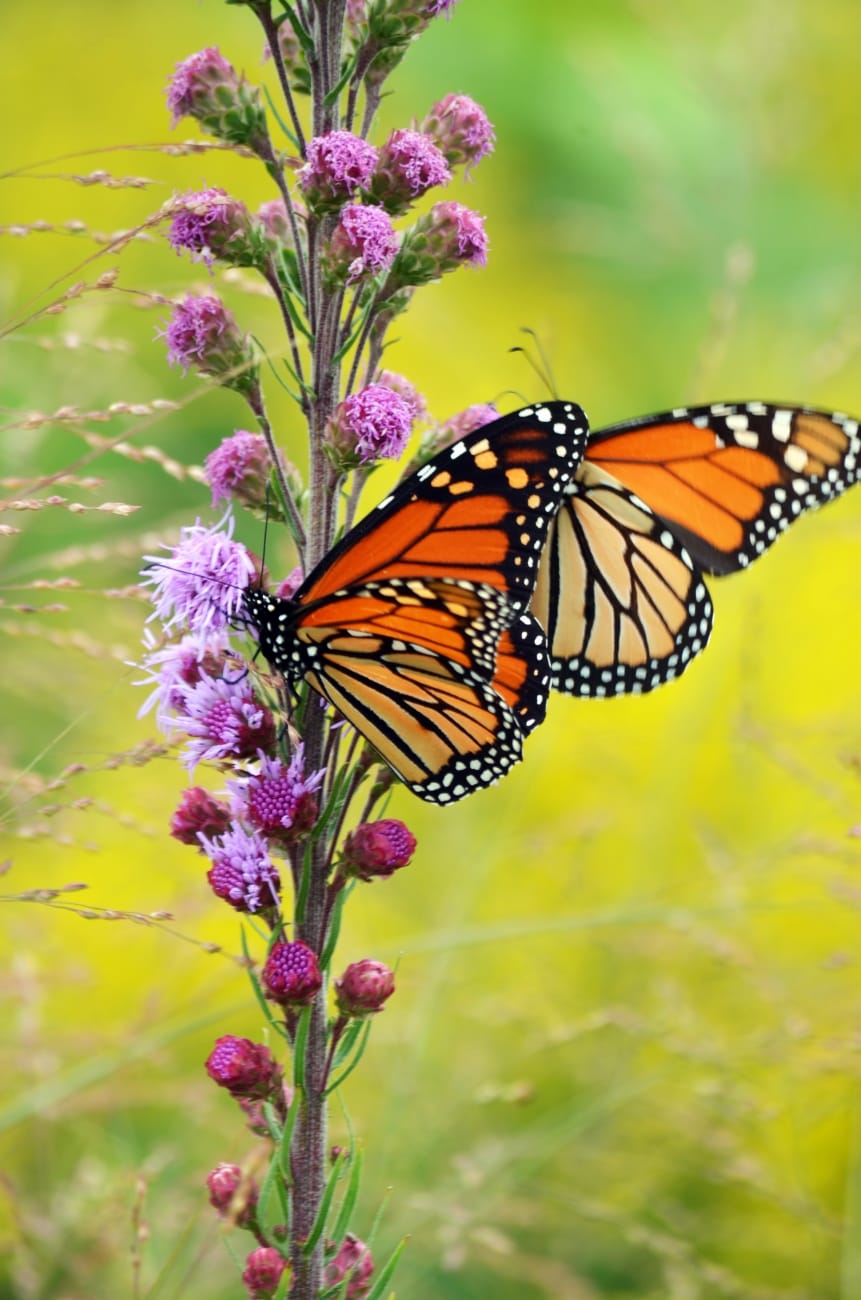
According to the press release, restoring native plants will benefit bees along with monarch butterflies, eastern prairie fringed orchids, and migratory birds. It's also intended to improve the water quality of the Skokie River and by extension the Chicago River and the Great Lakes.
If you have a spare 17 minutes, you could do worse than watch this beautiful short documentary about the rusty patched bumble bee. (A note: The documentary shows quite a few bees being trapped and studied; according to my research, they are released unharmed after no more than a few minutes inside a clear plastic box. Historical samples in institutional collections are shown dead and pinned, however.)
One of the entomologists interviewed pointed out: "Bumble bees ... really need three things. They need flowers, they need a safe place to build their nest, and they need a pesticide-free environment." As individuals, we can't always influence what the federal government does. However, most of us can do something toward providing these three things for wild bees.
On this page, there's a nice chart of plants that rusty patched and other bumble bees like. Those labeled with an asterisk and an exclamation point (like wild bergamot) are listed as bee superfoods and immune boosters. I got a chuckle out of that. Readers living in the bees' range in the U.S. might enjoy planting some of them.
Talk to you soon,
Owl
[1] Xerces Society, "Comments on the Proposed Nationwide Conservation Benefit Agreement for Bumble Bees on Energy and Transportation Lands." (Feb 24, 2026.)
[2] USFS, "Consolidated US Forest Service comments for the Application for Enhancement of Survival Permit, University of Illinois at Chicago; Draft Conservation Benefit Agreement for Eleven Bumble Bee Species." (Feb. 24, 2026.)
Sources:
https://www.regulations.gov/document/FWS-R3-ES-2024-0132-0001
https://www.fws.gov/project/critical-habitat
https://www.regulations.gov/docket/FWS-R3-ES-2025-0245
https://www.fws.gov/story/2026-02/habitat-restoration-and-stewardship-outreach-northwest-illinois
https://www.chicagotribune.com/2020/08/11/lake-county-buzzing-about-endangered-bee-discovery/
*Inspired by historian Heather Cox Richardson's Letters from an American
Owl in America will remain free to all readers. You can subscribe directly below, choosing a free or paid subscription. Tips of any size can be left in the tip jar, and will be received with great thanks. 🦉

Member discussion