April 23, 2026
Owl in America is a series of letters tracing the actions of the current U.S. administration from the perspective of an environmental lawyer. These notes follow how, in a time of rapid political and ecological change, governmental decisions are felt in the living world.
Hello all~
This year's Earth Day arrived in the middle of a particularly grim stretch of environmental news from the Trump administration. The U.S. Forest Service is under heavy attack. The Endangered Species Act "God Squad" was reconvened. The Boundary Waters Wilderness is open to mining. The EPA has rescinded its finding that carbon pollution poses a danger. And that's not all, by a long shot.
Let's focus on just one area today. The Endangered Species Committee—the so-called "God Squad," composed primarily of Cabinet members and led by Interior Secretary Doug Burgum—assembled at the end of March for the first time in several decades. Convened just a few times since Congress inserted the relevant provision into the Endangered Species Act (ESA) in the 1970s, it is nicknamed for its ability to indirectly condemn an imperiled species to extinction. Normally, federal actions that would jeopardize a species' existence are prohibited under the ESA, but on rare occasions, the committee can exempt them.
It met under the "national security" trigger, used here for the first time, to consider whether to allow the federal government to carry out, permit, or fund oil and gas activities in the Gulf of Mexico that could jeopardize the continued existence of endangered species. After Secretary of Defense Pete Hegseth determined national security concerns necessitated a blanket exemption, the committee granted it. The procedural framing effectively reduced its role to rubber-stamping Hegseth's finding.
What national security concerns required this drastic action? Hegseth said oil production in the Gulf of Mexico is necessary “to support military operations and readiness.” He claimed high energy prices would result from a hypothetical loss of Gulf oil production due to ESA enforcement that would also “benefit our adversaries and hurt our allies."
The core of the ESA sits in its "take prohibition." People and businesses are prohibited from "taking" (without a permit) an endangered or threatened species or modifying critical habitat in a way that harms the species, even on their own property. Take is defined very broadly as “harass, harm, pursue, hunt, shoot, wound, kill, trap, capture, or collect, or to attempt to engage in any such conduct." [1]
The law also applies to actions authorized, funded, or carried out by the federal government anywhere in the U.S. or its waters. For these, federal agencies must receive a finding from either the U.S. Fish & Wildlife Service (for land/freshwater species) or NOAA Fisheries (for marine/anadromous species) that their activities will not jeopardize the continued existence of listed species.
By broadly exempting oil and gas activities in the Gulf of Mexico from these protections, Hegseth, Burgum, and crew have dealt a serious blow to perhaps the most powerful environmental law in the world. The door is open to future exemptions based on an ongoing "national security threat." If this one stands, I can imagine blanket carveouts for drilling across the United States, to give just one example.
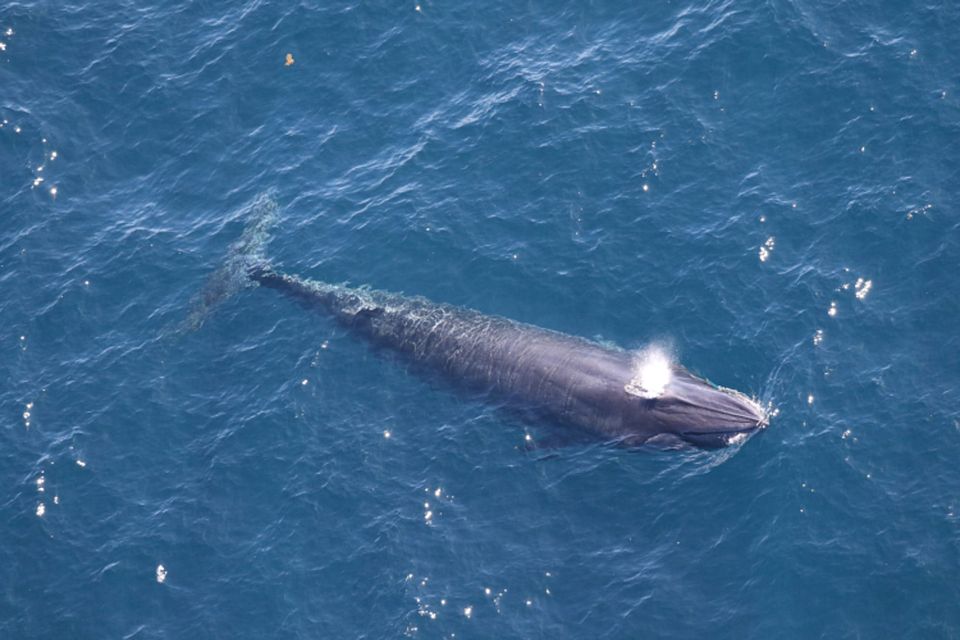
What does all this mean in the real world? After the devastation caused by the Deepwater Horizon oil spill in 2010, the Rice's whale population crashed to around 50 individuals—that's 50 or so whales remaining on Earth. Critically endangered, they've only been known to science since 2019.
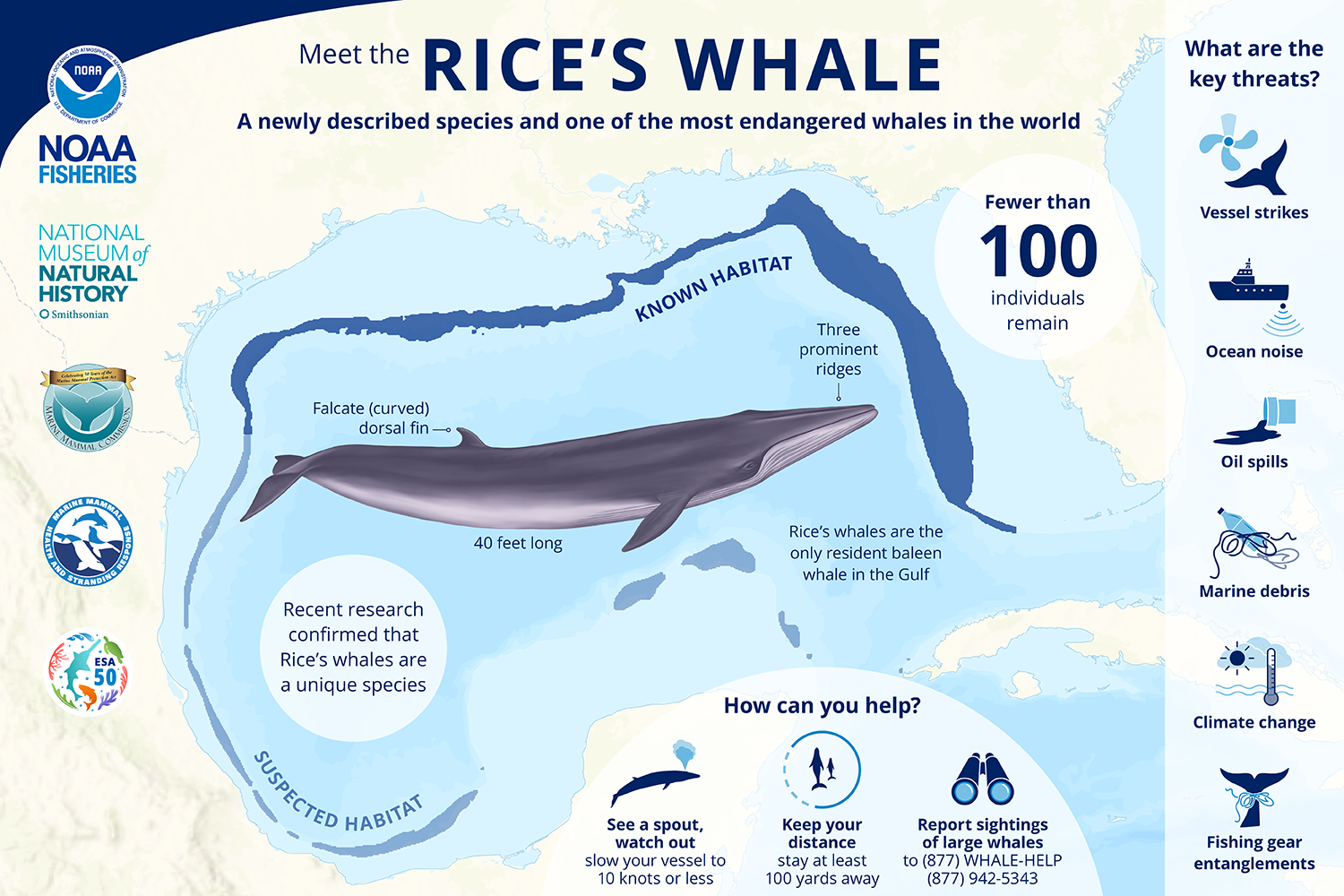
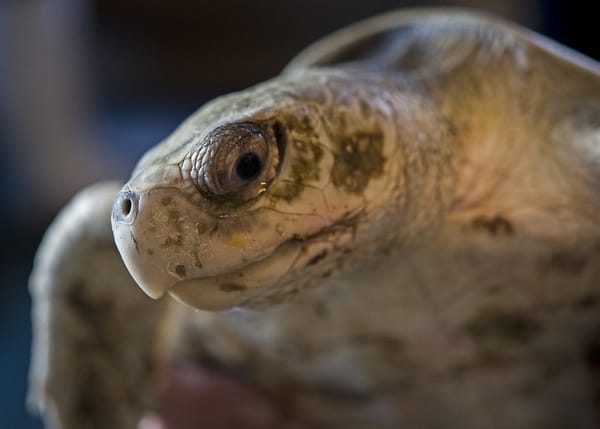
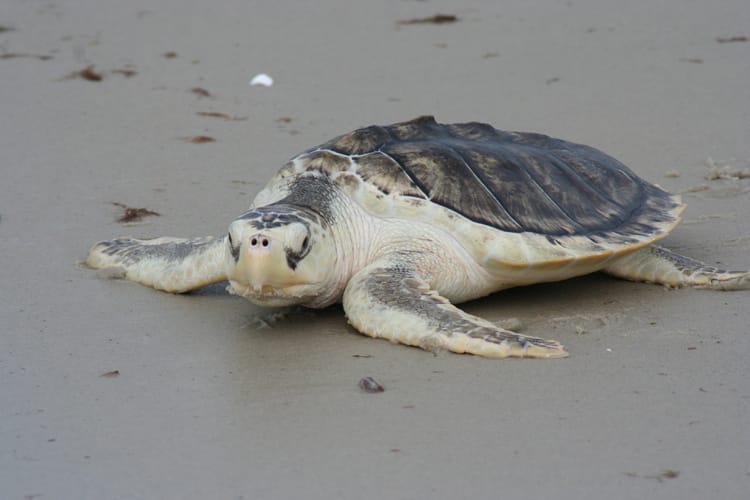
Ship strikes in the eastern Gulf of Mexico are thought to be the main risk facing them now, and under the ESA, the government set vessel speed restrictions to protect the whales. These limits also protected endangered sperm whales and Kemp's ridley sea turtles (the smallest sea turtle in the world). The regulations further required oil companies to monitor whale locations to avoid hitting them. Notably, they did not place any limits on the amount of oil and gas that could be drilled.
The Trump administration's use of the God Squad to go around the Endangered Species Act thus arguably makes no meaningful difference in the activities of oil companies in the Gulf of Mexico. It was perhaps a test balloon, a way to push the limits of circumventing the law, in preparation for deploying it more broadly across our lands and waters.
And this decision certainly explains why the committee received its nickname: it represents a choice—as a nation—to continue taking actions that we know are extinguishing a species. I think "God Squad" is memorable, but others have suggested we call it the "Extinction Committee." That feels more accurate to me.
A God Squad decision can be appealed directly to the appellate court instead of winding its way through the lower courts first. I'll keep you posted on appeals as they develop. (NB: the Center for Biological Diversity filed suit in a lower federal court a few weeks before the God Squad met, seeking a restraining order to stop the meeting. The judge denied the motion on procedural grounds. In the days immediately following the meeting, at least two other environmental groups sued.)
This decision is part of a larger program. Let's recall that God Squad head, Interior Secretary Burgum, is a billionaire former governor of North Dakota who made his fortune in software and is linked to the fossil fuel industry. Misusing the ESA is only one element of his pro-industry package. According to Politico, Burgum's department plans to recombine two offshore energy agencies, separately in charge of permitting and overseeing offshore drilling safety, into a new one called the Marine Minerals Administration.
Or maybe not so new: for those who follow offshore drilling regulation, this name bears an unpleasant resemblance to the old Minerals Management Service, which President Obama dissolved in 2011. In the wake of 2010's Deepwater Horizon oil spill in the Gulf of Mexico—the worst in U.S. history—investigations brought to light endemic corruption inside the agency tasked with managing safety and compliance for offshore wells. According to an Interior inspector general's report: "employees accepted gifts, steered contracts to favored clients and engaged in drug use and sex with employees of the energy firms they regulated."[2]
Under bipartisan Congressional pressure, the Obama administration disbanded the Minerals Management Service. Three new agencies were given separate permitting, environmental compliance, and revenue management responsibilities in an effort to hinder cozy relationships and lax oversight.
Couched in the language of "efficiency," the current move to recombine the permitting and regulation bodies into one agency is calculated to speed up drilling permits. I can only imagine it will also speed up the reestablishment of close ties between the regulators and the regulated. Another unfortunate proposal from the Interior Department would relax requirements for blowout preventers—the part that failed on the Deepwater Horizon drilling rig.
This forms part of a larger push, along with calling up the God Squad, to drive up U.S. oil production. If it seems like we learned nothing from the Deepwater Horizon spill, well, a lot of actions by this administration betray a lack of hindsight—and foresight, for that matter.
There's more brewing with the Endangered Species Act, which I'll save for another letter. But here's one piece of good news for Earth Day: while writing this, I saw that the House pulled the "ESA Amendments Act" from consideration. According to the Sierra Club, the overhaul would, among other harms:
extend timelines for listing processes, allowing imperiled species to continue to decline while decisions are pending. It would also . . . increase the allowable “take”—or the hunting, wounding, trapping, or killing—of threatened species, and narrow critical habitat designations. [3]
In addition, it would have increased the weight given to economic impacts when considering whether to list a species and would have limited environmental groups' ability to sue to enforce its provisions.
Sponsor Rep. Bruce Westerman (R-AR), chair of the Natural Resources Committee, said his bill was shelved to make way for more urgent matters. In a small taste of delicious irony, it actually appears pressure from Florida's Republican lawmakers killed the legislation, for now. After last month's God Squad move, they expressed concern that the bill could expand the administration's use of the committee to authorize drilling off Florida's coast.
According to Rep. Kat Cammack (R-FL): "We have very sensitive ecosystems that we want to protect and ecotourism is a huge part of our state’s economy." And Rep. Anna Paulina Luna (R-FL) posted on social media this week: "Don’t tread on my turtles. Protected means protected. #EndangeredSpeciesAct."
It's almost certainly not the last we'll see of this effort in the House. But we take the bright spots where we find them.
Talk to you soon,
Owl
[1] (16 USC § 1532(19)).
*Inspired by historian Heather Cox Richardson's Letters from an American
Sources:
https://eelp.law.harvard.edu/wp-content/uploads/2026/03/ESA-sec-7-NS-exemption-FINAL.pdf
https://www.eenews.net/articles/takeaways-from-burgums-hill-appearance/
https://www.bsee.gov/sites/bsee.gov/files/fact-sheet/fact-sheet/reforms-fact-sheet.pdf
https://www.sciencedirect.com/science/chapter/referencework/abs/pii/B9780128096659099699
https://www.fws.gov/sites/default/files/documents/endangered-species-act-basics.pdf
https://www.fisheries.noaa.gov/species/kemps-ridley-turtle
https://www.eenews.net/articles/burgum-gets-heat-over-offshore-agency-reorganization/
https://www.eenews.net/articles/house-leaders-pull-endangered-species-act-bill/
https://www.eenews.net/articles/fears-over-god-squad-derail-endangered-species-bill/
Owl in America will remain free to all readers. You can subscribe directly below, choosing a free or paid subscription. Tips of any size can be left in the tip jar, and will be received with great thanks. 🦉



Member discussion