November 20, 2024
Owl in America is a series of letters tracing the actions of the current U.S. administration from the perspective of an environmental lawyer. These notes follow how, in a time of rapid political and ecological change, governmental decisions are felt in the living world.
Hi all~
I’m working from a hotel in far northwest California today. The rain is lashing across the roof, and last night, the wind howled so loudly it rattled the windows. Several nearby villages have lost power, but this building is on a separate grid along with the regional airport, so maybe the lights will stay on here. Winter storms like this one are called “bomb cyclones,” and they have something to do with an extra-strong atmospheric river stretching from Hawaii to the mainland combined with an extremely low pressure zone lying off the coast of Washington state.
I learned this morning that this cyclone is rated a 4 out of 5 for severity, and that there is an ongoing debate about whether to label these winter storms with a human name, as we do with hurricanes and typhoons. I don’t have a strong opinion about it, but could we get a little more creative if we do decide to name them, and expand beyond the human? How about Cyclone Banana Slug? Storm Cormorant? At least it would bring some fun to the seemingly never-ending wild weather we have cooked up for ourselves.
Switching gears today from the chaos in the U.S. capital and across the ocean in Azerbaijan at the COP29 conference, I wanted to highlight some current lawsuits brought by concerned groups of people across the United States. Litigation is just one lens through which we can view the fight for planet Earth, but knowing what various groups are up to can provide a sense of what’s possible when we get together.
An Oregon county has sued the state’s largest natural gas provider, NW Natural. The complaint alleges that NW Natural has sown climate doubt and intentionally deceived Oregonians about climate change. The utility causes almost 10% of the state’s carbon emissions, says Multnomah County, and its marketing materials misled the public about the climate dangers of natural gas (methane) which in the short-term, is a far more potent greenhouse gas than carbon dioxide. A ProPublicainvestigation earlier this year found NW Natural has made little to no effort to reduce its emissions despite claims to be working toward carbon neutrality.
The lawsuit also names McKinsey & Company, the high-powered consulting group that counts many fossil-fuel companies among its clientele, for its role in spreading climate disinformation. This case marks the first time either a utility or McKinsey has faced a court hearing for climate deception.
Farther down the coast, the state of California, after years of litigation, has recently wrangled a settlement from a pipeline company whose negligence caused an oil spill offshore of Refugio State Beach in 2015. The company will reimburse the state’s taxpayers for over $50 million in cleanup costs incurred, and will pay another $22 million to an insurance group that paid for some of the restoration work.
Local officials approved a new manager to take over operation of the same pipeline; according to the Santa Barbara newspaper, lawyers at a local nonprofit group have appealed the decision on the grounds that another spill is likely because the new company lacks the financial or technical ability to operate it safely. Refugio State Beach, now managed by California, is also called Kasil, or “pretty place,” by the Chumash tribe who gathered there for millennia. Where the Refugio River meets the ocean, coastal sage scrub remnants and a natural lagoon provide rich habitat for a variety of shorebirds, songbirds, and mammals.
In HOAs-being-jerks news, a homeowners’ association (HOA) has sued a California nonprofit land trust over its plans to rewild an old golf course in the heart of Palm Springs into a desert nature preserve. The land trust received a large grant from the state wildlife conservation board to complete the work, which would benefit hundreds of bird species that already use the golf course as a migration stopover on the Pacific Flyway. The land trust has counter-sued the HOA for interfering with state grant funding in the HOA’s bid to maintain the land as a golf course. Work is on hold pending the outcome, but when complete, the preserve will provide 120 acres of permanently protected habitat for at least 19 California species of concern and one endangered beetle.
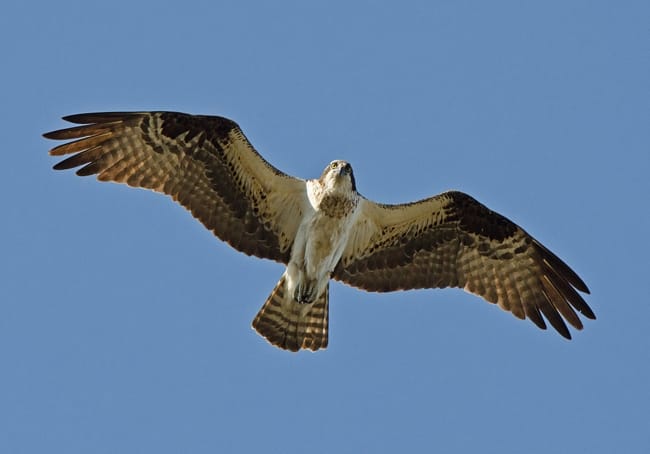
In Montana, the Yellowstone Valley Audubon Society, represented by Earthjustice, has sued the U.S. Fish and Wildlife Service, alleging that the agency illegally issued permits to the Montana state fish and game agency to kill birds near a fish hatchery. Court filings allege Montana Fish, Wildlife, and Parks has become the leading cause of death for ospreys in the state, killing even more per year than power lines, leading me to ask, what exactly is the purpose of this wildlife agency? That the hatchery raises non-native bass, bluegill, and trout species for sport fishing provides one clue.
The breeding population of the osprey has declined drastically along that stretch of the Yellowstone River, according to a monitoring study published last year. In just two years, records show the Montana game department shot “eight osprey, 105 Canada geese, 26 great blue heron and 16 double-crested cormorants” to prevent them from eating fish from the facility.
The lawsuit alleges a violation of the National Environmental Policy Act (NEPA), one of America’s bedrock laws and a chief conservation tool for those trying to save wildlife in this country. The Trump I regime took aim at NEPA and has promised to gut it during Trump II.
In Florida, a nonprofit group has sued the state for failing to protect from over-pumping the groundwater that feeds the state’s precious spring-fed waterways. Florida’s justifiably famous crystal-clear pools and streams are a national treasure, dwindling as the aquifers that feed them are drained to provide water for commercial and agricultural interests.
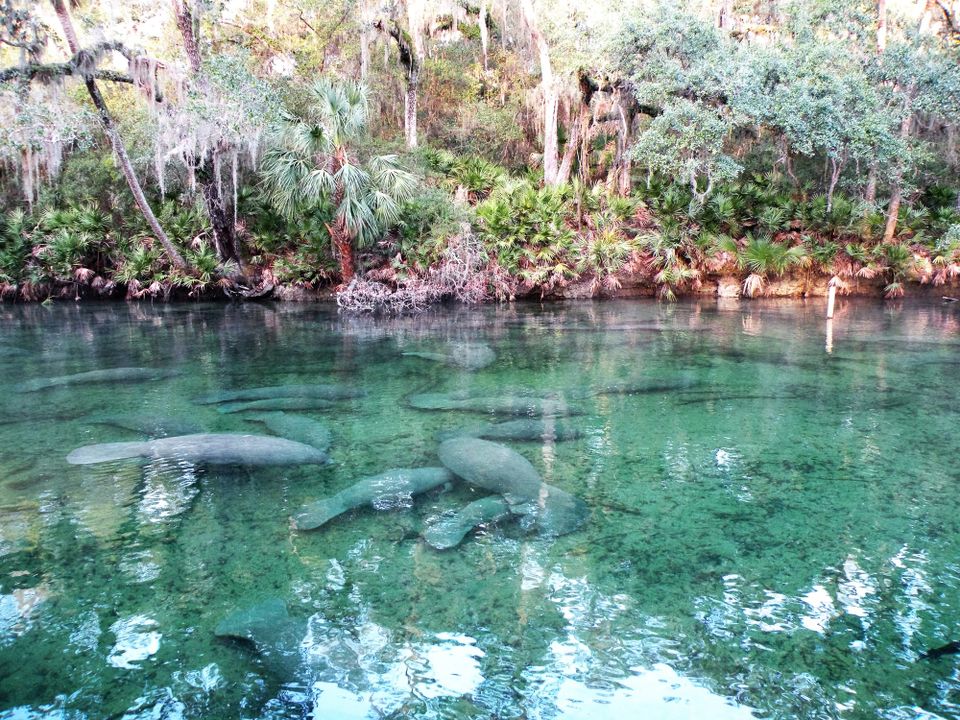
They are also important for manatees, the gentle, threatened mammals whose largest remaining U.S. populations can be found in the warm springs of Crystal River, Blue Spring State Park, and Silver Springs.
Also in Florida, a small-scale landowner has shared her experience donating an undeveloped suburban lot to a local wildlife trust for the benefit of burrowing owls. She bought the lot as an investment, only to realize it could provide a haven of undisturbed habitat in the middle of a development boom that’s left ever fewer open spaces for the owls to inhabit. Permanent protections are now in place, and tax law also allows for good financial benefits to the donor. She shared her story in the hope that more Americans would realize there are methods for regular people to conserve land in perpetuity.
Finally, may I offer a practice to readers who might wonder how we will get through the next four years? I’ve focused in this post on state and local (i.e., non-federal) efforts to save what people love. It’s likely these levels of leadership are where we will have to draw lines in the sand going forward. To do so, we must take care of our physical and mental health so we are strong enough to band together with other people to support the wild world and each other.
To that end, I really enjoyed the 20/10/5 framework proposed in Justin McAffee’s recent piece. It suggests 20 minutes of movement, 10 minutes of meditation, and 5 minutes of journaling each day to provide a baseline level of self-care for body, spirit, and mind. I think the total of 35 minutes carved out here and there during a busy day is doable for most and would offer a good reset from the high stress levels many of us are facing now.
Thanks, and talk to you soon,
Owl
Sources:
https://www.washingtonpost.com/weather/2024/11/19/atmospheric-river-bomb-cyclone-california-low-pressure/
https://www.theguardian.com/us-news/2024/oct/08/nw-natural-lawsuit-climate-doubt-oregon
https://www.propublica.org/article/nw-natural-gas-oregon-fossil-fuel
https://www.kcbx.org/environment-and-energy/2024-11-12/company-at-fault-for-refugio-oil-spill-agrees-to-pay-back-millions
https://www.parks.ca.gov/pages/603/files/RefugioSBFinalWebLayout061115.pdf
https://thepalmspringspost.com/nov-13-daily-briefing-olt-cross-complaint-middleton-concedes-next-stars-announced-and-more/
https://oswitlandtrust.org/prescott-preserve/
http://montanaindependent.substack.com/p/audubon-society-sues-federal-government
https://earthjustice.org/press/2024/conservation-group-sues-feds-over-fish-hatchery-shooting-migratory-birds
https://www.eenews.net/articles/florida-springs-advocates-sue-dep-to-force-groundwater-pumping-rule/
https://www.tampabay.com/news/environment/2024/11/18/florida-springs-lawsuit-department-environmental-protection/
https://www.floridastateparks.org/parks-and-trails/blue-spring-state-park/manatees-blue-spring-state-park
https://houseofgreen.substack.com/p/why-i-donated-my-plot-of-land-in
https://capecoralwildlifetrust.org
*Inspired by historian Heather Cox Richardson's Letters from an American
Owl in America will remain free to all readers. You can subscribe directly below, choosing a free or paid subscription. Tips of any size can be left in the tip jar, and will be received with great thanks. 🦉

Member discussion