June 14, 2026
Owl in America is a series of letters tracing the actions of the current U.S. administration from the perspective of an environmental lawyer. These notes follow how, in a time of rapid political and ecological change, governmental decisions are felt in the living world.
Hi all~
An unexpected sadness this week: I received an email from Larner Seeds that its founder, writer Judith Larner Lowry, has passed away. Her book The Landscaping Ideas of Jays is one of the great pieces of nature writing. It certainly sparked my lifelong fascination with native plant gardening.

I visited her native plant garden in Northern California once, many years back. It served as the public grounds for her Larner Seeds shop and was about as delightful as you'd expect.
Her family wrote: “Judith will never be forgotten. Every time we see a brilliant clarkia in bloom, a butterfly landing on milkweed, coarse woody debris in a forest, a covey of quails or a lone blue jay dropping seeds, we will think of Judith and her wild heart."
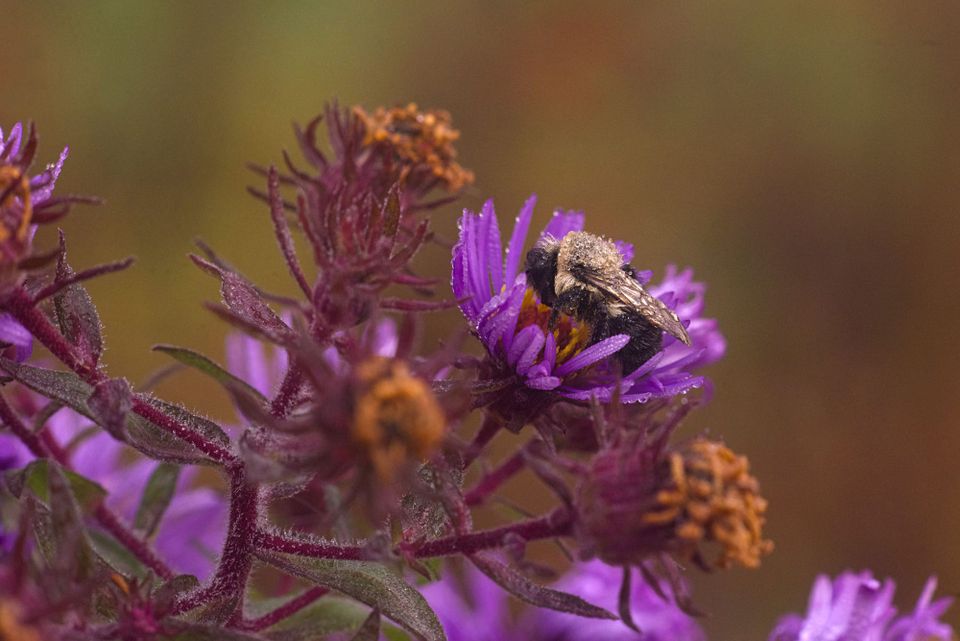
Brandon Keim has written of the importance of native asters to the life cycle of bees—not just as a nectar source but also as a bed and, later, for some, as a safe place to pass away when the first frosts fall. Is magic real? I can't say, but maybe imagining what bumblebees dream of while curled up in an aster's petals will give you some hint.
There's that little spike of sadness for someone I never met, but whose words set my life on a particular course. She was one of the good ones. So I'll say it now: Thanks, Judith.
Because she taught me to rewild a space for our little cousins, I have found many a bee sleeping in an aster in my yard. I’ll think of her each time I scatter more seeds for bumblebee dreams.
 bioGraphic
I thought I'd do an issue with a few updates on stories we've been following here. Then, because several new noteworthy developments arise each day, plus ongoing stories need tracking, I realized I'd have to break it up into at least two parts. Here's the first.
Colorado Senator Michael Bennet has introduced a bill called the "Public Lands Integrity Act" in an attempt to block public-lands selloffs in congressional budget bills. It would work by preventing the sale of federal public lands through expedited Senate procedures. It's a response to Republicans' near success last year at selling somewhere between 1 and 3 million acres of public lands as part of the One Big Beautiful Bill Act—later abandoned after fierce public outcry.
Under the budget reconciliation process, revenue and spending bills pass with a simple majority. Unrelated proposals are often sneaked into big budget bills. The Byrd Rule attempts to limit this by, in effect, requiring 60 votes to keep an "extraneous" measure in a reconciliation bill.
This bill would define as "extraneous" any provisions that would result in the sale, transfer, or disposal of federal public lands. If passed, any senator could raise a so-called "Byrd Rule point of order" regarding provisions about public lands in a reconciliation bill. For one to remain in the bill, at least 60 senators would have to vote for it (that is, to waive the point of order).
It's co-sponsored by Democratic Senators Jeff Merkley and Ron Wyden of Oregon and Martin Heinrich of New Mexico. A few days ago, Representative Gabe Vasquez (D-New Mexico) introduced a similar, bipartisan measure in the House of Representatives. If passed, this amendment to the Congressional Budget Act would shore up a serious weak spot in the legal structure protecting public lands from selloff.
On June 10, Senator Mike Lee (R-Utah, who is a Senate leader of Team Sell It All) offered a surprise amendment to the Wildfire Prevention Act that would nullify the 2001 Roadless Area Rule (usually just called the "roadless rule") across most national forests. It passed out of a Senate committee on June 11 and is now eligible for Senate floor consideration.
There's an unpleasant irony in this. The underlying bill is fairly standard "wildfire prevention": it requires the Forest Service and BLM to carry out more activities intended to mitigate wildfire and to improve their reporting on completed work. But the vast majority of wildfires—nearly 90%, and even more by some estimates—are caused by humans. New roads just give humans access to new places to start fires. So this bill, if passed with the roadless rule repeal tacked on, may actually lead to increased wildfire starts by opening up vastly larger swaths of public land to vehicle access.
As far as other fronts in the war on the roadless rule, Mike Lee's last-minute attack joins Representative Harriet Hageman's (R-Wyoming) bill to repeal the roadless rule, now under consideration in a House subcommittee.
There's also an ongoing Forest Service administrative repeal process. Agriculture Secretary Brooke Rollins proposed to rescind the roadless rule in June 2025, and the environmental review documents are expected any day now. A final decision is possible by the end of the year.
The rule, which places significant limits on logging and roadbuilding in “inventoried roadless areas” of our National Forests, was and has remained broadly popular since the Clinton administration adopted it. Only a tiny minority of American voters support opening up roadless areas to new logging and roadbuilding. That's why Secretary Rollins, Senator Lee, and others in that crew tend to frame the repeal in terms of providing access for wildfire prevention efforts. But by increasing human access, it's likely to lead to more fires, not fewer.
I've written extensively on the myths around wildfire prevention. Here's a good primer:
 Owl
Owl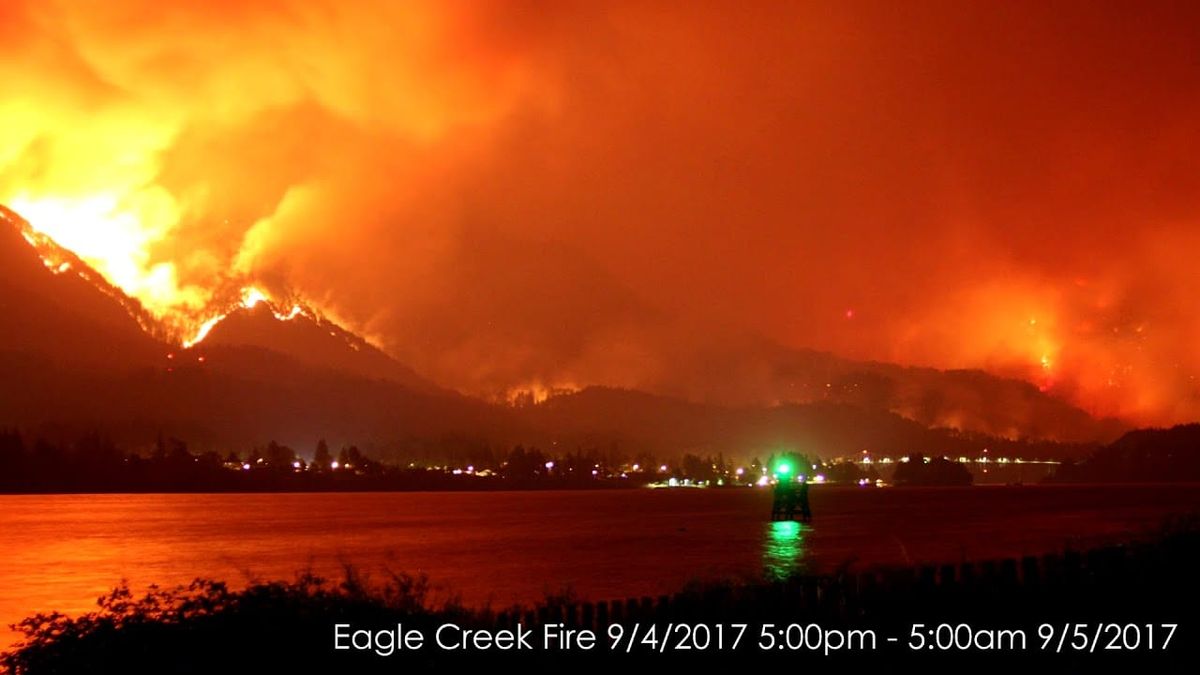
My advice is to take with a grain of salt any proposals to log forests in order to save them (or in order to save towns), unless they're set in the very specific context of thinning forests around human habitation paired with funding for smart home-hardening practices and defensible-space clearing.
Random logging projects in the backcountry tend to be a waste of money: they're best seen as a long-shot bet on the minuscule chance that a wildfire would encounter the patch of thinned forest in the limited time period in which the "treatment" remains effective. That window is a matter of several years in most cases.
And as for the big wind-driven fires that cause the most damage, there's no real preparation that can prevent such a fire from spreading.
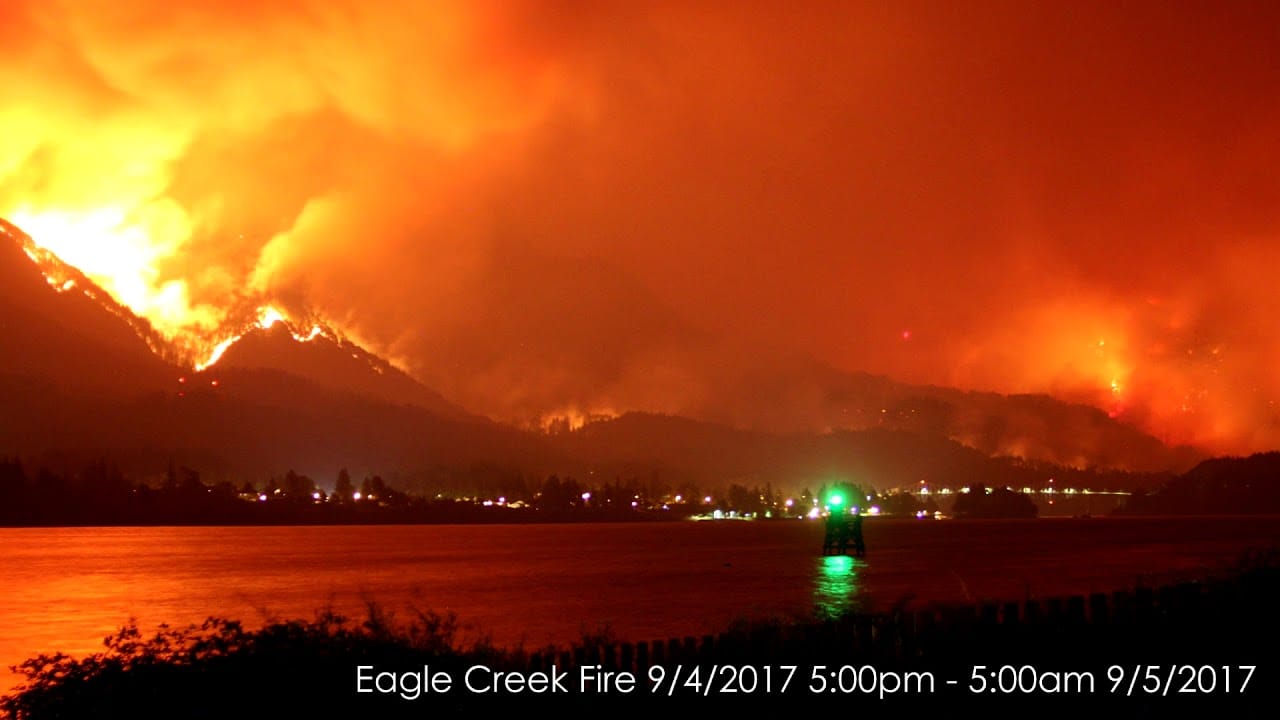
See the image above: that's the Columbia River along the Oregon-Washington border, looking across from the Washington side. The river's about a mile wide at that point. Yet that was not wide enough to prevent the wind from lofting embers from the Eagle Creek Fire on the Oregon side across the river to start multiple wildfires on the Washington side.
If even a natural firebreak a mile wide can fail, it's clear there's very little we can do to stop the biggest, weather-driven fires from spreading. Thinning and other logging projects in the backcountry, often billed as "fuel reduction," will have little chance of meaningfully slowing the most dangerous fires.
Projects to thin forests around towns and create firebreaks that can serve as firefighter staging areas—along with helping property owners do "fire hygiene" to make buildings less flammable—are the kinds of wildfire mitigation projects Congress should be funding.
Three pieces of news to follow up on my recent letter on marine protected areas:
Oceanographic reports on new research showing that across the Pacific and Indian oceans, tuna catch rates increased by an average of 12–18% over baseline in areas near large marine protected area (MPA) boundaries. The study attributes this to the MPA "spillover" effect, which occurs when recovered fish populations within a protected area spill over to the surrounding ocean and increase populations outside the boundaries as well.
Intuitively, less-mobile sea life could be expected to increase in a ring around an MPA, but researchers have questioned whether the same effect could be found for migratory fish.
Turns out, even for highly mobile species like tuna, there is a spillover benefit from MPAs. The study's authors write:
Recently created large-scale marine protected areas are potentially big enough to protect highly migratory species such as tuna, possibly leading to increases in abundance (a conservation benefit) and consequent spillover near protected area boundaries (an economic benefit). [1]
At the first-ever Melanesian Ocean Summit, Papua New Guinea has declared it plans to establish an MPA the size of the United Kingdom, covering more than 200,000 square kilometers. It will be a "no-take" zone, prohibiting "fishing and all other destructive activity." The nation will now launch its formal national process to finalize the reserve, which will become part of a network called the Melanesian Ocean Corridor and will include waters around Fiji and Vanuatu as well as Papua New Guinea.
According to Oceanographic:
The sanctuary will shelter an extraordinary breadth of life: scalloped hammerhead and silky sharks, spinner and bottlenose dolphins, Cuvier’s beaked whales, killer whales that return to the area seasonally, and deep-sea species whose existence in these waters is only beginning to be understood. [2]
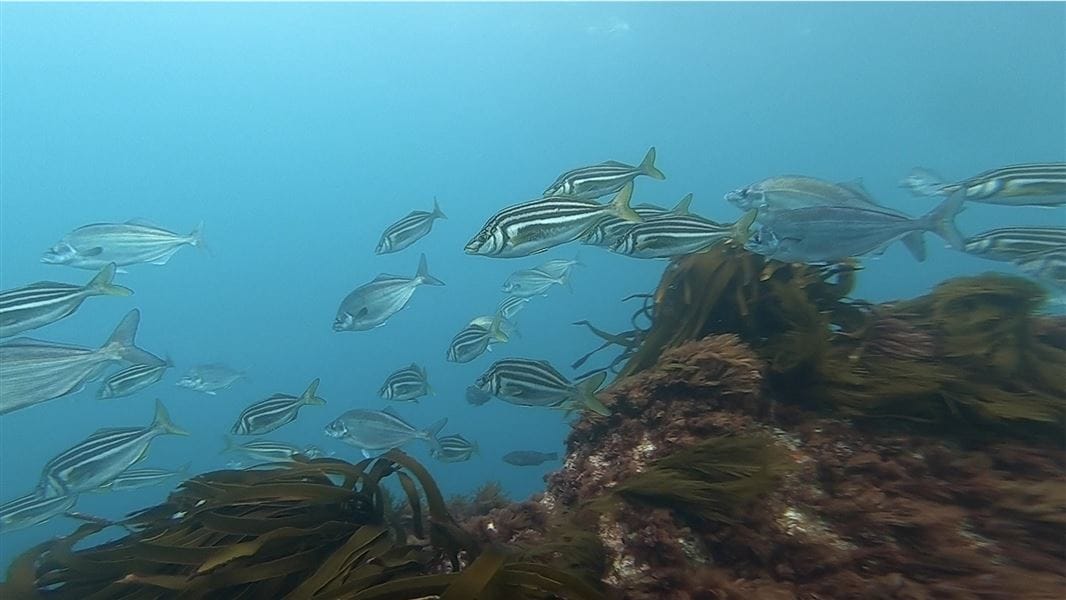
Also in the South Pacific, New Zealand has announced that its biggest marine reserve expansion in over a decade will be official as of July 1, 2026. It comprises 308 square kilometers along the southeastern coast of the South Island. A network of five fully protected reserves (with a sixth pending), it is called Te Au Roa o Te Rakihouia. In Māori, this "refers to the long wake or enduring ocean pathway of Te Rakihouia, son of the great explorer Rākaihautū and the first-known human to journey along and around the coastline of the South Island, conveying the enduring relationship between our people and the moana [ocean]."
Deb Haaland has won the Democratic nomination for governor of her home state of New Mexico. You may remember her as Biden's Secretary of the Interior, where she oversaw the administration's protection of a wide range of lands and waters, including national monuments and other protective designations.
Haaland's Interior Department also nominated the Okefenokee National Wildlife Refuge in Georgia for the UNESCO World Heritage List. Approval, which could come this July at the World Heritage Committee's meeting, would serve to bring international attention to this rare landscape. In the words of Brady Dennis at the Washington Post,
The swamp supports an astounding array of life, from black bears and red-cockaded woodpeckers to black gum trees and carnivorous plants with names such as hooded pitcher and golden trumpet. It is the headwaters for two rivers, the Suwannee and the St. Marys. And its vast peat deposits, formed by the slow decomposition of plants and 15 feet deep in places, store enormous amounts of carbon. [3]
Trump moved for the U.S. to again withdraw from UNESCO (he withdrew the U.S. during his first term; Biden subsequently rejoined). The withdrawal will not take effect until December this year, after any Okefenokee designation would occur. And for now, the U.S. will remain part of the UNESCO World Heritage Convention, the separate body that administers the World Heritage List.
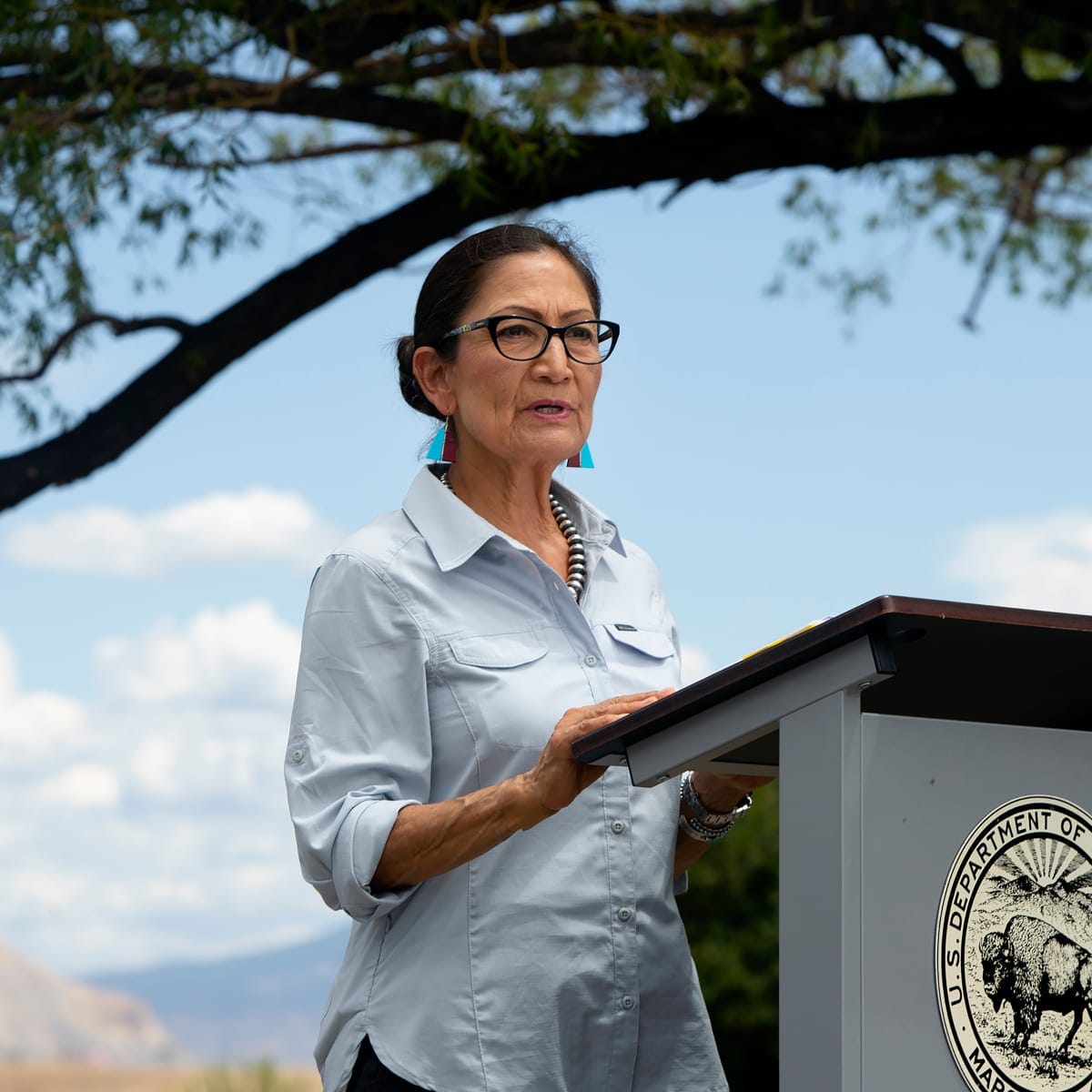
Haaland was also responsible for withdrawing public lands in the Pecos River watershed in New Mexico from new mining claims and leases back in 2024. This was meant to be a two-year pause to protect the river while the Bureau of Land Management and the Forest Service, which both manage portions of the impacted land, worked on a proposal to withdraw the lands from mining for the next 20 years. New Mexico recognizes the Pecos River tributaries and wetlands as Outstanding Natural Resource Waters for their importance for wildlife habitat, water supply, and recreation.
The Trump administration canceled the plan for the 20-year withdrawal last month. That announcement in the Federal Register also ended former Secretary Haaland's temporary 2-year withdrawal, meaning the watershed is now open to new mining claims.
A broad coalition of local Tribes, residents, businesses, and elected officials had consistently requested the mining withdrawal for years, and the community is unaware of any request to the Trump administration to reverse it. This continues a trend I've spotted: harmful administration actions taken at, apparently, no one's behest. Actions like this one seem targeted mostly at reversing the previous administration's environmental achievements.
Deb Haaland, a member of the Laguna Pueblo Tribe, identifies as a "35th-generation New Mexican." Should she win the governorship in November, I'll be excited to see how she challenges the Trump administration's bad acts in her state.
Talk to you soon,
Owl
🦉 Let me know! Are there any issues you're curious to hear more about? Stories you'd like me to follow up on or explore in more detail? Environmental news you'd like some context for?
You can reach me any number of ways: reply to this email, post a comment below, or tag me on Bluesky. Thanks for being here!
[1] Lynham, John and Juan Carlos Villaseñor-Derbez. "Evidence of spillover benefits from large-scale marine protected areas to purse seine fisheries." Science, Dec. 13, 2024.
[2] Hutchins, Rob. "Papua New Guinea announces largest MPA in its history." Oceanographic, May 15, 2026.
[3] Dennis, Brady. "Land by Georgia swamp, once slated for a mine, will become a wildlife area." The Washington Post, Mar. 23, 2026.
Sources:
https://www.congress.gov/crs_external_products/R/PDF/R48444/R48444.3.pdf
https://www.sltrib.com/news/environment/2026/06/11/mike-lee-senate-republicans/
https://www.congress.gov/bill/119th-congress/senate-bill/140
https://www.pew.org/en/research-and-analysis/articles/2026/02/18/an-update-on-the-roadless-rule
https://www.hcn.org/articles/as-roadless-rule-rollback-looms-grassroots-hearings-take-root/
https://oceanographicmagazine.com/news/papua-new-guinea-announces-largest-mpa-in-its-history/
https://www.science.org/doi/10.1126/science.adn1146
https://www.doc.govt.nz/our-work/marine-reserves-for-the-southeast-of-the-south-island/
https://insideclimatenews.org/news/31052026/georgia-okefenokee-swamp-nears-unesco-recognition/
https://www.landdesk.org/p/trump-cancels-pecos-mining-ban-process
https://www.govinfo.gov/content/pkg/FR-2026-04-06/pdf/2026-06658.pdf
*Inspired by Heather Cox Richardson's Letters from an American
Owl in America will remain free to all readers. Paid subscriptions help make possible the time it takes to track agency notices, court filings, specialized reporting, and environmental stories that can be easy to miss. If you can support this work with a paid subscription, thank you; if you can’t, thank you for being here. Please share these letters, speak up where you can, and keep paying attention to the living world. 🦉

Member discussion