August 10, 2026
Hello all~
My heart goes out to all the people and animals suffering in or displaced by the wildfires sweeping the Northern Hemisphere—or dealing with the smoky skies they bring. John Vaillant, author of Fire Weather: On the Front Lines of a Burning World, has written a good piece for TIME magazine on the current state of affairs and the (small but real) glimmers of hope he spots nonetheless.
Namely, he says that a spirit of cooperation and civic support prevented the major urban fires from being as deadly as we might have feared. And, while these fires are driven by climate change, in turn driven in large part by fossil-fuel burning, the transition to renewable energy is "underway and irreversible," despite the White House's (and oil CEOs') reluctance to admit it:
https://time.com/article/2026/08/08/what-happens-when-the-world-is-on-fire/
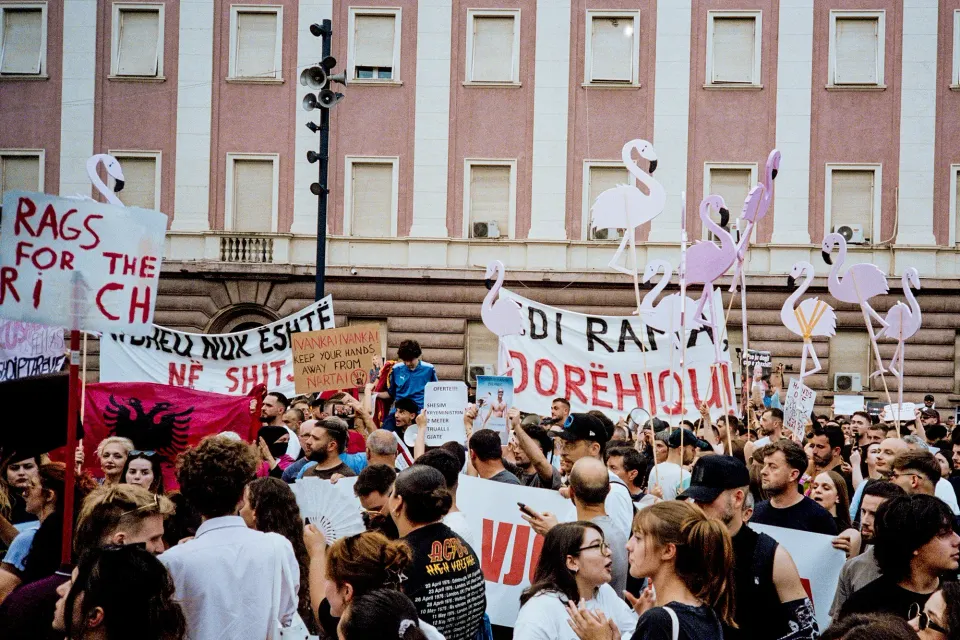
Following up on last month's story, protests in Albania's Flamingo Revolution—against the Kushner- and Trump-linked construction in a protected estuary to build luxury vacation suites—continue apace. We've reached Day 70 of massive protests in Albania's capital, Tiranë, calling for the resignation of Prime Minister Edi Rama, who is tangled up in Jared and Ivanka's scheme to construct resorts in the protected Vjosë River Delta before new regulations lock into place. More background on the Flamingo Revolution here:
https://www.owlinamerica.com/june-22-2026/
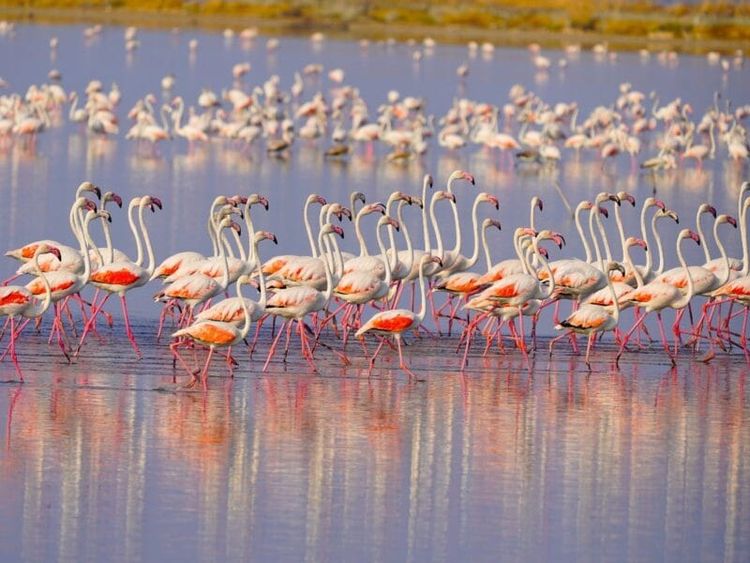
Protesters carry cut-out and inflatable flamingos, and signs with slogans like "Albania Is Not For Sale" and "Ivanka, Ivanka, Keep Your Hands Off of Narta! 🐾" Narta Lagoon is part of the protected area within Vjosë Wild Rivers Park that is a crucial stopover for migratory birds on the Adriatic Flyway and is at risk of development for this resort.
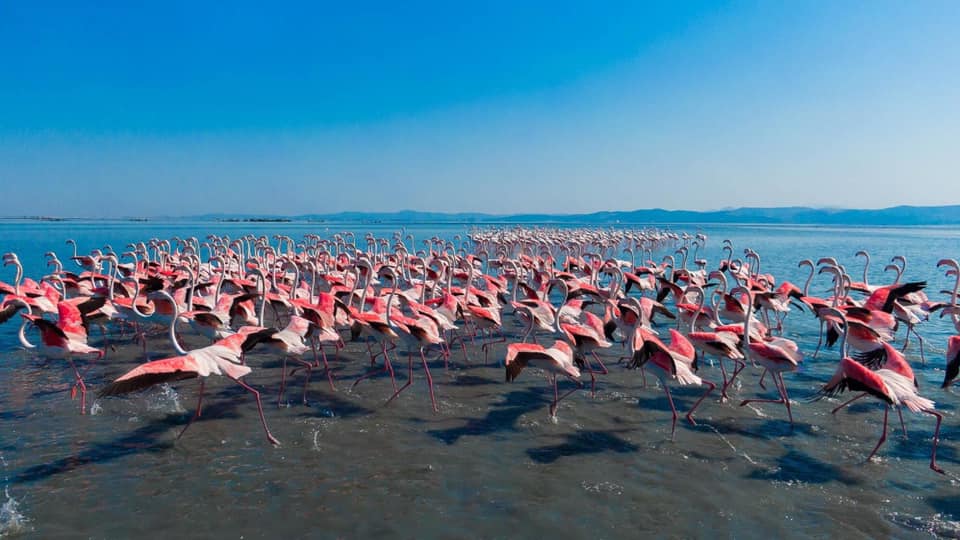
A story in Reuters recently revealed that Albanian corruption prosecutors suspect the protected land, sold to Kushner's Sazan Real Estate Development for this planned resort, may have been fraudulently obtained in a money-laundering scheme. The firm's name comes from Sazan Island, an unspoiled wildlife haven adjacent to the Vjosë Wild River National Park delta that Ivanka has earmarked for a "lifestyle" complex, separate from the 10,000-room resort also planned within the park.
The man who sold the land to Kushner's firm has been accused of importing South American cocaine into European ports, then laundering the money through fraudulently obtained property deeds. A group of nearby villagers has documents they say prove they are the rightful owners of the land and have never sold it:
There is also an ongoing corruption investigation of the prime minister himself, in part because of a new law he backed that allows luxury resorts to be built anywhere in Albania, even in protected landscapes like the Vjosë Delta. Mother Jones reports that the loophole must be repealed to comply with EU regulations before Albania can move forward with negotiations to join the union, so there is just a brief window now in which the resort and Ivanka's lifestyle complex could be built.
The Flamingo Revolution is a movement of mainly Gen Z Albanians, eager to see their country ascend out of the mire of corruption it has faced since emerging from behind the Iron Curtain in the 1990s. They're using social media to rally people to the streets every day to call for the prime minister's resignation, repeal of the luxury-resort loophole, and term limits for ministers. They are also asking for new laws to limit the potential for foreign investors like Trump and Kushner to run roughshod over environmental protections and Albanians' wishes.
I love the title of the Mother Jones piece: "How Jared Kushner and Ivanka Trump Sparked a Movement to Overthrow the Government of Albania." So good:
I recently remembered a term that describes what I find so powerful about Albania's protest movement: soliphilia. That's the notion, coined by Australian philosophy professor Glenn Albrecht, of the point at which the love of a place transmutes into a political commitment to saving it.
The Flamingo Revolution is not only rooted in political dissatisfaction and concern for human lives and livelihoods. It's also inclusive of wild land and wild lives. I think that the concern embodied in the protests—for the ultimate underdog, the natural world—makes it compelling in a way that other protest movements sometimes fail to achieve.
I also think the Albanians' movement bears out the principle of intersectionality in action. It recognizes that the corrupt capitalist system personified by the Trump family and other oligarchs victimizes across boundaries: it threatens fragile newer democracies like Albania's, fragile wetlands, fragile legal frameworks, fragile migratory bird populations, and fragile social support systems alike. There's a place in the resistance for all the victims of kleptocratic oligarchs; and for those who can't march in the streets—like river deltas and wild birds—the Albanian people will represent them.
Soliphilia invokes not just love of a place and willingness to take a political stand to protect it, but also solidarity with others who depend on that place. In this case, I love to see that the protest movement is in solidarity with flamingos and the other wild creatures that need the delta to live, as well as with the land itself.
So, in the spirit of solidarity: Viva Albania! Viva Flamingo Revolution!
Following up on a story from April, the UNESCO World Heritage Committee has added the Okefenokee Swamp, a protected wildlife refuge in Georgia, to its list of outstanding sites, which includes such wonders as the Grand Canyon and the Taj Mahal.
Brady Dennis of the Washington Post has been following the swamp's story from its nomination during Biden's term to the announcement last week that it had been added to the list of World Heritage Sites. He writes that an economic study of the proposal suggested it could double tourism to the Okefenokee and provide an additional 700 jobs in a relatively poor part of Georgia and just across the border into Florida. Increased awareness and visitation to this area—while potentially bringing the drawbacks of overtourism—could also serve as protective mechanisms against the ever-present threat of mining in the vicinity:
Increased visibility can also mean more people caring about, and fighting, these kinds of destructive proposals. Public support for conservation can result in efforts to purchase and set aside land around a protected area to cocoon it from industrial activity. A recent deal to protect nearly 8,000 acres of rare blackwater swamp along the edge of the Okefenokee from a proposed titanium mine was completed with a combination of state, nonprofit, and individual support. These kinds of coalitions typically arise from years of advocacy across many organizations and levels of government. UNESCO designation may make such efforts even more successful going forward. More background about the Okefenokee here:
https://www.owlinamerica.com/april-16-2026/
And here's the complete list of additions to the World Heritage List for 2026, which is fascinating:
https://whc.unesco.org/en/newproperties/
The United States is now responsible for a total of 27 World Heritage sites. As with all our responsibilities to the world, we seem to be letting our standards slip these days. The Chaco Culture National Historical Park in New Mexico was added to the UNESCO World Heritage List in 1987. UNESCO later renamed the listing "Chaco Culture" and expanded it to include Aztec Ruins National Monument and additional Chaco sites managed by the Bureau of Land Management (BLM).
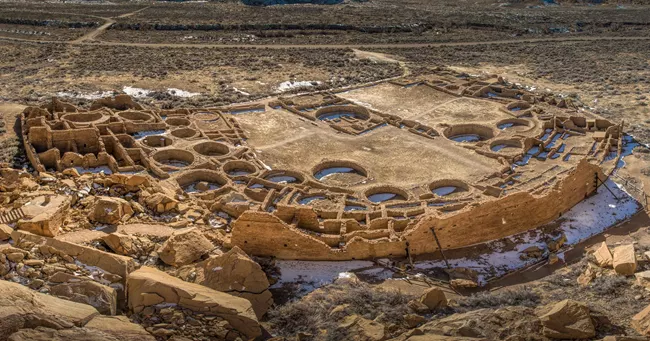
The National Trust subsequently added Chaco to its list of America's Most Endangered Places in 2026 after the Trump administration announced plans to initiate oil and gas activities in the surrounding area. Two regulatory changes—part of the administration's "energy dominance agenda"—are working in tandem to threaten this landscape.
The Land Desk recently wrote about the administration's plan to weaken the historic preservation law that has protected the "buffer zone" around the park. Not just an empty area surrounding a high-value site, the buffer zone itself contains thousands of Chaco sites.
The buffer resulted from decades of advocacy by Tribes, advocates, and the local community, withdrawing lands in a 10-mile radius around the park from most oil and gas drilling activities. The ancient Chaco Great North Road, an aspect of the ancient people's cosmologically attuned construction, is just one such site that is outside the park boundaries but within the buffer zone.
The historic preservation law requires oil and gas companies to survey potential drilling or construction sites on public land for archaeological or cultural artifacts. If any of these are found, Section 106 of the law further requires project managers to "consult with tribal nations or other potential stakeholders, to identify potentially affected properties, and to work to avoid, minimize, or mitigate adverse effects on those properties."
https://www.landdesk.org/p/trump-looks-to-gut-a-key-historic
The Trump administration's proposal would remove the consultation role of Tribes, concerned citizens, and local governments. If oil and gas companies find historic sites in the areas they'd like to develop, they will inform the agency as usual (typically, BLM). But now, BLM would only release a list of sites to the Tribes and others, who can then submit comments and suggestions after the fact. Public input will no longer be compulsory, but will be at the discretion of the agency.
And it will move Tribes and state historic preservation offices from inside the planning circle to outside. Thus, the groups with the most expertise on the significance of these sites will no longer be able to assist in designing mitigation to preserve cultural heritage and archaeological sites. Instead, they'll only be able to submit comments after the plans have already been developed. When projects are far advanced in planning, they are unlikely to be altered significantly in response to suggestions from "outsiders," no matter what archaeological treasures may be at risk.
https://ncshpo.org/2026/07/20/the-end-of-section-106-as-we-know-it/
The proposed change to the law is currently under review at the White House Office of Management and Budget, with a discussion meeting scheduled soon. After it clears this review (which it almost certainly will, as the law also stands in the way of some of the president's pet projects in D.C.), it will be published in the Federal Register and opened for public comment.
The proposal weakens the protective overlay granted by the National Historic Preservation Act. A second protective layer was provided by the buffer zone itself. It was created by a BLM rule in 2023 that withdrew the lands in the 10-mile radius from new oil and gas claims. The Trump administration has concurrently proposed dismantling the buffer zone altogether by opening it back up to oil and gas activities.
Together with weakening the historic preservation law, this could mean a great deal of destructive activity going forward without much to stop it, legally.
https://www.landdesk.org/p/on-energy-binges-data-centers-and
BLM is currently considering public comments, submitted last month, on whether to rescind the buffer zone, enacted through Public Land Order No. 7923.
From the National Trust for Historic Preservation, here is a bit of what the world is losing if we fail to protect this heritage for which we, as a nation, are responsible:
https://savingplaces.org/stories/11-most-endangered-historic-places-2026
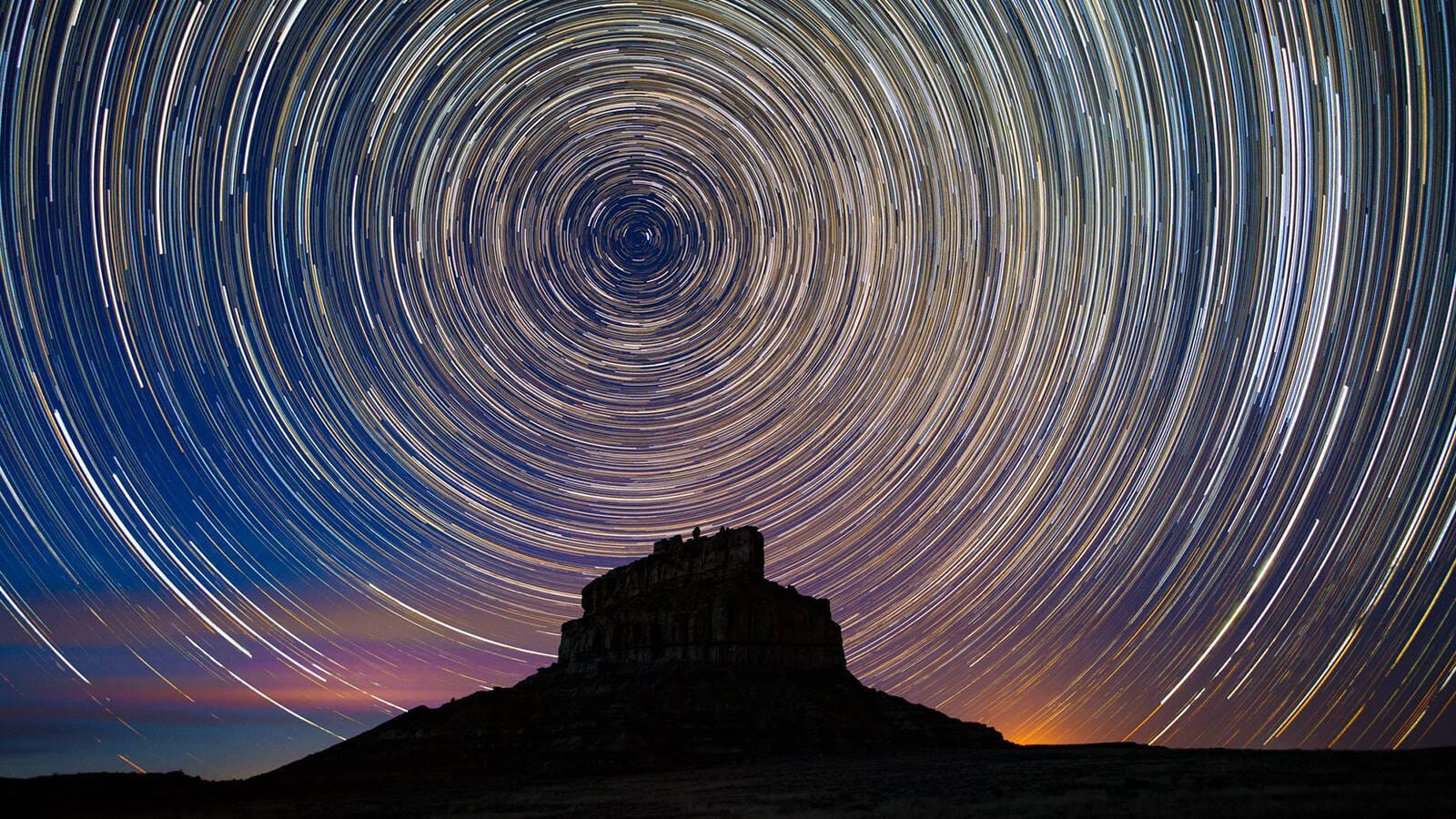
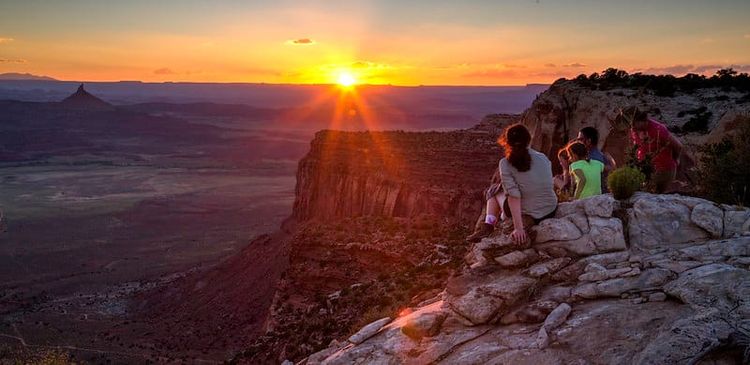
A final thought: The Chaco peoples were experts in the night skies. In the centuries surrounding the turn of the last millennium, from about 850–1250 AD, they built monumental structures aligned with solar and lunar cycles as well as true north, and certain features of their work remain enigmatic to us.
https://www.archaeologysouthwest.org/wp-content/uploads/The-Great-North-Road-A-Cosmographic.pdf
The Chaco Culture area is still one of the best places on Earth to commune with the stars and has been recognized as an International Dark Sky Park. Like a UNESCO listing, recognition by DarkSky International is more honorary than legally protective; but also like a UNESCO designation, it brings international attention to some of the world-class places for which we are responsible.
https://darksky.org/places/chaco-culture-national-historic-park-dark-sky-park/
Talk to you soon,
Owl
Owl in America traces the actions of the current U.S. administration from the perspective of an environmental lawyer. These notes follow how, in a time of rapid political and ecological change, governmental decisions are felt in the living world.
Owl in America will remain free to all readers. Paid subscriptions help make possible the time it takes to track agency notices, court filings, specialized reporting, and environmental stories that can be easy to miss. If you can support this work with a paid subscription, thank you; if you can’t, thank you for being here. Please share these letters, speak up where you can, and keep paying attention to the living world. 🦉
Member discussion