July 18, 2026
Owl in America is a series of letters tracing the actions of the current U.S. administration from the perspective of an environmental lawyer. These notes follow how, in a time of rapid political and ecological change, governmental decisions are felt in the living world.
Hi all~
If you've been with this newsletter for a while, you may recall that I consistently recommend The Land Desk for its author's deeply researched pieces on the American West, all backed up by decades of experience as a writer and editor-in-chief for High Country News. Jonathan Thompson knows more about public lands than almost anyone I can think of, and his opinions on water, land use, and open space are driven by data that he's spent years combing through.[1] He has ridden the waves of anti- and pro-public lands administrations over the years, and he typically doesn't get too fired up about much of the cacophony emanating from Washington, D.C.
So when I read his uncharacteristically fiery piece this morning on Trump's reduction of two national monuments this week, my ears perked up. Subtitled "It's far, far worse than the last time Trump took his Sharpie to cherished public lands," the piece goes on to describe the implications of the action that:
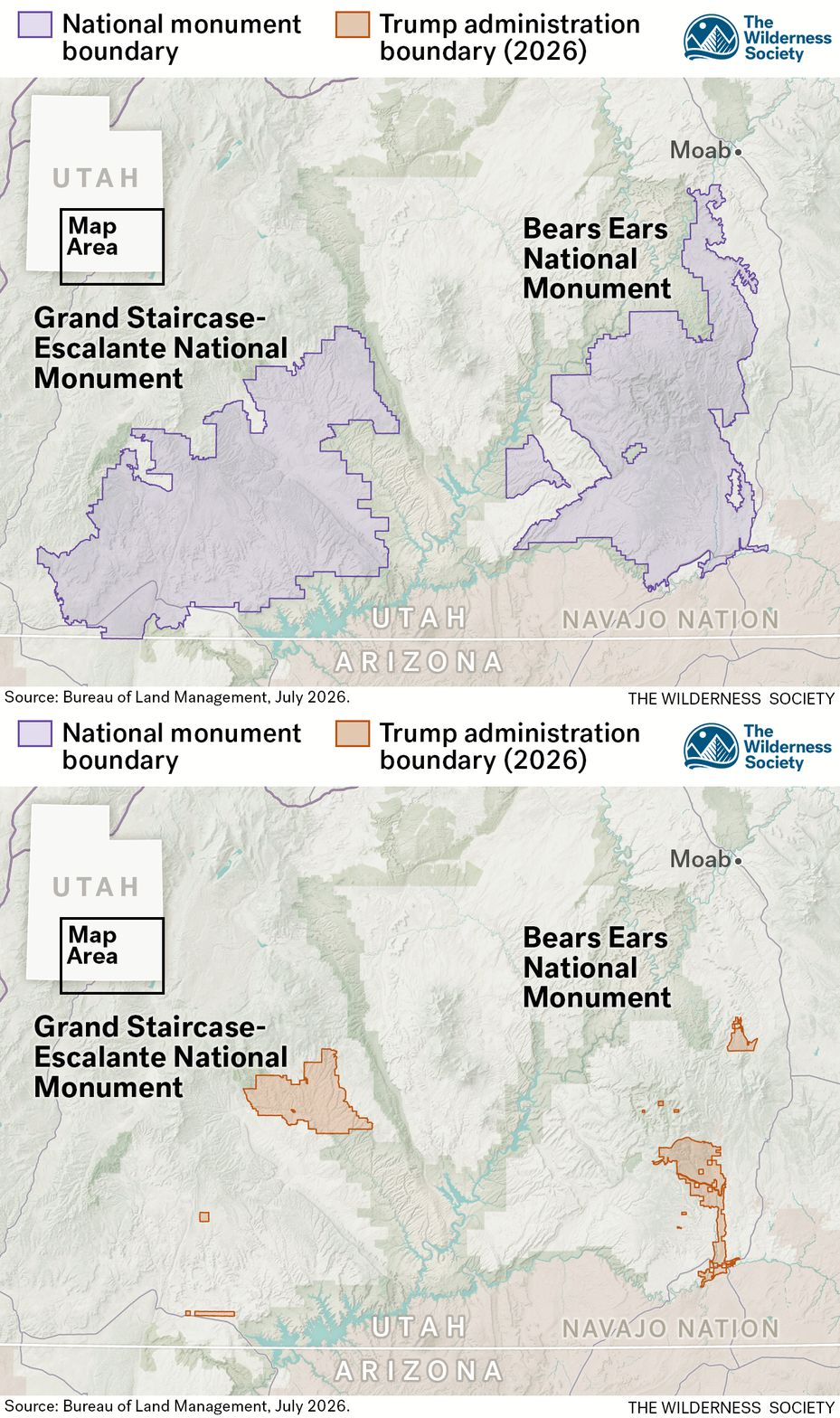
dramatically reduced the size of Bears Ears National Monument and Grand Staircase-Escalante National Monument, both in southern Utah, thereby removing national monument protections from more than 2.9 million acres of public lands and the antiquities therein. He also disbanded and terminated the Intertribal Bears Ears Commission, a direct attack on the tribal nations that first proposed a national monument for their homelands and that have been co-managing it until now.
The move reopens huge swaths of Utah’s canyon country to new mining claims and mineral leasing, reviving the potential for oil and gas drilling, uranium mining, and potash, lithium, and coal extraction in previously protected areas. It also scraps the existing resource management plans for both national monuments, throwing even the remaining shards of protected areas into regulatory uncertainty.
Read the piece in its entirety—but do so in the next couple of weeks if you're not a paid subscriber to The Land Desk, as his pieces slip behind a paywall after 30 days. It puts into context what else is at stake with this action:
https://www.landdesk.org/p/trump-slashes-nearly-3-million-acres
As a reminder, Obama established Bears Ears in 2016. Trump shrank it in 2017. Clinton established Grand Staircase-Escalante in 1996. Trump shrank it in 2017. Litigation ensued over whether a president has the authority to reduce the size of monuments, but it was unresolved when Biden took office. He subsequently restored them to their former size, in effect rendering the cases moot. These legal challenges will likely be revived—and new ones filed—now that Trump has attempted to shrink the same monuments again, to even smaller remnants than he did the first time.
None of this is a surprise. In January 2025, just days before Trump took office again, I did a deep dive into the public lands chapter of Project 2025, the right-wing playbook for Trump's second term. Shrinking national monuments, as the president has done this week, was explicitly planned. The authors also laid out a multi-pronged attack on the Antiquities Act, which is the law that gives presidents the power to declare national monuments:
https://www.owlinamerica.com/january-17-2025/
We can look across the three branches of government at how anti-public-lands forces have been working against national monuments in each. In Congress, legislative efforts to weaken or limit the Antiquities Act have stalled.
"Sell It All" Senator Mike Lee of Utah introduced legislation in 2025 to revoke the Antiquities Act's grant of presidential authority to declare national monuments, reserving that power for Congress alone (S. 220). Representatives Celeste Maloy (R-Utah) and Mark Amodei (R-Nevada) introduced its partner bill in the House (H.R. 521); both have sat in committee for over a year. Due to their overwhelming unpopularity, they are widely predicted to die there. A separate bill that would require congressional approval of new monuments (H.R. 2645) has also failed to advance out of committee and is not expected to become law.
In the executive branch, Trump can try to wield his Sharpie to shrink monuments, as he did this week for Bears Ears and Grand Staircase-Escalante National Monuments. He can also, according to a recent legal analysis by the Justice Department, revoke monument designations undertaken by Biden in the final days of his term. The Office of Legal Counsel opinion reverses nearly 90 years of Justice Department precedent concluding that presidents may only create, but may not shrink or eliminate, national monuments.
https://www.justice.gov/olc/media/1403101/dl
This came a few months after the White House released a list of presidential actions that included reversing two new national monument designations finalized by Biden: Chuckwalla and Sáttítla Highlands National Monuments, both in California. Those two action items were then dropped from the list without explanation, leaving the two new monuments in place for now. I wrote about them in early 2025:
https://www.owlinamerica.com/january-7-2025/
As for the third branch of government, the judiciary's role in the attack on the Antiquities Act has received far less attention. What most left-wing observers did not plan for—it was foreseen only by a few very astute Supreme Court observers—was how corrupt the Roberts Court would turn out to be. While lower courts have mostly remained staunch in upholding national monument designations, Chief Justice John Roberts has explicitly invited litigants to bring a case challenging expansive uses of the Antiquities Act:
https://legacy-assets.eenews.net/open_files/assets/2021/03/22/document_gw_18.pdf
Attorney Lisa Graves, an expert on right-wing influence and author of Without Precedent: How Chief Justice Roberts and His Accomplices Rewrote the Constitution and Dismantled Our Rights, makes the point that progressives and liberals have so far under-reacted to the Supreme Court's recent decisions because of a lingering sense of fidelity to the institution of the Court:
In past decades, the Court served as a force that expanded constitutional protections for additional classes of people through its holdings on equal protection, due process, and other enumerated rights. That Court is gone, but some of us trained to respect that institution as a neutral arbiter have been slow to adjust to the new reality of this right-wing Court. It is, in effect, enacting a legislative agenda by inviting and choosing cases to rule on. Those rulings then go on to act as judge-made law for a right-wing agenda that is too unpopular to get its laws made the old-fashioned way, through congressional action.
I cannot recommend this interview more highly; Lisa Graves clearly lays out the deep peril represented by the Roberts Court and what can be done before it's too late:
https://podcasts.apple.com/us/podcast/5-4/id1497785843?i=1000773854036
In the case of this week's national monument reductions, it is imperative that we understand these not as mere Trump petulance, where he reverses Biden's wins to be vindictive. In fact, in addition to opening up more public lands to more extractive activities, this is almost certainly a move to invite litigation.
Environmental groups and Tribes, including those that share co-management responsibility for the monuments, will sue. It would be madness to leave standing the precedent that a president can just erase most of a national monument. Any case will almost certainly turn on whether it's legal for a president to reduce a national monument as Trump has done, as the Antiquities Act says nothing about that.
According to the strategy of pipelining cases to a Supreme Court that wishes to rule on them, one or several of these cases will be appealed. One or more appellate court decisions will in turn be presented to the Supreme Court, and the Roberts Court will grant review. In all likelihood, a Roberts majority will issue an opinion that sharply limits or functionally extinguishes presidential power under the Antiquities Act. It might go further and call into question the entirety of the national monument system.
If carried out, this judge-made law can be an end-run around the need for legislative action to restrict national monuments, which as we've seen, is so unpopular that related bills languish and die in committee.
If you catch yourself saying, "Surely not," remember that this is the radical Court that overturned the "settled precedent" of Roe v. Wade in Dobbs v. Jackson Women's Health.
It is the Court that erased decades of settled law on agency independence:
✧ It held that principal agency leaders, even of congressionally designated "independent" agencies (except the Fed), are subject to being fired by the president in Trump v. Slaughter;
✧ It held in Loper Bright Enterprises v. Raimondo that courts are no longer required to defer to agency interpretations of ambiguous statutes (under Chevron)—a change that may prove particularly consequential for scientific and financial regulation.
And this month's birthright citizenship decision in Trump v. Barbara that was reported by most outlets as a 6-3 win in favor of retaining citizenship was, in constitutional reality, a close-shave 5-4. The case asked whether Trump's 2025 executive order denying birthright citizenship for children whose parents are not citizens or permanent residents complied with the 14th Amendment, which states:
"All persons born or naturalized in the United States, and subject to the jurisdiction thereof, are citizens of the United States and of the State wherein they reside."
It's a case that's so open-and-shut that it (a) should never have received a hearing at the Supreme Court at all, but if it did, it (b) should have been an easy 9-0 in favor of upholding birthright citizenship.
Despite the headlines, it's most certainly not a relief that birthright citizenship withstood the test and lives on by a bare majority. Justice Kavanaugh concurred in the judgment that overturned Trump's executive order, making it technically 6-3. Yet his separate opinion dissented: "In my view, the Executive Order [that limited birthright citizenship] does not violate the Fourteenth Amendment."
https://newrepublic.com/post/212540/brett-kavanaugh-republicans-birthright-citizenship
He agreed in principle with the dissenting justices—Alito, Gorsuch, Thomas—that limiting birthright citizenship would be constitutionally acceptable. He just believed that an executive order was not the proper legal vehicle to achieve that and suggested congressional action might do the trick. His theory, when combined with the dissenters', signals to the administration and right-wing policymakers that a legislative attempt to restrict birthright citizenship might well survive review. The fact that only one justice stands between this precedent and overturning a key part of our Constitution is incredibly alarming.
The three (admittedly foulmouthed) lawyers on the 5-4 podcast put it this way, in an episode well worth the listen if you want to have a good laugh while learning the ins and outs of Trump v. Barbara, the birthright citizenship decision:
This potentially revolutionizes the way this country works. It just essentially nullifies the entire constitution and any semblance of rights you have, because you can always just be plopped into a bucket of non-citizens where none of that sh*t applies to you anymore. Again, as Peter said at the top, this was five to four.
This was one vote away. Republicans currently have the presidency and the Senate. If John Roberts has one of his mystery seizures again and dies this summer, they could replace him with the vote to make this go the other way.
If Republicans hold the Senate in the 2026 midterms, they'll have two more years for Sonia Sotomayor to have a health scare, for John Roberts to have a health scare. For anybody in that five vote majority to need to retire for one reason or another and replace them with the fifth vote to overturn birthright citizenship. The odds get worse if they hold the presidency and the Senate in 2028.
Like, this is a five alarm fire. The fact that this was one vote away should be lighting representatives' and senators' and pundits' hair on fire.
https://podcasts.apple.com/us/podcast/trump-v-barbara/id1497785843?i=1000775762527&r=3934
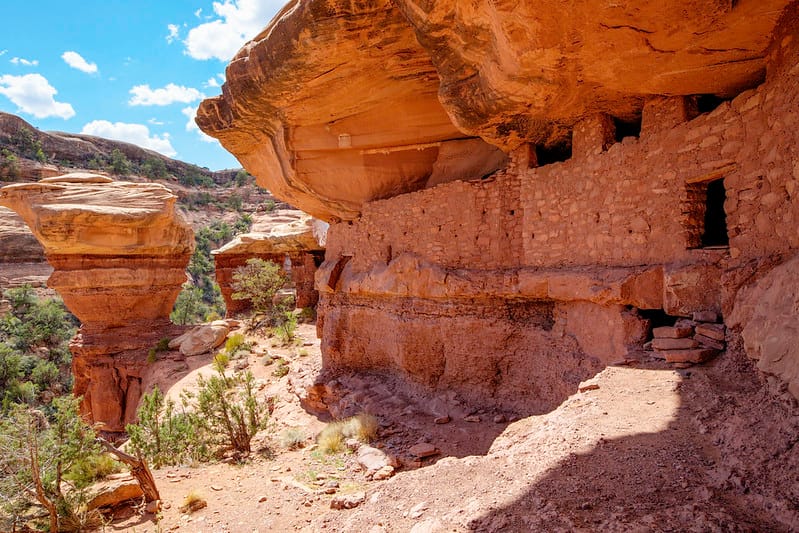
Given how radical these decisions (and many others I didn't go into) have been, we should be quite prepared for this Supreme Court to take drastic action against the Antiquities Act and, by extension, a large portion of our public lands system. I am concerned that this Court might do something as extreme as invalidating decades of monument designations by, for example, overturning precedent that has allowed presidents to set aside large landscapes (such as, most famously, the Grand Canyon) as monuments.[2]
Again, I recommend this interview with Lisa Graves to get a clear handle on what's happening here and what can still be done.
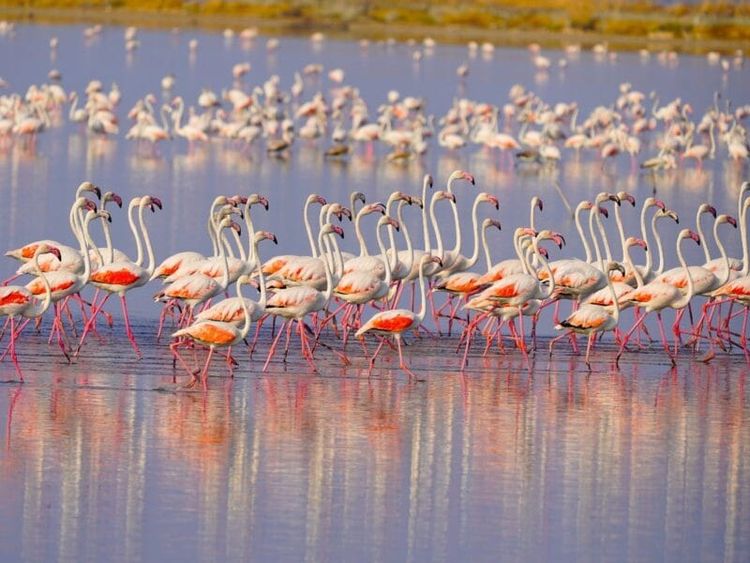
An update on the Flamingo Revolution, which I wrote about in my last newsletter:
https://www.owlinamerica.com/june-22-2026/
Albanians continue to protest in massive numbers, calling for the resignation of their prime minister in connection with Jared Kushner and Ivanka Trump's planned mega-resort in an internationally significant estuary system along the Albanian coast.
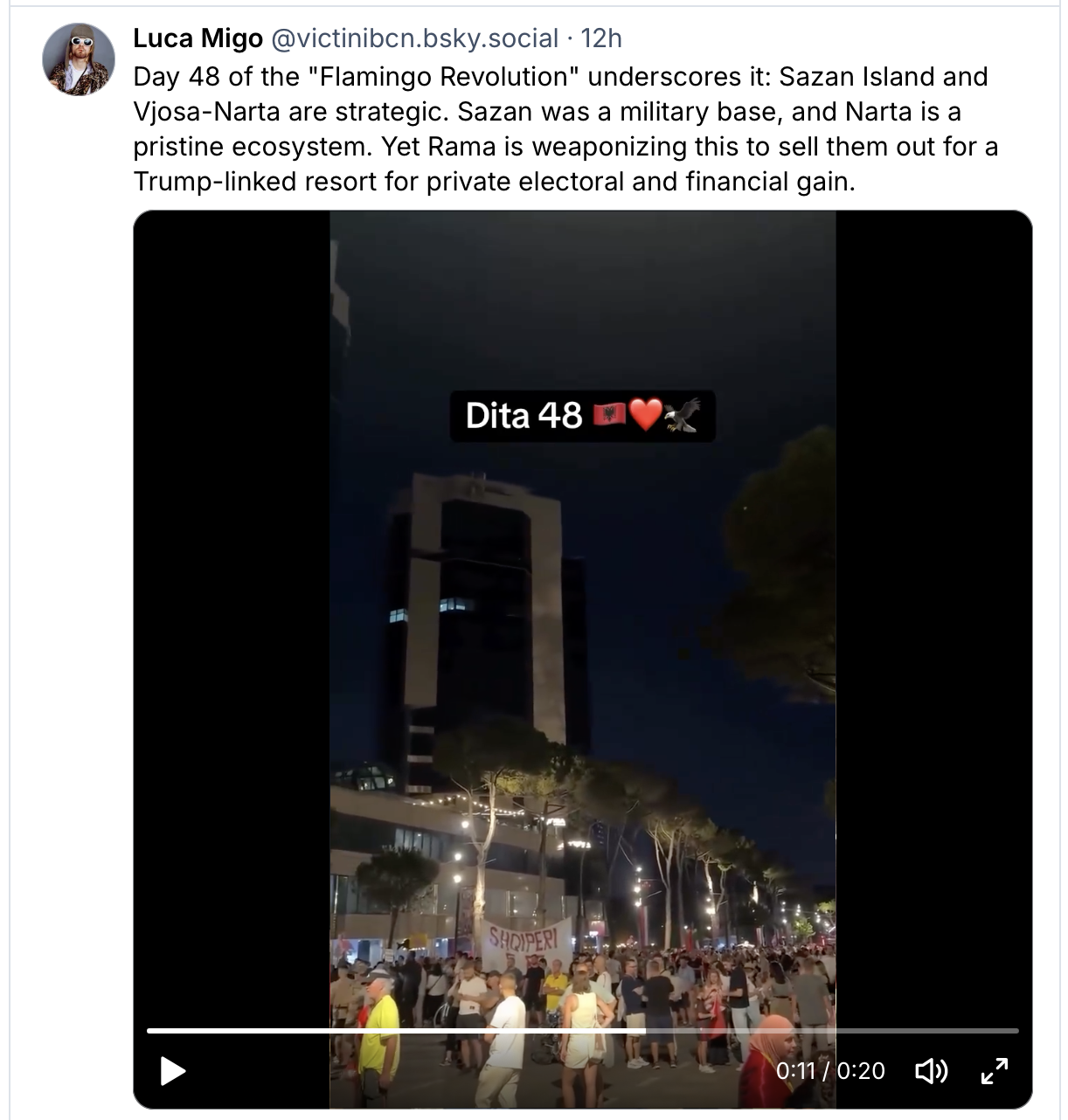
🇦🇱🦩 Viva Albania! Viva Flamingo Revolution! 🦩🇦🇱
Talk to you soon,
Owl
[1] I recommend the following sources of public-lands analysis by independent journalists:
Please take care with other public-lands newsletters; one popular one in particular has been sharing pieces with factual and legal inaccuracies that appear to have been generated by AI.
[2] The Grand Canyon, although originally set aside as a national monument, went on to be protected as a national park, so it would be safe should the national monument system be upended. But many other unique and invaluable American lands would not be.
Additional Sources:
https://crooked.com/podcast/scotus-just-barely-preserves-birthright-citizenship/
https://economicpopulist.substack.com/p/after-trump-v-slaughter-the-answer
Owl in America will remain free to all readers. Paid subscriptions help make possible the time it takes to track agency notices, court filings, specialized reporting, and environmental stories that can be easy to miss. If you can support this work with a paid subscription, thank you; if you can’t, thank you for being here. Please share these letters, speak up where you can, and keep paying attention to the living world. 🦉

Member discussion