April 11, 2025
Owl in America is a series of letters tracing the actions of the current U.S. administration from the perspective of an environmental lawyer. These notes follow how, in a time of rapid political and ecological change, governmental decisions are felt in the living world.
Hi all~
Before I start today, a quick note. I began the Owl in America project by updating you frequently about the Trump administration’s attacks on the natural world. Before the administration took power, it was straightforward enough—if depressing—to comb through the pronouncements and policy documents laying out what the president and his backers intended for our public lands and the environment.
Now that they are carrying out these plans to the letter, with a speed and vindictiveness that take my breath away, I find I can’t type the words. It’s not a case of “I told you so.” It’s something more like, “I saw this coming but couldn’t prevent it and now I am watching as all I love and built my life on is burning.” And I find I can’t use the written word to describe what it’s like seeing the destruction of all the laws that, however imperfectly, protected our beautiful lands and wild lives from being ground up in the maw of corporate capitalism. Everything I would say here is instead written on my heart, which seems to be where it will stay, for now.
If you are interested in tracking that destruction as it happens, though, several other writers on Substack have taken up the charge. I probably know more about the ‘nature and environment’ writing community on this platform than anyone (if you’re not aware, my other publication is a directory and newsletter of eco-writers and artists on Substack), and for that purpose, I spend hours each day tracking new work in the category.
But I keep particular tabs on all the folks who are writing about public lands and environmental laws, my area of specialty. There is a bit of inaccuracy floating around in this sub-niche. However, here are two writers I can recommend to keep you accurately posted:
The links above should take you to the homepages for their Substack newsletters, where you can subscribe to receive their posts.
Now, on to today’s note.
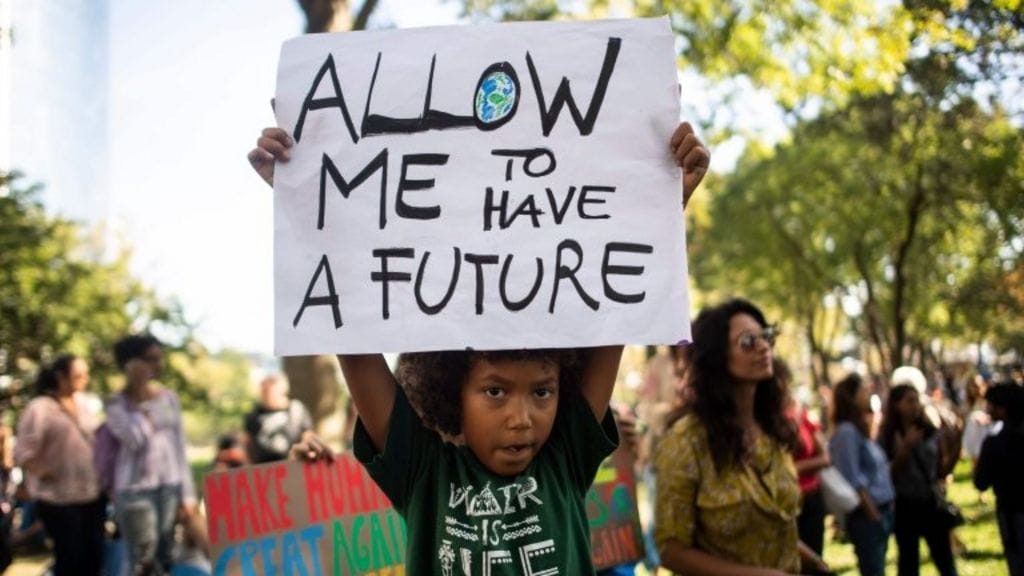
Reading aloud a chapter of my kid's American history book yesterday, I had to stop because grief had closed my throat. I passed it off as an itchy cough, then left the room to get a lozenge and collect myself.
The passage that struck my heart was this, in a chapter teaching the Bill of Rights through the story of 1960s gay-rights activist José Julio Sarria. I’m going to quote nearly the entire section on the First Amendment to the Constitution, and I encourage you to read it, even though it’s written for middle-grade children. It explains in clear language, intended to inspire young minds, just what makes this amendment so critically important in a free society:
The First Amendment guarantees not one, not two, but five major freedoms. The first is freedom of religion. This means you are free to practice whichever religion you choose, or none at all, as long as you do not hurt anybody else.
Next, the First Amendment guarantees freedom of speech. The government cannot stop you from expressing your opinions. . . .
The third freedom is freedom of the press. The government is not allowed to censor or punish journalists for reporting the news. This is a very important freedom even if you are not a reporter. Journalists report on what government officials do. This helps keep us informed, and it gives officials an incentive to act honestly. . . .
Next, the First Amendment guarantees the freedom of peaceable assembly. The government cannot keep people from coming together in peaceful groups. . . .
Finally, the First Amendment gives us the right to petition our government for “redress of grievances,” which means we can ask the government to take something wrong and make it right. We can write letters to government officials, pass around petitions for our neighbors to sign, and file lawsuits in court to make changes to our society. [Source]
I’m sure, like me, that as you read the list of First Amendment rights, your mind was busily cataloging examples of current U.S. government actions to violate or outright dismantle each one. By the time I reached the end of this section in our read-aloud yesterday, the ongoing, multi-prong attack on American rights was clear as day. That’s why my throat closed in grief, yes, but also in fear. A parent’s terror, for my child, for all our children, for those with disabilities, recent immigrants, anyone identifying as female, identifying as queer, identifying as anti-Trump.
We have worked so damn hard to make life in this country good for all of them, for anyone who is not among the group—wealthy, white males—that the original U.S. Constitution gave full human rights to.
It didn’t help that the history chapter had just run through the Bill of Rights from the Tenth Amendment backward, and my mind had increasingly recoiled as it generated examples of how the executive is currently violating them. We’d already worked through, for example, the Eighth Amendment right to be free of cruel or unusual punishment (being horrifically violated in the El Salvador deportation cases on an ongoing basis). The Sixth and Fifth Amendment rights to a jury trial and due process (El Salvador, again). The Fourth Amendment protection against unlawful search and seizure.
The only right this government seems intent on upholding is the Second Amendment right to bear arms. Maybe that one, too, will come under attack as the administration grows bolder and eventually turns even its most pro-gun supporters against it.
By undermining our First Amendment rights, the executive branch has effectively declared war against the U.S. population. Attacking law firms, political opponents, activists, the universities, public education, journalists as individuals and the press as an institution, students of Muslim heritage speaking against Israel’s genocide—all of it, stripping our First Amendment rights. Striking fear into our hearts so we obey in advance: we stop writing, we stop calling, we stop protesting. And why wouldn’t we? We don’t want to end up in El Salvador.
Have you stopped to think about why we even know what the inside of a Salvadoran prison looks like? We’ve all gotten so used to reality TV that sometimes we forget that it’s all staged. Here’s this black-box prison, supposedly so far beyond our government’s grasp that according to the administration, once a person has disappeared into it, there’s no possibility of retrieving them. This is true even for someone like Kilmar Abrego Garcia, whom it says it sent there accidentally. Yet for weeks now, we’ve been shown image after image of studio-lit prisoners, arranged in their cages, along with the occasional drop-in photo ops of officials like Kristi Noem. (Somehow she was able to get in and out of this black hole from which, supposedly, no one ever emerges.)
We’ve been given stage-directed video clips of shaven prisoners being frog-marched into detention. We’ve been deluged with overhead images of near-naked bodies in uniform contorted positions, packed tight as sardines.
Do we normally see the inside of prisons, well-lit and stage-managed to perfection as this one is? Do we get infomercials for Guantanamo, or the supposed black-ops prisons aboard ships in international waters? No, and that’s because all this CECOT publicity is pure fascist propaganda.
Contrast the photo below, taken inside an El Salvadoran prison by a human-rights organization six years ago, with the flood of images we’ve seen this year.
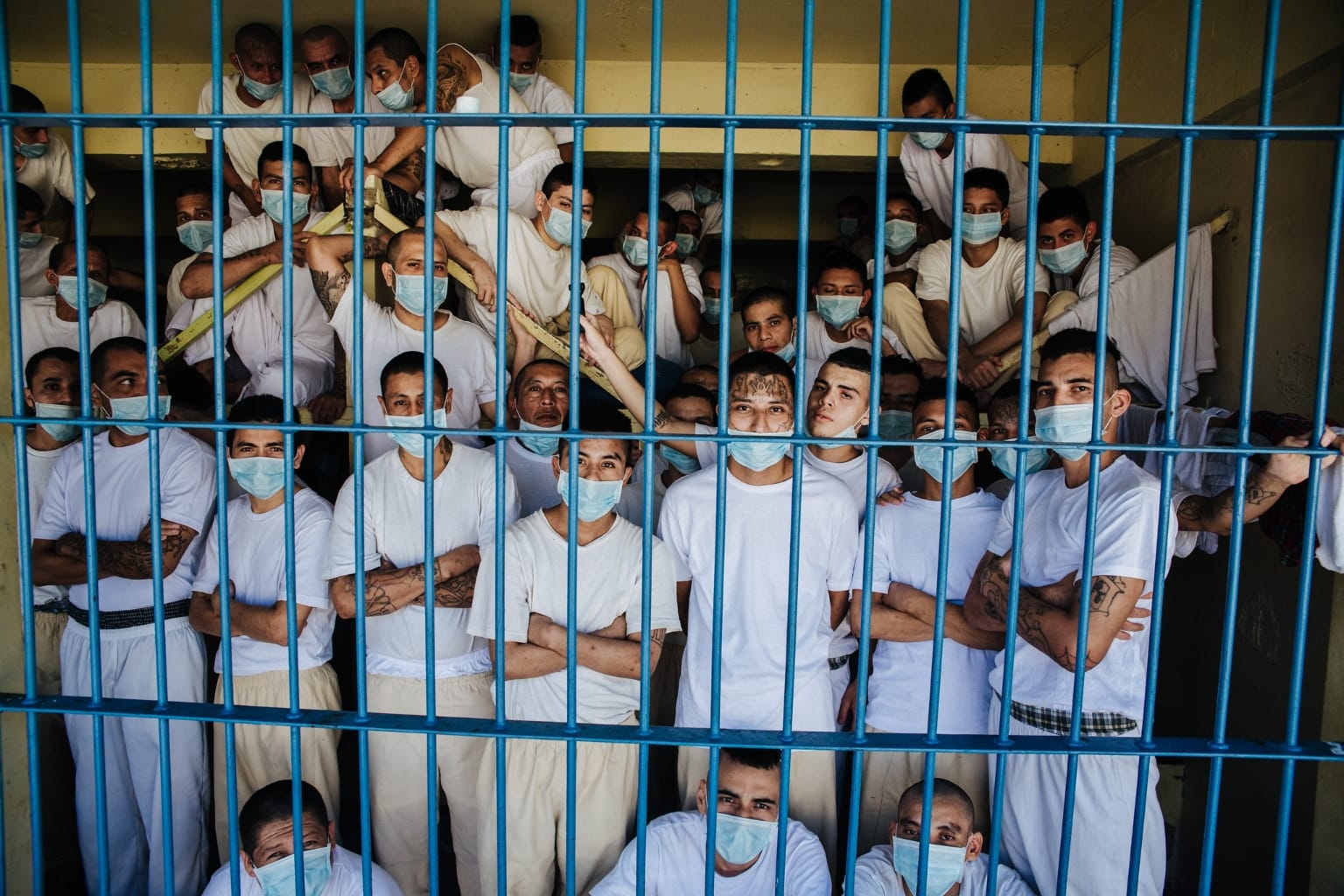
See the evolution in just five years from the disheveled men packed into a yellowed, grimy cell, the hair still on their heads, the photo taken from close enough to see their wrinkles, their scars, their humanity? It’s horrible stuff still, but it’s human.
Notice in recent images the harsh, almost clinical lighting, the bright white paint, the perfect choreography of the prisoners’ bodies, the identically shaved heads, the wide angles, the inhuman precision. It’s dehumanizing. It’s dystopian.
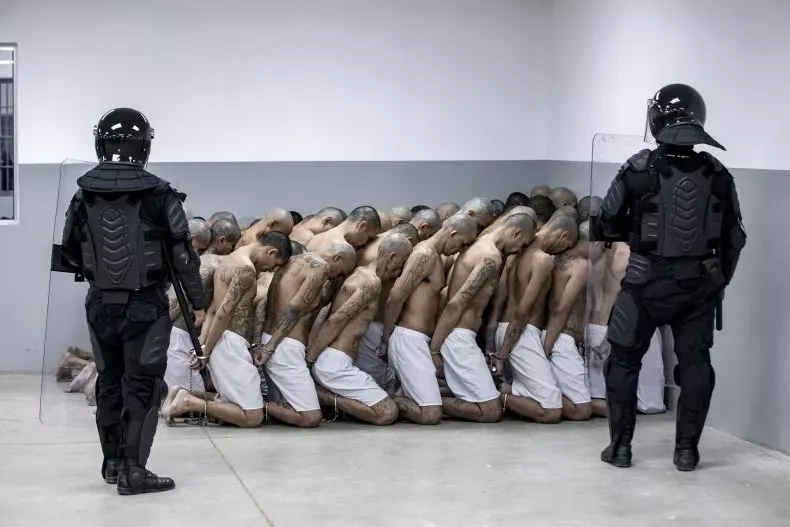
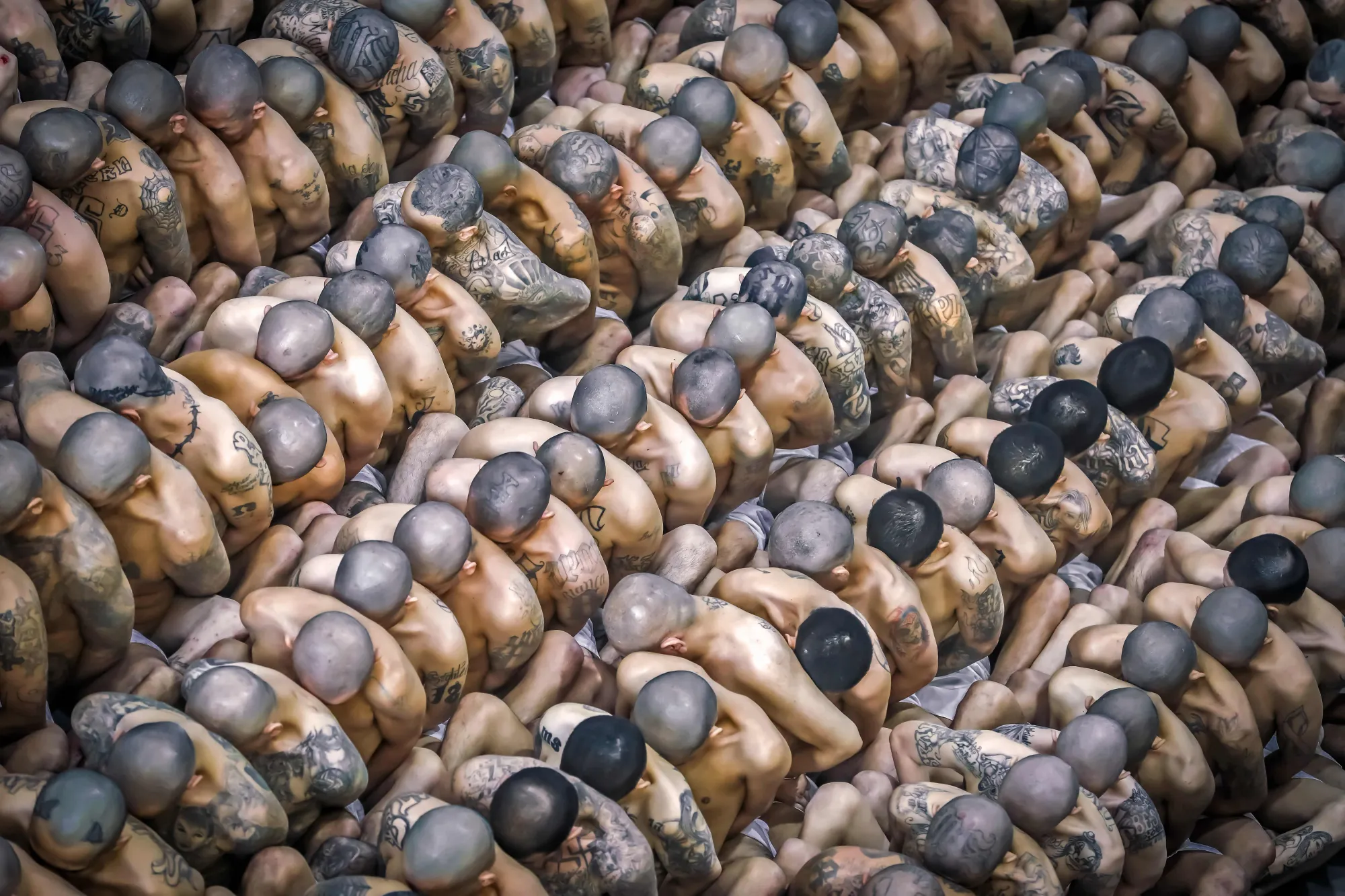
Someone’s going to so much effort to show us all of this, staged in this terrifying way, for one reason: to scare us.
I am not impressed with the Supreme Court’s responses to the ongoing illegal deportations to this prison. (I am wildly impressed with several lower-court judges, however.) As I feared, in the Abrego Garcia case, the Supreme Court found a cop-out solution to avoid a direct confrontation with the executive. As a refresher, Kilmar Abrego Garcia was legally here in the U.S. as a noncitizen, protected from deportation by an immigration judge in 2019, after he proved he’d been targeted for death by gangs in his home country. The government arrested and sent him to CECOT back in March, in violation of that judge’s standing order. They’ve claimed ‘administrative error’ and an inability to get him back now that he’s physically outside U.S. jurisdiction. This week, a district court judge ordered him returned to the U.S., and the administration appealed the order up to the Supreme Court.
Attorney Joyce Vance explained it in detail in yesterday’s post, but in an apparent attempt to avoid triggering a Constitutional crisis, the Court only ordered the administration to “facilitate” his release, not to “effectuate” it. Meaning, one understands, that Abrego Garcia could be released into El Salvador where he is a known gang target, but does not necessarily have to be brought back into the U.S., where his wife and children live.
In its order, the Supreme Court specifically expressed hesitancy regarding whether judges have the authority to order the president to bring him back, as—according to the justices—that might impinge on the executive branch’s power to conduct foreign affairs. So, while it was a 9-0 order, it clearly contains a lot of wiggle room and expresses deference to the president in these matters, so much so that the three liberal judges—Sotomayor, Kagan, and Jackson—also filed a statement explaining that accepting the government’s position in this case means accepting “that it could deport and incarcerate any person, including U. S. citizens, without legal consequence, so long as it does so before a court can intervene.”
I want everyone to remember that the agreement our government signed with El Salvador specifically says that CECOT can imprison American citizens. So far, the administration has not tried this.
I fear that, with the Court majority hesitant to set up a clear challenge to the administration on the issue of deporting noncitizens, it will find it even more difficult to challenge the president when he inevitably trials the deportation of citizens. For the record, the United States government cannot legally deport citizens, with one very narrow exception: an immigrant who has naturalized into U.S. citizenship can be ‘denaturalized’ through a legal process in which the government must prove the person lied or committed fraud in their citizenship application. People can also renounce their U.S. citizenship voluntarily.
In the first Trump term, policy chief Stephen Miller empowered a task force to go after cases of suspected fraudulent citizenship papers in order to denaturalize certain citizens. One can see how that could be abused. One of Trump’s ‘Day One’ executive orders this time around directed this effort to resume. This also explains why the government has been attempting to reverse birthright citizenship. And why it’s trying to see how far it can get with deporting people—citizens or not—due to ‘administrative errors.’
As we descend this slippery slope, the administration may try to deport a naturalized citizen next, that is, someone who was a citizen of another country but immigrated here and became a citizen. Simultaneously, or perhaps a bit later, it will try to deport a birthright citizen, someone whose parents were not citizens but who was born within a U.S. territory and is therefore a U.S. citizen from birth. If it succeeds in deporting those from one of those two types of citizenship without meaningful resistance from the judiciary, then it will probably attempt to deport a citizen whose parents were also citizens. They will start with a few citizens who have been convicted of horrible crimes—gang murders, child abuse, etc. Deporting these terrible people will seem reasonable enough to many Americans that they still won’t realize we’re being led into concentration camps.
Once the administration has shown it can get away with all of those test cases, only then will it attempt to deport and imprison (in El Salvador or elsewhere) political rivals, environmental activists, and any opposition leaders it can prosecute under domestic crime or terrorism laws and therefore label as deportable. Keep an eye on laws that will aim to criminalize more and more activities, and perhaps eventually even certain groups of people. These people would then, as newly designated ‘criminals,’ be deportable. By this point, we will be very near the bottom of the slope we’re currently riding, and we’ll find ourselves in a pit from which it will be very difficult to escape.
This administration’s goal is for us to sit down and shut up. Repeated images and videos from the inside of a torture facility are meant to show us what may happen if we don’t.
The aim is for us to stop protesting, to stop exercising our First Amendment right to peaceably assemble and to speak freely. The president has threatened to invoke the Insurrection Act this month. (We have learned, by now, that when he says he is going to do something, he usually does it, no matter how crazy it sounds, right? Right?) Even if it’s below our conscious awareness, we don’t want to risk being the protestor who’s branded as a domestic terrorist and deported. God forbid we might be sent away due to an ‘administrative error.’
We are not there yet, but we are on that road. For those of us who are still protected by our status as citizens, we must protest now, while we still can. We must write now, while we still can. We must rally in support of our elected representatives, before they are totally sidelined by the monarchical executive. We must support lawyers and judges, while they still uphold the rule of law. Once that’s gone, we may not get it back in our lifetimes.
These immigration cases are test balloons to see how the courts will respond when the president violates the rights of non-citizens. So far, we have seen arrests of foreign students legally here on visas, Canadian travelers legally crossing the border on work visas, UK citizens with glitches in their travel documents, and non-citizens like Kilmar Abrego Garcia, even protected as he was from deportation by a court order. (My theory is that Abrego Garcia was not targeted due to a simple administrative error, but because of his name’s similarity to that of Juan Garcia Abrego, former head of a Mexican drug cartel who was once on the FBI’s Most Wanted list and is now imprisoned in the U.S. for life. It may have been a happy accident for the president’s people, but the similar names create an association with gang criminality and drug trafficking in the subconscious mind and makes the racist White House and Fox News PR spin on this test case that much easier to pull off.)
Inasmuch as the president is testing his limits with deporting and/or imprisoning non-citizens of various stripes, we should all remind ourselves, again, that the agreement he made with Bukele explicitly provides for imprisoning U.S. citizens. I think that for now, there’s too much national attention on this for the president to move forward with deporting citizens. I suspect, soon, he’ll turn the national conversation to something else outrageous until the furor about El Salvador dies down. We’ve largely stopped talking about Signalgate, which happened only three weeks ago, but in a few weeks, while we’re talking about the next horrible thing, further deportations will probably be tried.
I want Bukele’s prisons closed. The Salvadoran population is cowed and terrorized under Bukele’s concentration-camp regime, afraid to even gather outside after dinner for a chat with the neighbors. Local police departments are under arrest quotas to fill Bukele’s new prisons, and are known to gather up any random groups of men they find when they’re in danger of missing the day’s quota. Arrestees, presumed guilty until proven innocent, are tried in mass trials before anonymous judges, 100 people at a time. All guilty, or all innocent. Mostly, all guilty.
Good friends with both the Trump family and Elon Musk, Bukele is showing the American executive how to do a dictatorship.
I feel for El Salvador’s people, and I want Americans to retain our human rights so we can use our power to fight for a better life for Salvadorans, too. I want to keep my First Amendment right to sue the government for harming forests and wildlife. I want our children to know they can speak their truths without risk of arrest. But what rights we still retain are eroding, and quickly. I believe that unless we derail this monster, we will be in no position to help anyone at all, whether human or nonhuman.
Don’t stop calling, writing, showing up, gathering, protesting. Go harder. We have to stop this now. We are all that’s left.
Talk to you soon.
Sources:
https://apnews.com/article/who-is-abrego-garcia-e1b2af6528f915a1f0ec60f9a1c73cdd
https://thehill.com/opinion/immigration/4992787-trump-deportation-plan-immigration/
https://www.brennancenter.org/our-work/analysis-opinion/el-salvadors-offer-house-us-prisoners-illegal
https://saisreview.sais.jhu.edu/el-salvadors-controversial-offer-housing-u-s-criminals-in-its-mega-prison/
https://nymag.com/intelligencer/article/nayib-bukele-donald-trump-deportation-authoritarianism.html
https://joycevance.substack.com/p/the-supreme-court-finally-rules
https://joycevance.substack.com/p/the-abrego-garcia-case-a-quick-update
https://english.elpais.com/international/2024-02-09/a-dictatorship-is-born.html
*Inspired by historian Heather Cox Richardson's Letters from an American
Owl in America will remain free to all readers. Paid subscriptions help make possible the time it takes to track agency notices, court filings, specialized reporting, and environmental stories that can be easy to miss. If you can support this work with a paid subscription, thank you; if you can’t, thank you for being here. Please share these letters, speak up where you can, and keep paying attention to the living world. 🦉




Member discussion