May 15, 2026
Owl in America is a series of letters tracing the actions of the current U.S. administration from the perspective of an environmental lawyer. These notes follow how, in a time of rapid political and ecological change, governmental decisions are felt in the living world.
Hello all~
As expected, the Trump administration has finalized its repeal of the public lands rule. I wrote about it in more detail here and here, but the upshot is that the rule benefited BLM-managed lands by explicitly recognizing conservation as a "use" on par with extractive uses like mining, grazing, and logging. It better protected certain designated areas of environmental concern and allowed Tribal governments and conservation groups, among others, to lease parcels for ecological restoration and mitigation.
The Biden administration finalized the rule in 2024. It applied only to lands managed by the BLM, or Bureau of Land Management. To be fair, that's a lot of land: the BLM oversees more public land than any other federal agency, stretching across about 10% of the United States.
Interior formally proposed rescinding the rule last September. This week's announcement is the final administrative nail in the coffin. The repeal will take effect June 11.
From the Federal Register notice:
Repeal of the 2024 Rule will, therefore, improve the BLM’s management of the public lands by restoring the more efficient processes in place prior to that Rule’s promulgation and removing any thumb on the scale in favor of conservation at the expense of productive use and development of the public lands and their many important resources.
It's laughable to say that the public lands rule was a "thumb on the scale in favor of conservation." It was merely a tentative effort to level the playing field for the natural world on many of our public lands. The phrasing does, however, reveal the administration's reframing of conservation as an imposition on "productive use and development."
My take is that this is one bad act by the Trump administration that won't make much of a difference on the ground. The repeal is primarily symbolic: an easy culture-war win. The new rule barely had time to try and turn the Titanic; decades of entrenched management styles and relationships were never going to shift much under a still-new framework.
Veteran observer of the West's public lands Jonathan Thompson is also not too concerned by the end of the rule. Writing at The Land Desk, he describes it as "a sort of reinforcement" of the Federal Land Policy and Management Act’s multiple-use mandate, which called for BLM to manage land "in a manner that will protect the quality of scientific, scenic, historical, ecological, environmental, air and atmospheric, water resource, and archeological values." The rule did this, in part, by calling out conservation as a "use" under that multiple-use mandate. It allowed for conservation leases, sure, but only on lands that were not already leased for other uses or otherwise claimed.
So rescission does not itself open new acreage to drilling, grazing, or other extraction. Future projects would still require the usual review processes. We're going back to the status quo before the Biden team tried to oh-so-gently steer the behemoth toward practicing a bit more conservation.
Too gently, according to longtime Oregon policy wonk Andy Kerr, who has been described as the Ralph Nader of old-growth forest defense. Back in September when the administration first announced it would repeal the public lands rule, he wrote a piece called "BLM 'Conservation' Rule to Be Trumped. Good!" You can read it for yourself, but Kerr's main point was that Biden's team rushed it through without full environmental review, resulting in discretionary rather than mandatory guidelines and leaving it fairly toothless.
He says:
In fact, the Federal Land Policy and Management Act of 1976 [already] put conservation on a footing above that of development. It’s just that all administrations since then have failed to do so. While the Biden rule provided for new designations and practices to conserve and restore BLM lands, in every case it also provided loopholes large enough to drive bulldozers, bovines, pipelines, and power lines through with ease.
Kerr also points out that the rule preserved existing extractive uses. And, in the end, voluntary opportunities for conservation improvement depended on field managers choosing to implement them.
Any future effort at a similar rule will have to be advanced more carefully. One part of the public lands rule I especially hope to see revived someday would have strengthened protections for BLM's designated Areas of Critical Environmental Concern. ACECs are supposed to be specially managed to preserve important ecological conditions "in a manner that conserves, protects and enhances the relevant and important values identified."
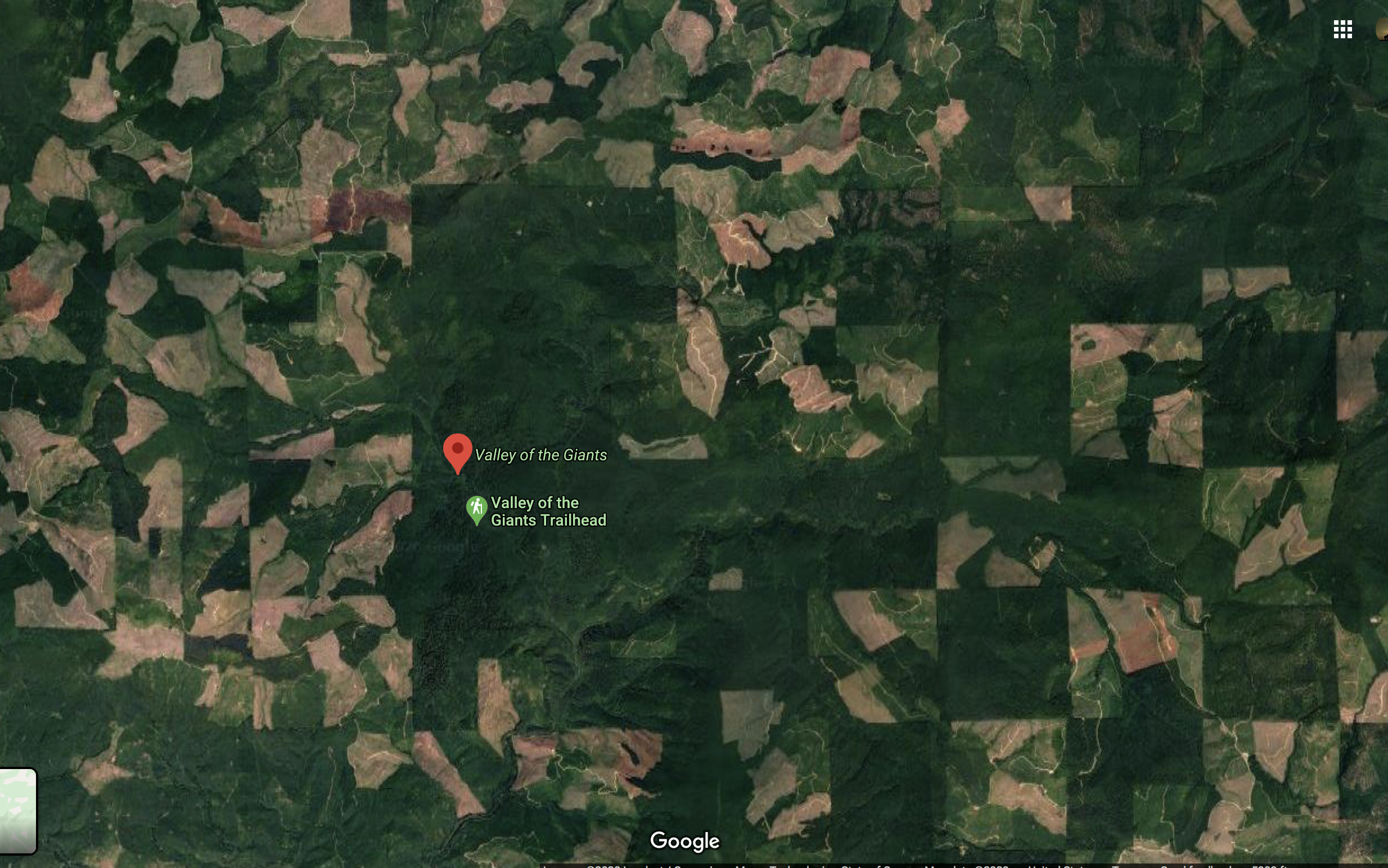
ACECs include landscapes like Oregon's Valley of the Giants: a vanishingly rare sliver of coastal old-growth Douglas-fir and western hemlock forest that escaped the logging rampages of the 20th century. It's a 51-acre core of centuries-old giants, floating on a 1,600-acre raft of recovering second-growth, surrounded by miles of denuded clearcuts.
Several years ago, I wrote a challenge to a BLM timber sale in Oregon that would have logged about 200 acres within a different ACEC, this one designated partly for its value as bald eagle and raptor habitat. The agency proposed what it euphemistically calls a "regeneration harvest," which is more or less a clearcut. The stand had been logged in the 1940s, but in the nature of rainy Western forests, had recovered nicely in the intervening 75 years or so.
In response to our objections, the agency reasoned that because eagles and other raptors hadn't been observed there recently—and because agency analysis stated they preferred trees over 80 years of age—the stand wasn't current habitat and thus was not currently providing the "value" for which the ACEC had been designated. This despite the fact that if the trees were left alone, in just a few years they'd grow into the 80-year-old forest that would provide the very habitat the ACEC was supposed to protect! The illogic was (and still is) infuriating.
Biden's public lands rule established a new management standard intended to ensure every ACEC's values are properly conserved. In practice, this might have just been one tiny lever to steer the agency toward conservation, but I sure could have used it several years ago in challenging that logging project in eagle habitat. (The agency went ahead with it; the nonprofit group I represented lacked the capacity to take them to court, overwhelmed as always by much larger and more extreme logging plans.)
So that's it for the public lands rule, then. Someday a little sanity will return to D.C. and we can work toward a stronger and better version of it. For now, the Senate is widely expected to confirm Steve Pearce—who has expressed support for selling public lands—to direct the agency. Conservationists expect an uphill battle for the next several years, whether or not he is confirmed this week.
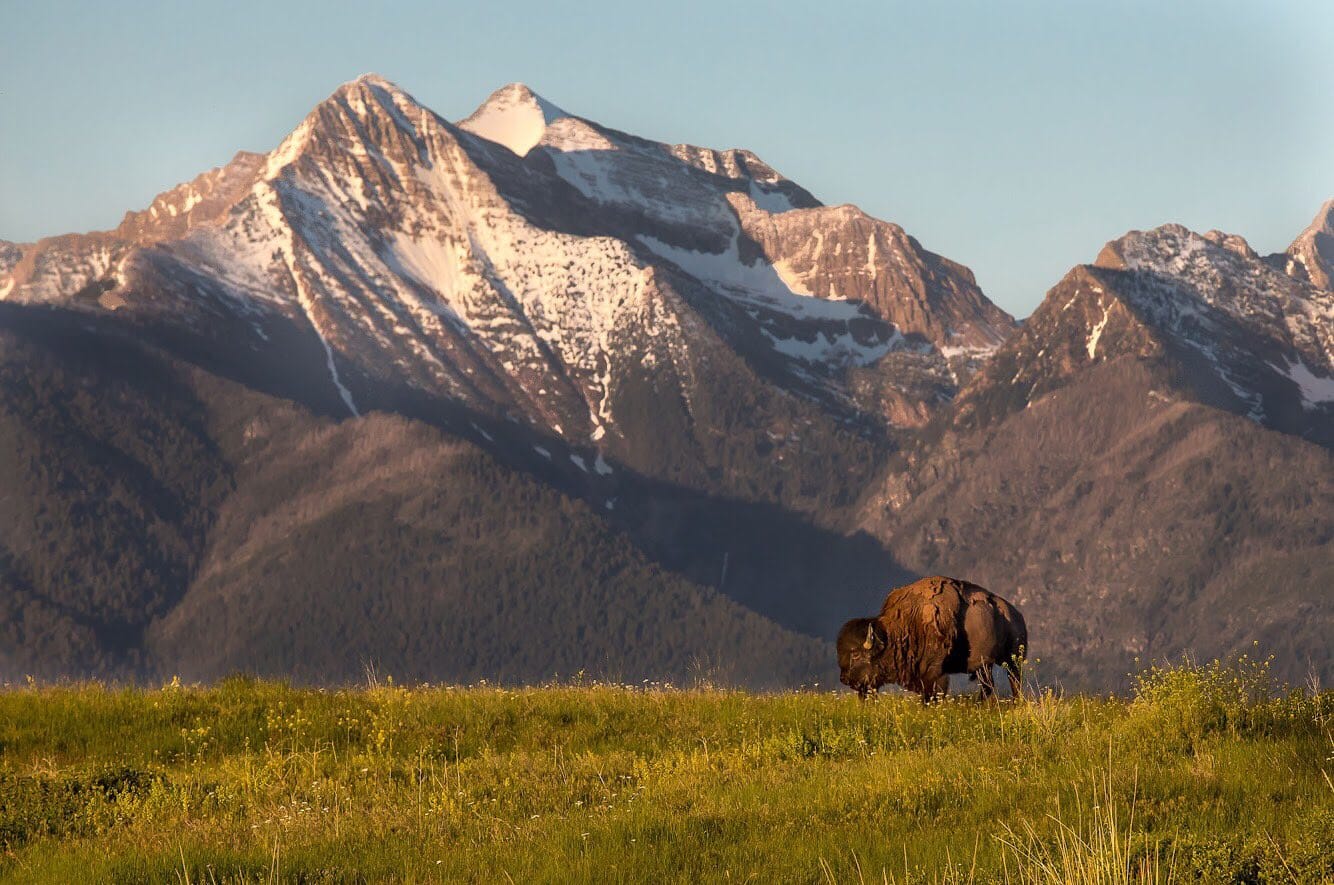
This administration deprioritizes conservation and treats it as a distortion of public-land management in competition with traditional extractive uses like logging or livestock grazing. In line with that ethic, BLM announced last week that it was revoking bison grazing permits in Montana held by American Prairie.
The agency said:
After reviewing the administrative record, applicable law, and American Prairie’s own materials and public statements, the BLM concluded that American Prairie manages its bison as wildlife used primarily for conservation and ecological restoration rather than as a production‑oriented domestic livestock operation.[1]
This premise is absurd. Roughly two-thirds of BLM livestock grazing is controlled by just 10% of "rancher" permittees, a group that includes public utilities, mining companies, and billionaire landowners like Rupert Murdoch and Charles Koch. Some "production-oriented domestic livestock operation" does happen on those leased lands, of course, but it's telling that grazing preference is attached to base property. Access to public land can increase the value and investment appeal of adjoining private ranches, whose total acreage is often much smaller than the leased acreage.
That is a much bigger story, and one that comes up again and again in discussions of American public lands. If you'd like to understand the underlying issues, I recommend ProPublica and High Country News' recent three-part exposé of public-lands ranching in the U.S. It's an excellent series.
Part One | Part Two | Part Three
Talk to you soon,
Owl
[1] To be clear, BLM says it will continue to allow grazing for the thousands of bison that are domestic livestock. The problem is that American Prairie is undertaking perhaps the most ambitious rewilding project in the U.S., linking a huge landscape into a thriving, revived prairie ecosystem that encompasses Tribal lands, wildlife refuges, private land, and BLM land. Part of that effort has been in service of restoring wild bison herds to a vast swath of northeast Montana. American Prairie says it is evaluating its legal options after last week's announcement. Learn more about their work here: https://americanprairie.org/project/assembling-the-land/
Sources:
https://www.blm.gov/policy/ib-2024-035-change-1
https://www.blm.gov/programs/planning-and-nepa/planning-101/special-planning-designations/acec-s
https://public-inspection.federalregister.gov/2026-09386.pdf
https://www.eenews.net/articles/trump-admin-jettisons-public-lands-rule-eases-grazing-regulations/
https://www.landdesk.org/p/trump-axes-public-lands-rule
https://www.andykerr.net/public-lands-blog/blm-conservation-rule-to-be-trumped-good
https://www.outdoorlife.com/opinion/steve-pearce-blm-nominee-hearing/
https://www.blm.gov/press-release/blm-revokes-american-prairie-bison-grazing-permit
https://www.propublica.org/article/grazing-environment-public-lands-oversight
https://www.propublica.org/article/grazing-ranchers-public-lands-trump
https://www.propublica.org/article/politicians-help-ranchers-dodge-oversight
*Inspired by historian Heather Cox Richardson's Letters from an American
Owl in America will remain free to all readers. Paid subscriptions help make possible the time it takes to track agency notices, court filings, specialized reporting, and environmental stories that can be easy to miss. If you can support this work with a paid subscription, thank you; if you can’t, thank you for being here. Please share these letters, speak up where you can, and keep paying attention to the living world. 🦉
Member discussion