Five Things of Beauty #5
Frog saunas ✦ Phylogenetic art ✦ Old growth law ✦ Hakai Magazine ✦ Marie Howe


Originally published in April 2024.
- Beautiful (and/or Terrifying) Holes
I’ve seen this photo circulating around the nature-lover shoals of the web for the past couple of weeks. It portrays frogs undergoing heat treatment for chytrid fungal infection in brick “saunas.” It’s undeniably adorable; here you’ve got wee frogs spending time in their little sauna nooks like Finnish bathers taking the cure. Do they do a cold plunge after?
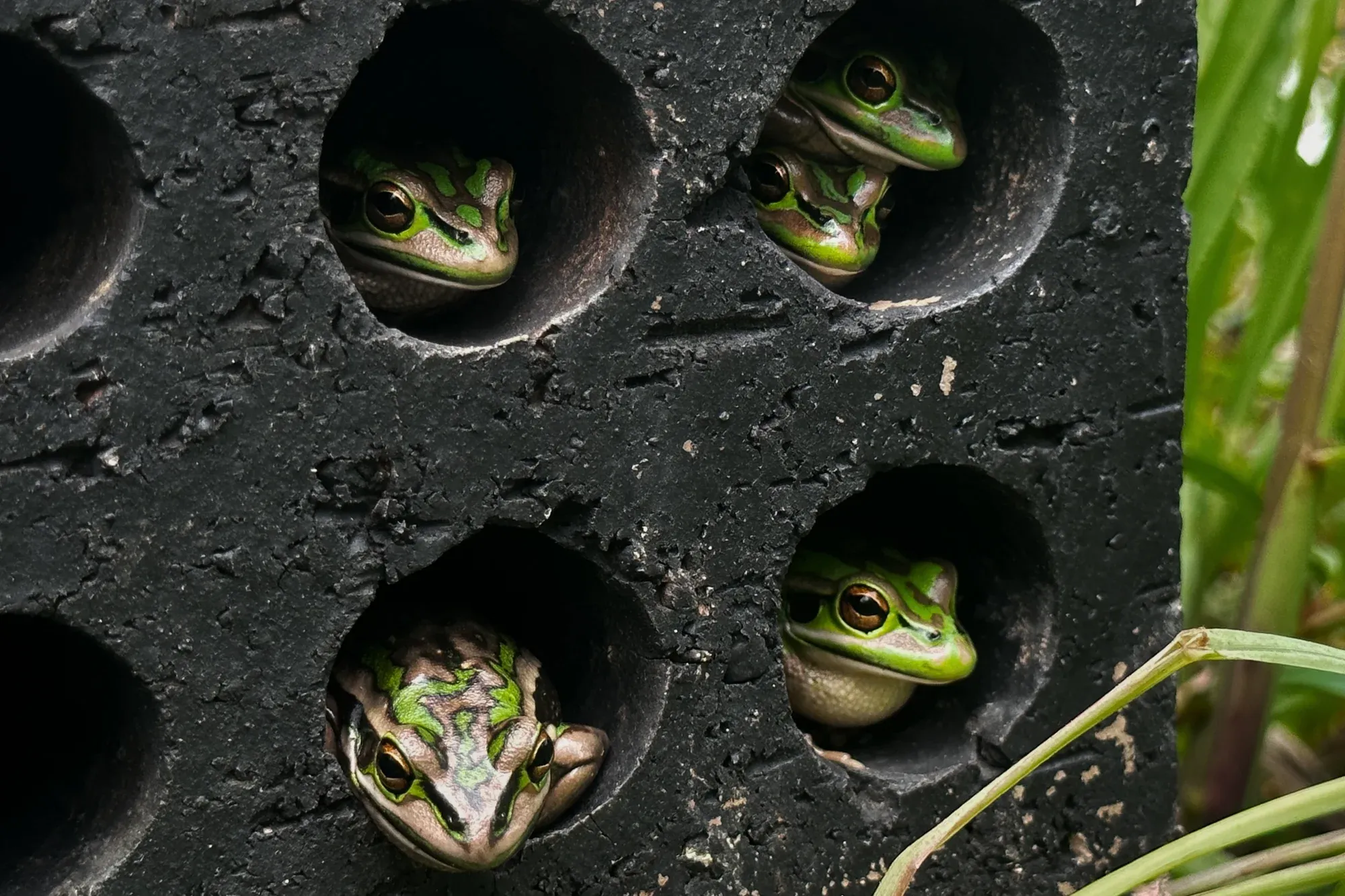
I joke, but these black-painted brick saunas have shown promising efficacy against the epidemic chytrid fungus that is killing frogs worldwide. At least 90 frog species are thought extinct due to the fungal infection that thickens their skin, preventing it from performing its usual function of exchanging ions and balancing hydration. Put simply, their electrolytes get out of balance and they suffer a heart attack, sometimes within just a few weeks of infection.
In the lab, chytrid-infected frogs chose the sun-heated, sauna-like brick holes to rest in, preferring them to cooler, shaded bricks. 70% of frogs receiving heat-treatment survived the infection.
In the wild, chytrid infections spike during winter, thus, it’s hoped that sauna bricks recently placed in the habitats of the last remaining wild green and golden bell frogs, warmed by the weak winter sun, may attract wild frogs when it’s cold out. Depending on these first field trials, wider distribution could follow quickly. It’s a low-cost solution, and as it’s now winter in their Australia home, initial results may be in within a few months.
That said, although I am a diehard frog-lover, I also find the frog-sauna photo horrifying such that I can hardly look at it. You know how some people faint at the mere sight of blood? — it’s an involuntary response. I feel something similar when I catch a glimpse of things inside holes.
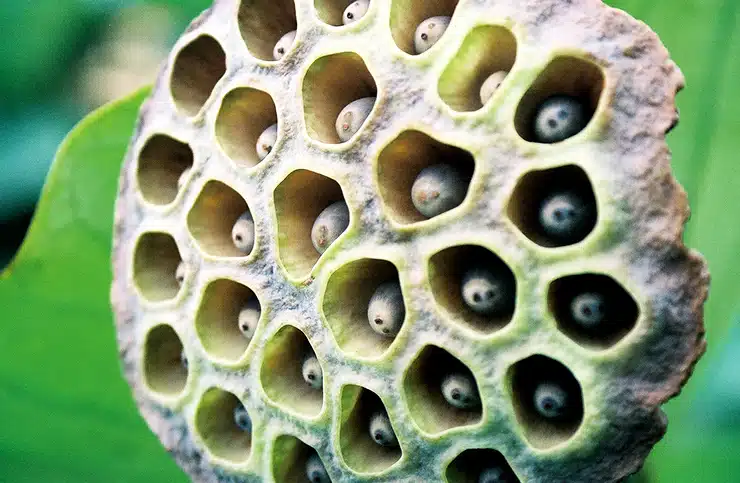
Turns out, there’s actually a name for this: trypophobia. For me, multiple holes are a problem, but it’s way worse when there’s something in the holes. The classic trigger is a lotus seed pod (in this case with seeds inside), a photo of which I will post here and then never look at again.
I find the interior of beehives mildly disturbing, but this photo I recently came across in Scientific American really did me in. It’s the ignition chamber for a fusion-testing facility at Lawrence Livermore National Laboratory in the U.S.

It’s not as bad as this one, though, which portrays a dark-matter detector at the Sudbury Neutron Observatory in Canada. What a horror show. I pasted this in at the final possible moment before sending this post and only looked at it with my peripheral vision. My heart started pounding anyway.

I wrote this post at a coffee shop and I kept feeling like I should hide my screen, in case anyone else should catch a glimpse of this clearly disturbing content. But of course, it’s pretty unlikely I was sitting next to any other trypophobes. And if any of you reading this are so afflicted, I apologize.
- Beautiful Phylogeny
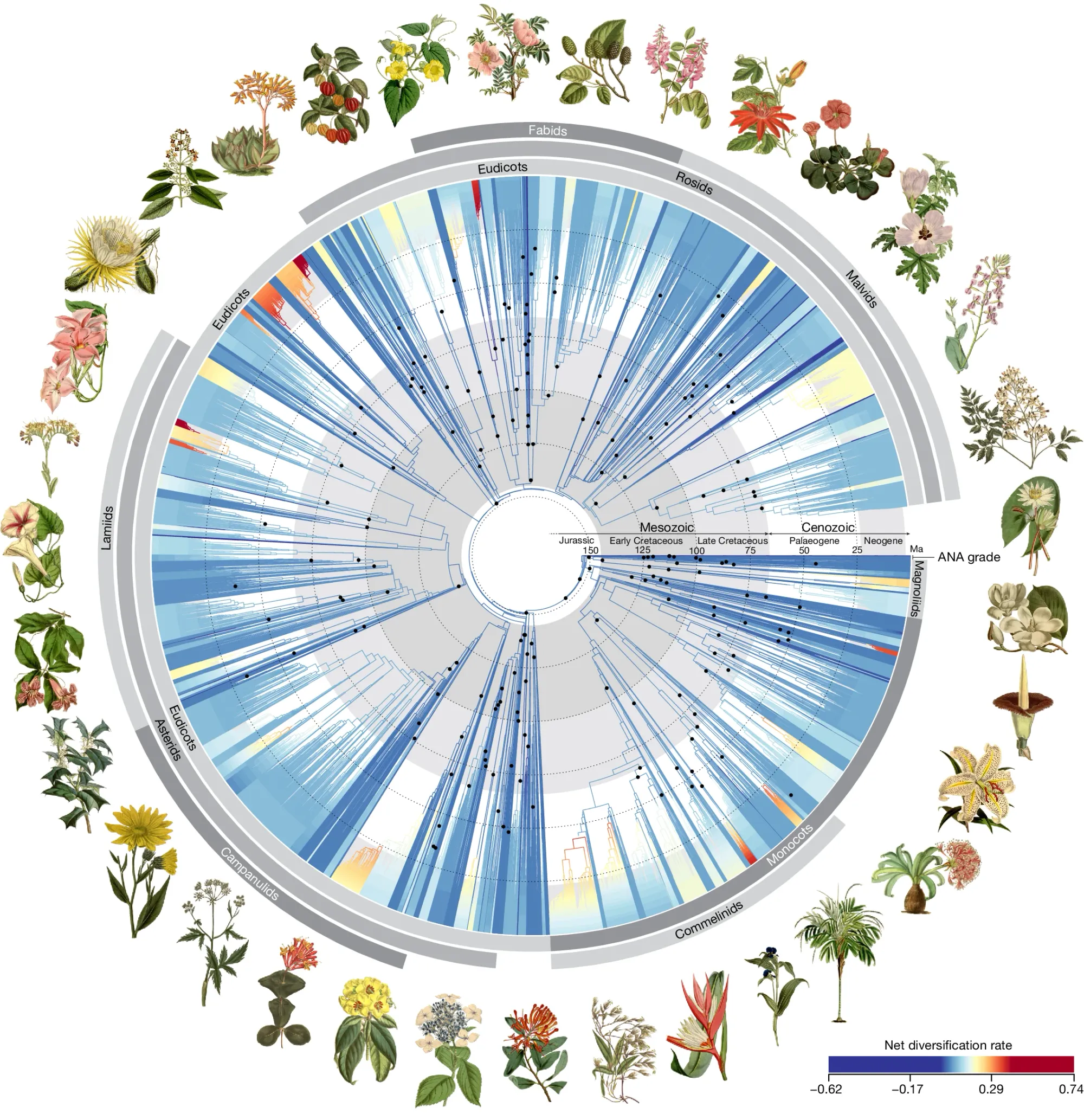
Here’s a palate-cleanser! I can’t stop staring at this graphic from another recent Nature study explicating the family tree of angiosperms (flowering plants). There’s absolutely no reason the research team had to create something so artfully intricate. Here, I see science that betrays the scientists’ innate love of beauty.
Annie Dillard wrote in her remarkable 1973 essay, “The Force That Drives the Flower”:
The notion of the infinite variety of detail and the multiplicity of forms is a pleasing one; in complexity are the fringes of beauty, and in variety are generosity and exuberance.
Reading that piece again (if you want to read it, beware: it dives into the gruesome), I am struck by how she has captured the tension between the gore and the gorgeous in the wild world: “freedom grew the beauties and horrors from the same live branch.”
So, trypophobia and the prettiest phylogenetic tree, all together in one fascinating tangle of being human in this ultimately unknowable web of life.
- Beautiful Law
For admittedly good reason, people rather despise lawyers and enjoy making pointed jokes at our expense. I laugh along, because really, who can deny that my profession has been a plague upon many houses?
And yet, some corner of me still wants to publicize the work my fellows lawyers do on behalf of a living planet. Willfully misunderstood, unfairly vilified, poorly compensated, emotionally cauterized by the abyss they gaze too long and too deeply into: these phrases often describe the lawyers who toil for Mother Earth.
We have to play a long game. The wheels of justice turn slowly and with much creaking. Here’s a legal victory that has been in the offing since the final days of the previous U.S. presidential administration. Four years after its passage, a damaging Trump-era environmental rollback has finally been overturned.
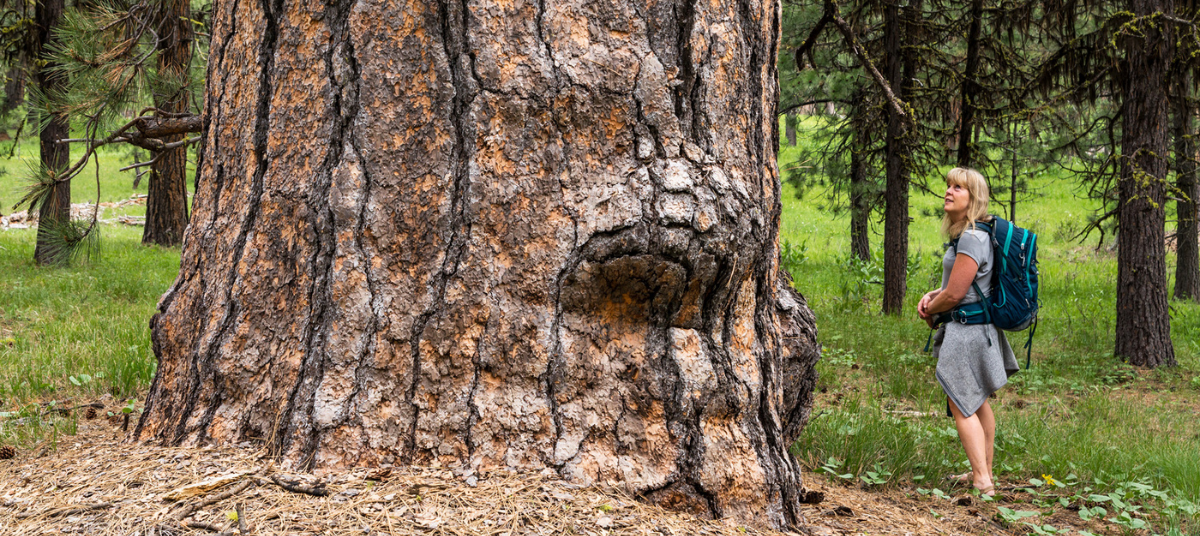
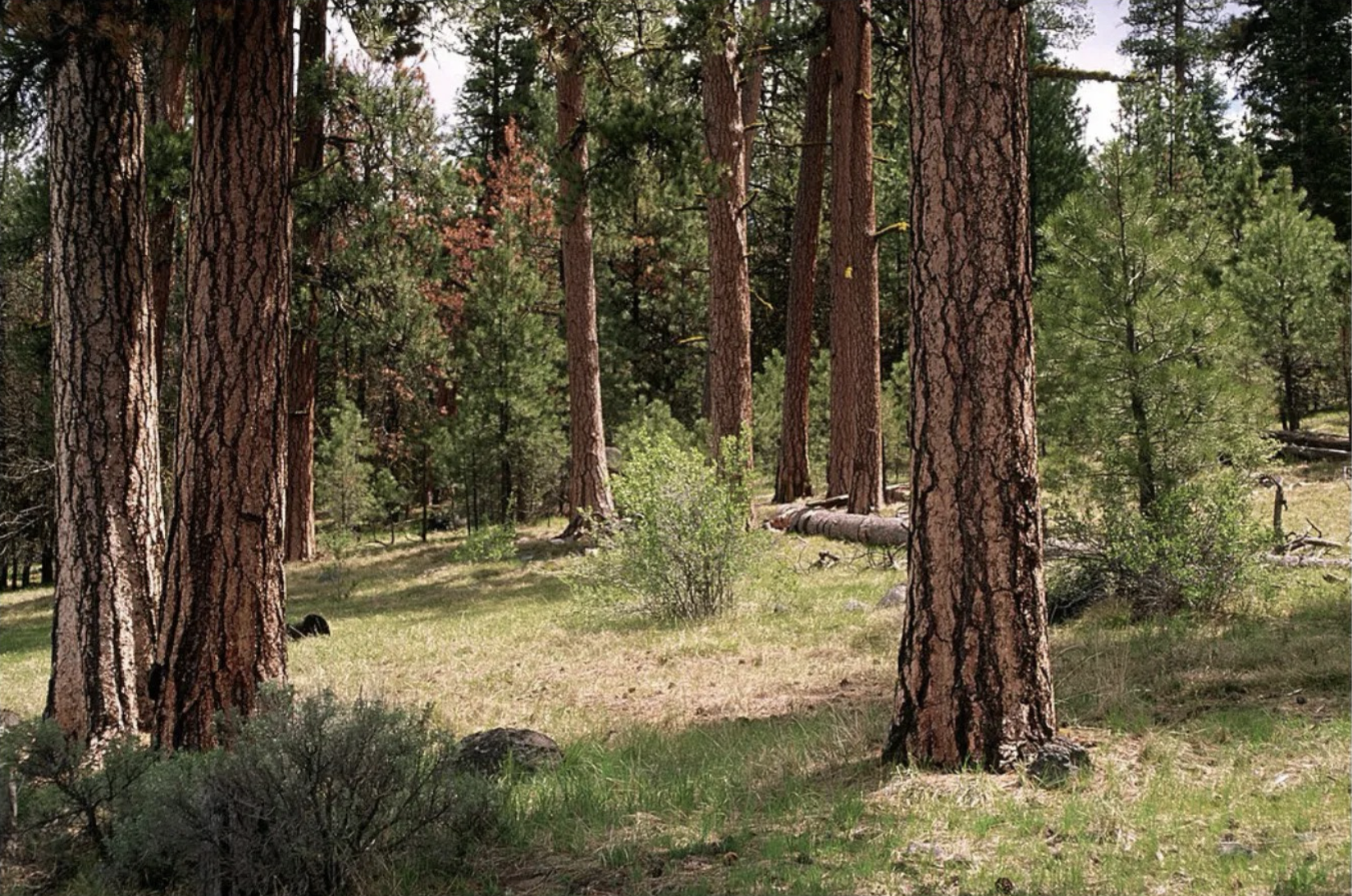
A longstanding forest management rule called the “Eastside Screens” protected large trees over 21 inches (about half a meter) in diameter from being logged in over 7 million acres of Oregon and Washington forests. (For comparison, Belgium is about 7.5 million acres.)
For those unfamiliar with the region, the Pacific Northwest east of the Cascades Mountain range is beautifully forested in many places and until colonial settlers reached the area in the 1800s, it was replete with massive old trees like the ponderosa pine pictured above. Because the climate is drier in the rainshadow of the Cascades, trees take longer to reach such diameters; the tree above is likely several hundred years old.
Two days before he (barely) left office on January 6, 2021, ex-President Trump found some time — in between speedily pardoning favored career criminals and orchestrating a coup attempt — to weaken this forestry rule. It may seem strange that he had capacity for such industry giveaways, given his insurrectionary priorities in early January of that year. In fact, kleptocratic action characterized the entirety of that dark administration, particularly when it came to the liquidation of America’s public resources.
Four years later, a raft of restorative legal decisions are coming in, slowly repairing the tattered quilt the former administration made of our environmental protections. Should Trump be elected (or in some other way come to lead the U.S. again), bad rules like this one will almost certainly be reinstated in some form, with little or no concern for the recent court ruling. And if so, this team of lawyers, like so many fighting across the globe, will find new, creative ways to defend forests and wildlife.
- Beautiful Journalism
I had some bad news in my email this morning. Hakai Magazine, a never-paywalled and truly fine source of journalism on worldwide coastal science and societies, has announced it will be shuttering at the end of 2024. I’ve read it for years and have recommended many pieces published there; I felt the announcement as a visceral blow.
Silver linings: the supporting foundation has agreed to store Hakai’s decade of writing in a permanent, free online archive. And, the magazine announced today that it is looking for sustaining backers to bridge the funding gap so that it may remain in operation after this year. So, if you know any zillionaires, you know what to do.
I had planned to describe a Hakai piece on seabird recovery for this segment of the newsletter, but I think I will instead do a little retrospective of some of my favorite essays of the past few years:
I like everything Ben Goldfarb writes. That said, he’s especially great when he tackles what may be … umm, sensitive … issues for some environmentally-minded people. I’ll say it: every enviro I know is also a massive dog-person, and we really like to take our dogs with us to wild places. We are causing a lot of harm.
J.B. MacKinnon is one of my favorite authors. His little book, The Once and Future World, was formative. This piece for Hakai, which features rats standing trial in late-medieval France, is a wild ride.
This piece by Tiare Tuuhia stoked my imagination and stirred a lot of thoughts around limits — more specifically, the prevalence of “No limits!” thinking in Western culture and the wisdom that’s lost when individual gain is favored over collectively imposed limitations on human behavior. There’s a better way, one that may offer a path forward that benefits our fellow species as well.
- Beautiful Words
I leave you with this.
Hymn
It began as an almost inaudible hum,
low and long for the solar winds
and far dim galaxies,
a hymn growing louder, for the moon and the sun,
a song without words for the snow falling,
for snow conceiving snow
conceiving rain, the rivers rushing without shame,
the hum turning again higher — into a riff of ridges
peaks hard as consonants,
summits and praise for the rocky faults and crust and crevices
then down down to the roots and rocks and burrows
the lakes’ skittery surfaces, wells, oceans, breaking
waves, the salt-deep: the warm bodies moving within it:
the cold deep: the deep underneath gleaming: some of us rising
as the planet turned into dawn, some lying down
as it turned into dark; as each of us rested — another woke, standing
among the cast-off cartons and automobiles;
we left the factories and stood in the parking lots,
left the subways and stood on sidewalks, in the bright offices,
in the cluttered yards, in the farmed fields,
in the mud of the shanty towns, breaking into
harmonies we’d not known possible. finding the chords as we
found our true place singing in a million
million keys the human hymn of praise for every
something else there is and ever was and will be:
the song growing louder and rising.
(Listen, I too believed it was a dream.)
Marie Howe. New and Selected Poems. W.W. Norton, 2024.

I love the structure of a 5-part newsletter. I’m taking a leaf from Tsh Oxenreider’s "5 Quick Things" and M. E. Rothwell’s "Moleskine Notebooks," both of which I always open. I never fail to find at least two or three items of interest in each (and usually more). I hope something here resonated with you and left you feeling just a little bit better about our beautiful world.