Five Things of Beauty #1
Humpback whales ✦ Obscura Lucida ✦ Margaret Atwood ✦ Barry Lopez ✦ Wildfire

Originally published on January 15, 2024.
Today we remember Dr. Martin Luther King, Jr., born January 15, 1929 (just five days after my grandmother). They would both be 95 years old today. Here in the United States, we’ll take a holiday in his honor. I hope in the upcoming year we can live up to some of his dreams for our nation and the world.
- Beautiful News
Here’s a really good thing I read this week: humpback whale populations at South Georgia Island have nearly rebounded to pre-whaling numbers. This island, a British territory, lies deep in the South Atlantic where it forms the vertex of an elongated triangle between the southernmost tip of South America and the Antarctic Peninsula. With its sheltered Cumberland Bay, it’s a wonderland of icy dark mountains and satiny penguins on black-sand beaches. Until its discovery by European whalers in 1904, it was a whale paradise too, the frigid but fertile waters teeming with humpbacks, sei, and blue whales, among others. Extermination ensued, thus whaling ended at South Georgia in the 1960s because virtually no whales remained.
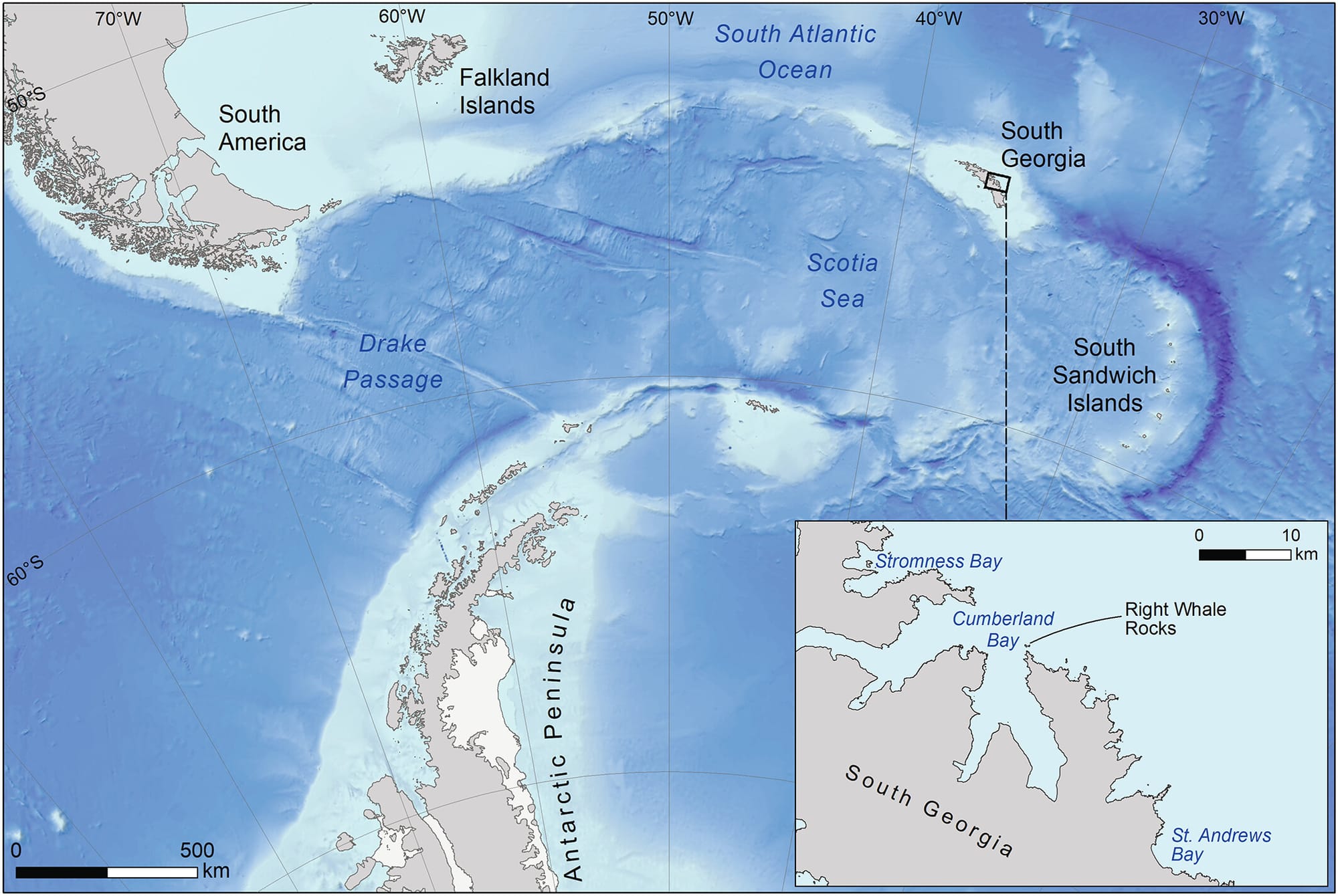
Now, biologists report that nineteen humpbacks, including mother and calf pairs, have been spotted in the bay, coincidentally the same number that was encountered by the 1904 explorers.1 While the recovery itself is remarkable, a particularly poignant facet of the story is that researchers speculate humpbacks as a species “forgot” about the wondrous feeding ground of South Georgia Island, simply because all the whales who knew about it had been killed. In order to have reached the numbers we see there today, a whale or whales must have rediscovered it and brought friends and family around. The humpback species suffered a great cultural loss when its members forgot about South Georgia Island; that knowledge was regained through some combination of luck and perhaps ancestral memory.
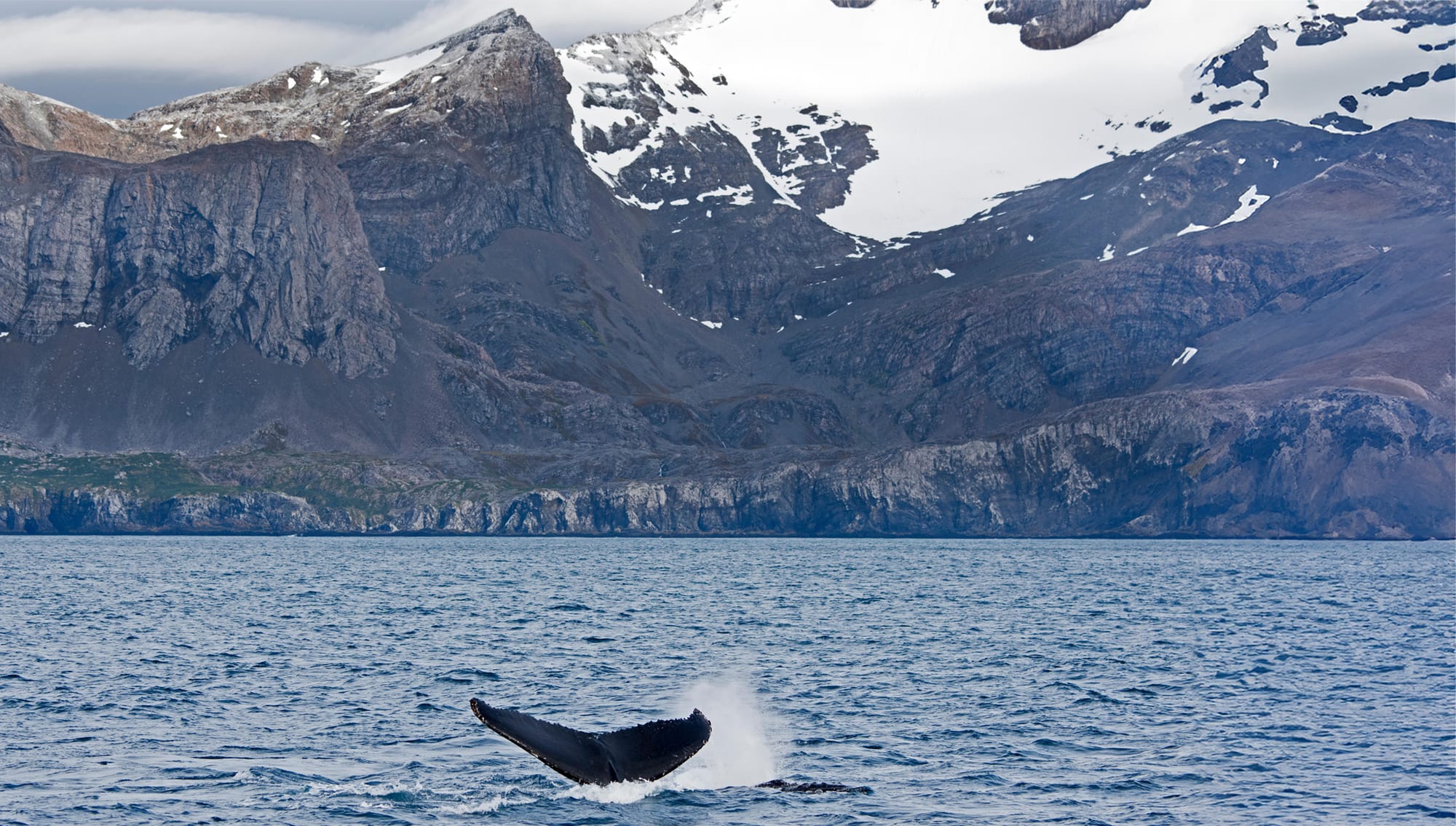
At present, there may not be enough plankton in the area to support all the whales. Nevertheless, whales fertilize the ocean for themselves. As the biotic cycle swings back into action in this remote bay, the way is paved for some of our best ecosystem engineers to begin their job of healing an impoverished biome. Should be a spectacular thing to witness in years to come.
- Beautiful Art
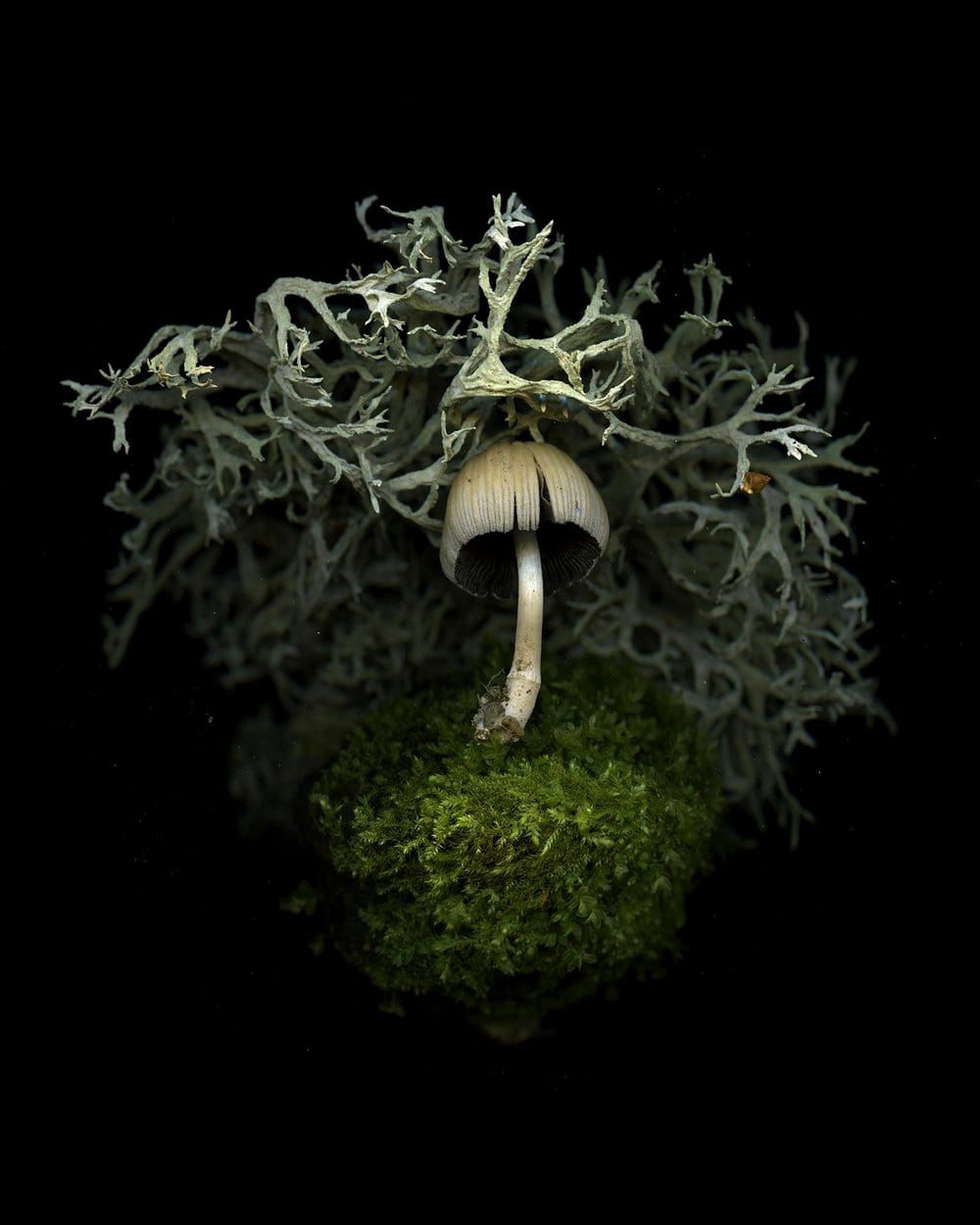
I can’t stop staring at Julya Hajnoczky’s incredible living art, which is shared at obscura-lucida.com. These are not paintings! — she creates her work through scanning living materials, which she then returns to their ecosystems. These pieces are part of her collection, “at the last judgement we will all be trees.”
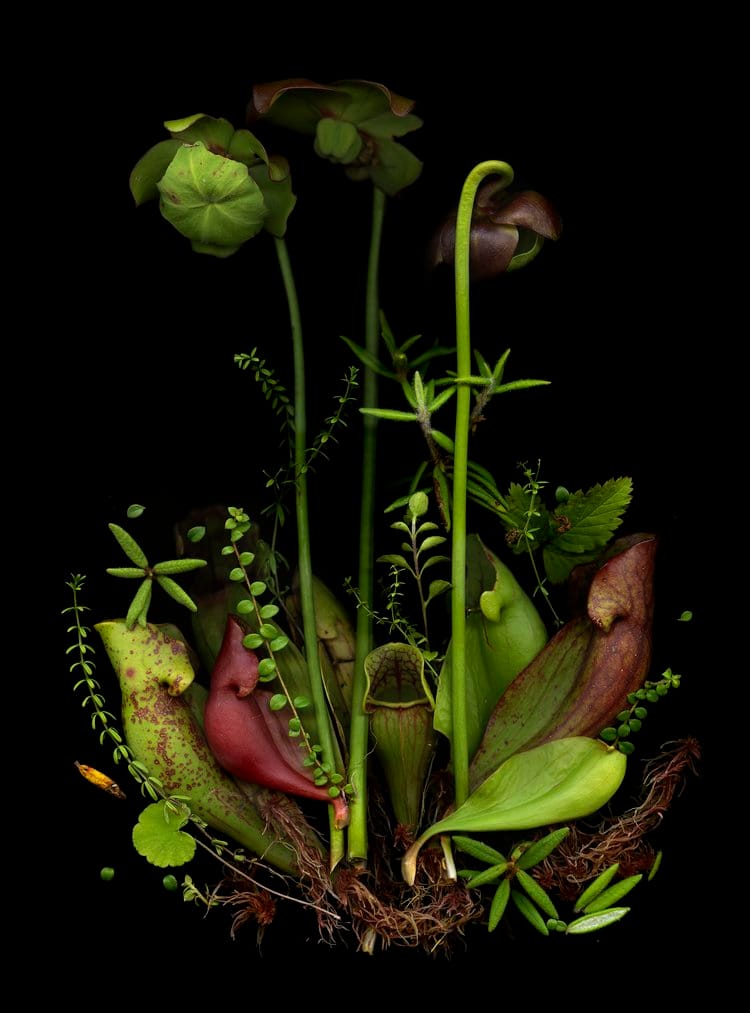
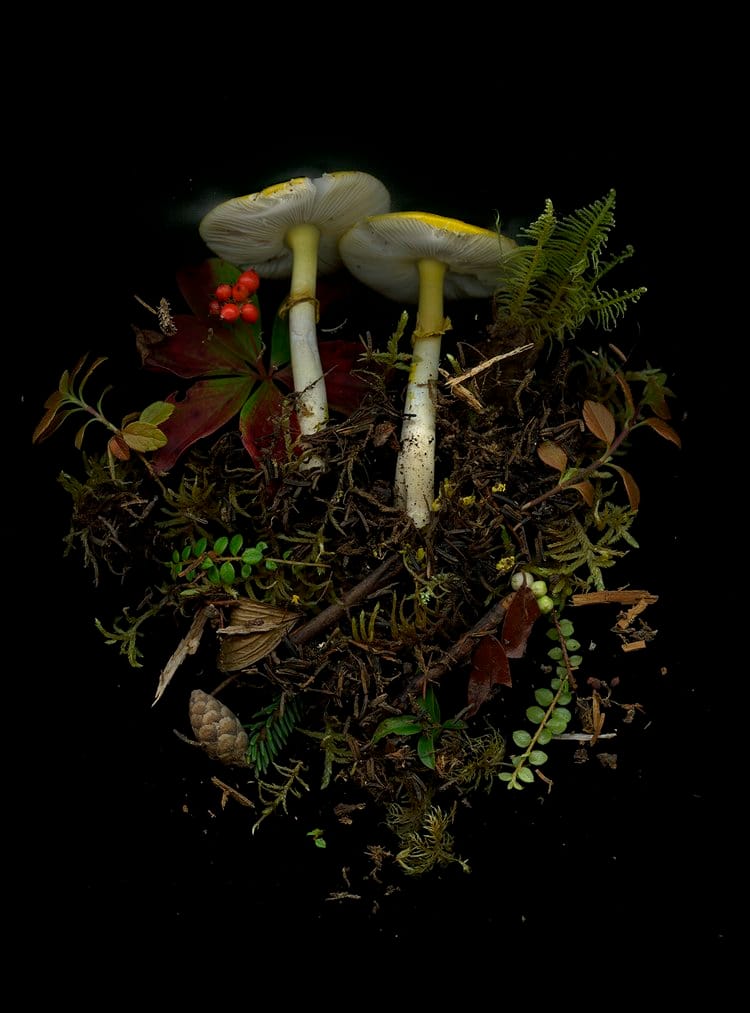
- Beautiful Writing
The title of Hajnocsky’s photography collection led me to Margaret Atwood’s poem, “Resurrection,” of which it is the final lines. I’d never read it before. It’s breathtaking.
Resurrection
I see now I see
now I cannot see
earth is a blizzard in my eyes
I hear now
the rustle of the snow
the angels listening above me
thistles bright with sleet
gathering
waiting for the time
to reach me
up to the pillared
sun, the final city
or living towers
unrisen yet
whose dormant stones lie folding
their holy fire around me
but the land shifts with frost
and those who have become the stone
voices of the land
shift also and say
god is not
the voice in the whirlwind
god is the whirlwind
at the last
judgment we will all be trees
—Margaret Atwood [2]
- Beautiful Book
I have loved Barry Lopez’s writing since a college professor introduced me to Arctic Dreams, lo, these many years ago. I was dismayed to hear of his death soon after the megafires of 2020 incinerated his archives and much of the forest comprising his beloved community. Embrace Fearlessly the Burning World is his last collection of essays, published posthumously in 2023. It’s a searing read, glorious and plangent, as his work always was.[3]
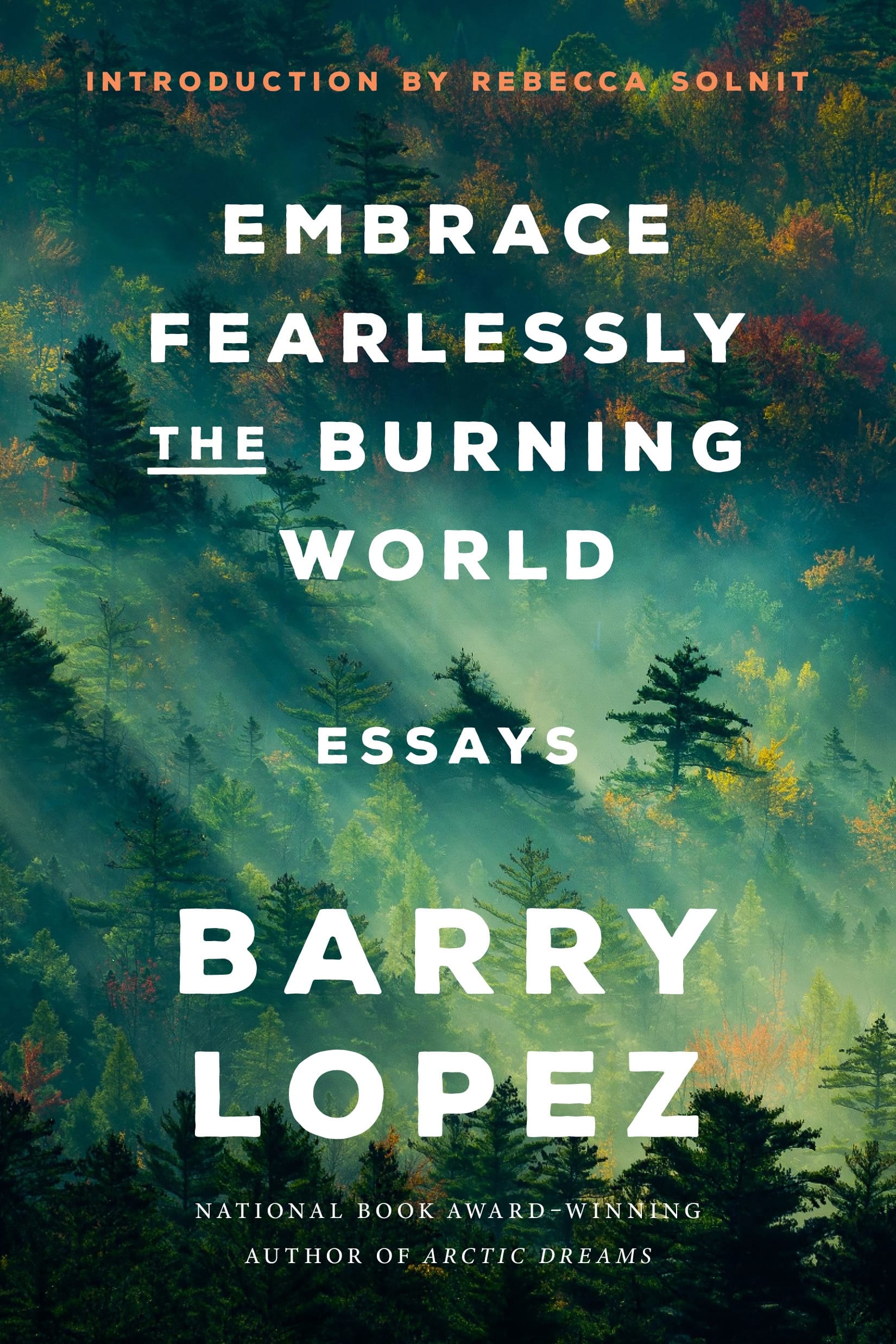
Author Debra Gwartney was Lopez’s wife. Her essay “Siri Tells a Joke,” about life before and after his death and the fire, is luminous and sharp-edged; it gave this reader and long-term Lopez admirer a springboard into grief for our collective loss. Fair warning.
- Beautiful Deep-Dive
I promised to at some point write up my perspective on post-wildfire forest recovery. It’s a big topic, one I’ve done a lot of work on, and it deserves a deep analysis to get past the fear-based narrative and into the nuance. Simply put, it’s my contention that the research fails to support active management in burned forests for the purpose of recovery. In many or most cases, the forests of western North America do not benefit from post-fire logging, and in fact, are damaged by it.
The equally simplistic narrative about fire-prevention logging (called euphemistically, “thinning”) to prevent severe wildfire and protect homes is also not well supported by the literature. Max Wilbert takes a swing at this issue in his piece, “Thinning and Logging Aren’t a ‘Solution’ to Wildfires.”
 Max Wilbert
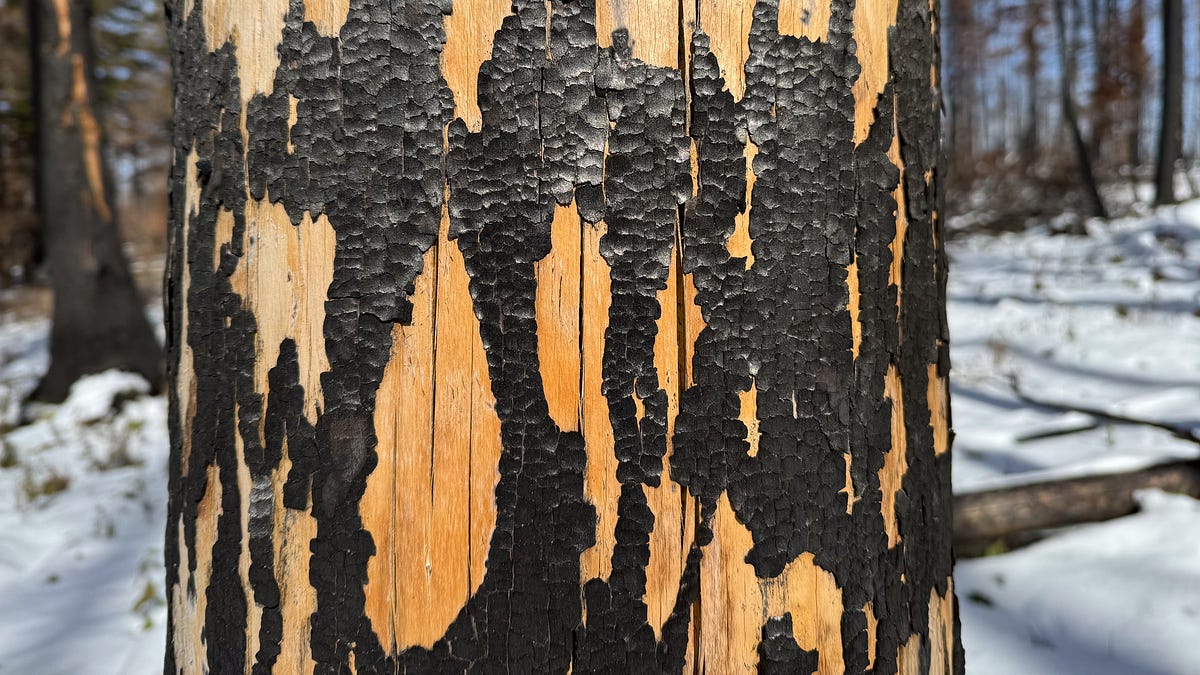
As with most any environmental narrative, it’s wise to ask, Cui bono? In most cases of “thinning for fire prevention” or “post-fire restoration,” logging benefits corporations, not forests. Thus politicians push for logging. Forest fires have existed for millions of years, so forest-dwelling species have typically evolved to survive fires. None have evolved to survive logging.
Similarly, we know a lot about how to prevent people’s homes from burning in a wildfire; what’s most effective is hardening homes, not logging trees somewhere off in the backcountry.
If you start with Wilbert’s piece and want to dive in more, I’d second his recommendation to watch Ralph Bloemers speak on this issue. This Undark piece also gets at the problem.
It’s an ultimately hopeful message: we actually know a lot about how fires behave, how to protect homes, and how to assist forest recovery after a fire. We just have to conform our actions to our knowledge.
I love the structure of a 5-part newsletter. I’m taking a leaf from Tsh Oxenreider’s "5 Quick Things" and M.E. Rothwell’s "Moleskine Notebooks," both of which I always open. I never fail to find at least one or two items of interest in each (and usually more). I hope something here resonated with you and left you feeling just a little bit better about our beautiful world.
[1] Jackson, J. A., Kennedy, A. S., Bamford, C. C. G., Hart, I., Martin, S., MacDonald, D., Moore, M. M., & Carroll, E. L. (2024). Humpback whales (Megaptera novaeangliae) return to Cumberland Bay, South Georgia, one century after the peak of whaling. Marine Mammal Science, 40(1), 237–245.
[2] Apologies if the poem’s formatting isn’t spot-on. I was unable to find a hard copy of this poem, which, as far as I can tell, was last published in Atwood’s The Journals of Susanna Moodie in 1997.
[3] For Lopez’s book, I would be remiss not to give a very strong trigger warning for child sexual abuse, which can be avoided by choosing not to read the chapters entitled “A Scary Abundance of Water” and “Sliver of Sky.” The other essays stand just fine without those two and are very much worth your time, in my opinion.